
A Practical Guide to Knitwear Yarn Selection for Brand Development
For clothing brands, retailers and buying teams, yarn selection is one of the earliest decisions that shapes a knitwear product. […]
Read article →KNITWEAR SOURCING NOTES
Use these notes to prepare stronger briefs, compare material routes and define approval evidence before committing to production.
FROM OUR JOURNAL
Updates, practical insights and knitwear development notes from our team.
For clothing brands, retailers and buying teams, yarn selection is one of the earliest decisions that shapes a knitwear product. […]
Read article →For clothing brands and retail buying teams, knitwear fit is shaped long before bulk production begins. Yarn behavior, stitch structure, […]
Read article →Jacquard and intarsia can give a sweater, cardigan or knitted vest a distinctive visual structure, but the design file is […]
Read article →Why sampling risk starts before the first sample For a clothing brand, a knitwear sample is more than a visual […]
Read article →A custom knitwear cardigan brings together yarn choice, stitch structure, fit, trim details, and finishing. For a clothing brand or […]
Read article →For private-label knitwear brands, the right yarn decision affects hand feel, appearance, fit, and commercial positioning long before bulk production […]
Read article →SOURCING REFERENCE

Separate visible design cues from specifications that still need measurement, material or construction decisions.
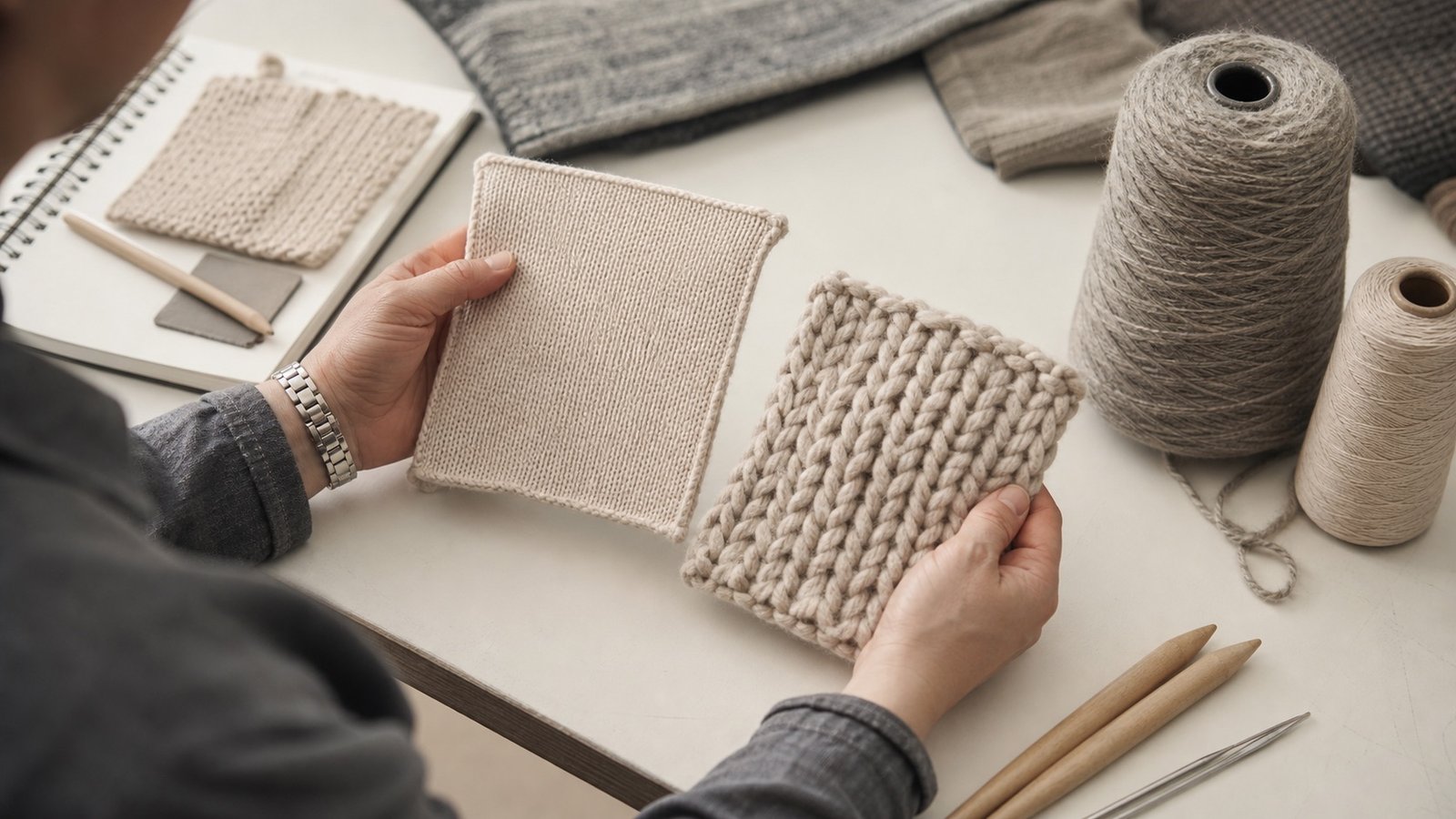
Evaluate gauge beside yarn count, density, structure, weight, drape and the intended retail result.
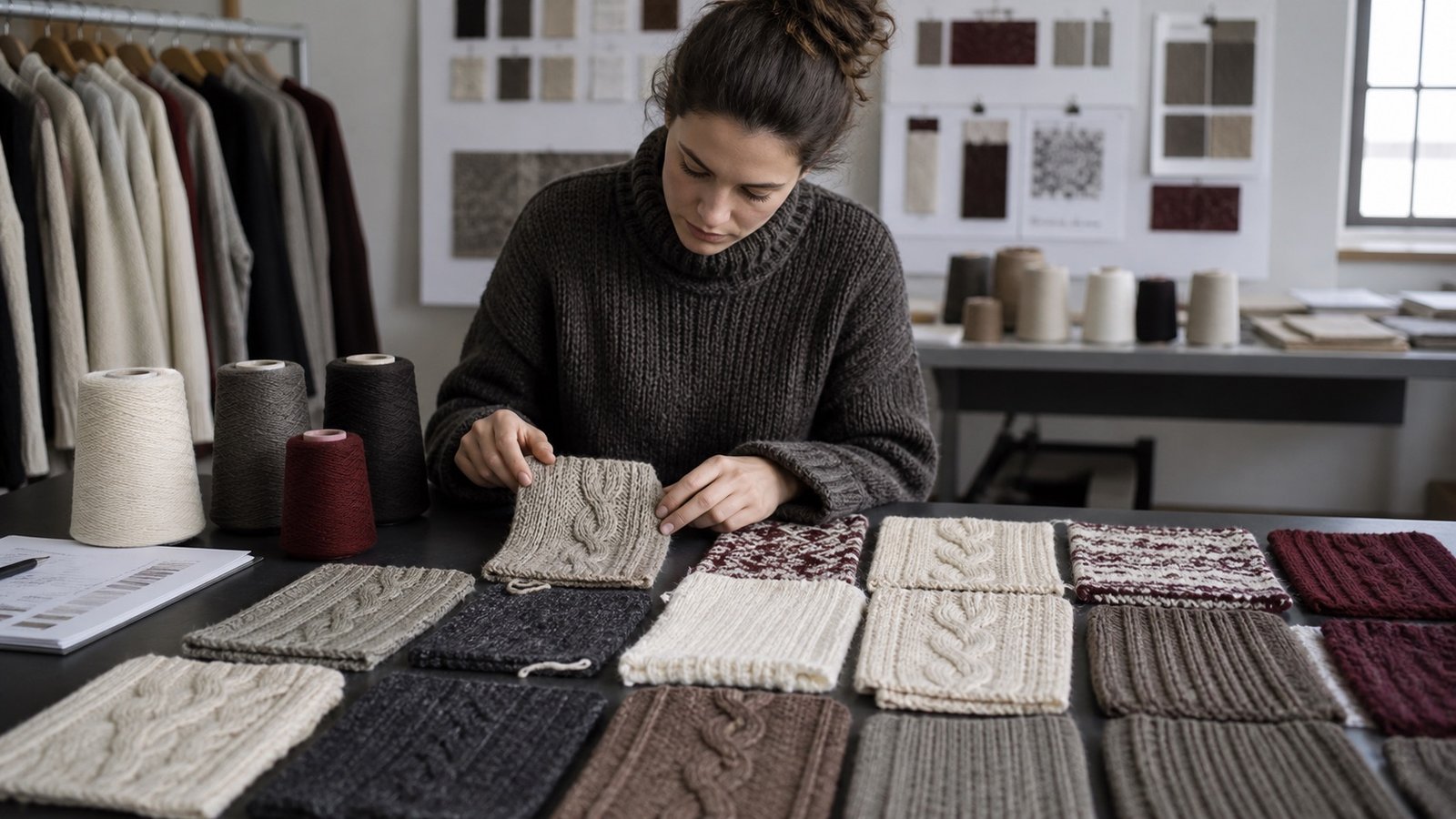
Organize swatches, samples, comments and tolerances so the factory has one unambiguous standard.
A pre-production sample is the final physical standard for bulk—not another exploratory prototype. It should represent the exact material, measurements, workmanship and presentation intended for the order.
Any open point should be listed explicitly before authorization rather than accepted as an unwritten assumption.
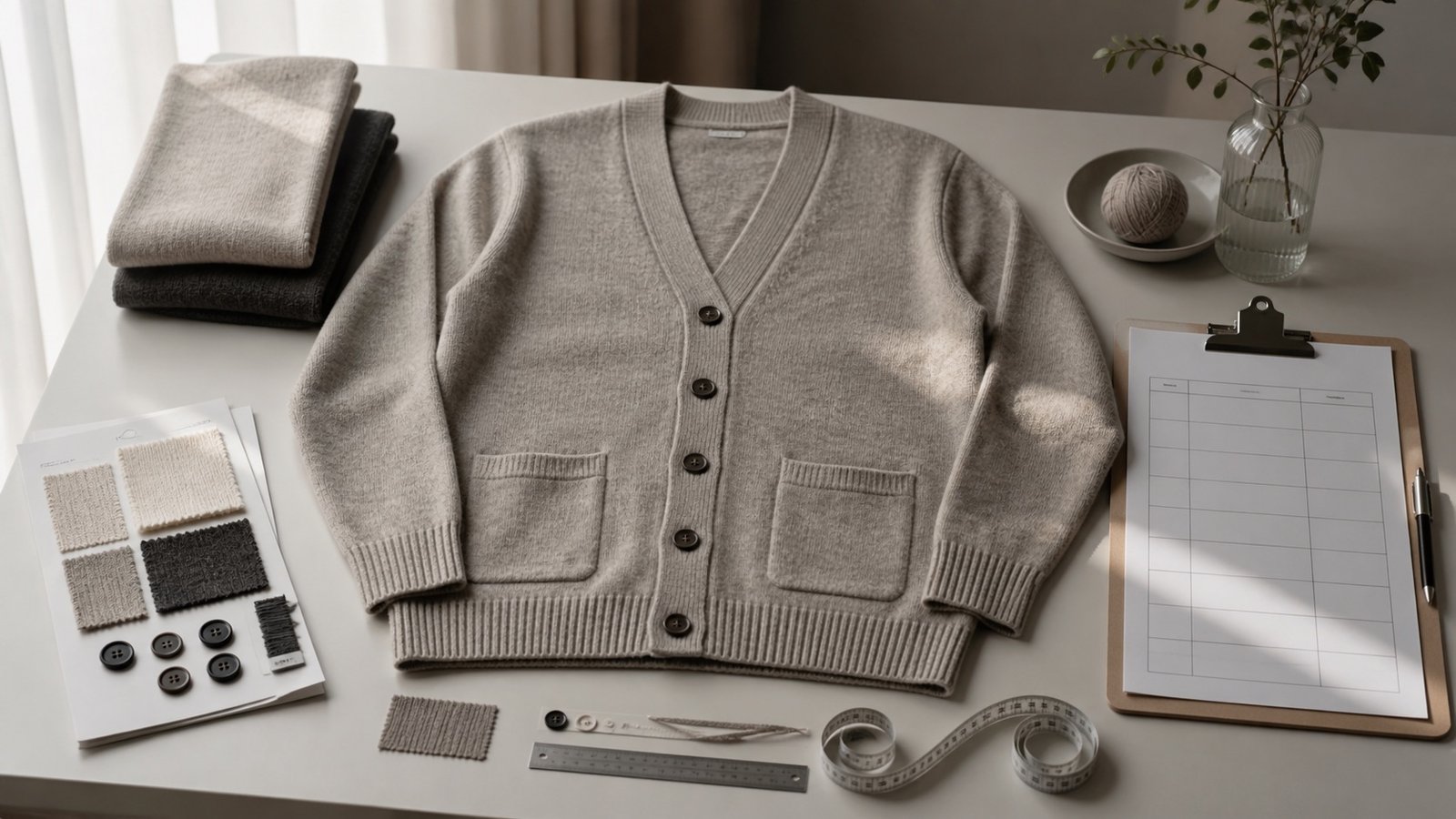
AQL is a statistical sampling framework. It does not mean every garment is inspected and it is not a promise of zero defects.
The buyer and factory should agree the protocol before inspection so the result has a clear commercial meaning.

Technical drawings, approved swatches, sample comments, measurement changes and trim decisions should point to one current product standard.
A structured register prevents an outdated message or superseded sample from guiding bulk production.
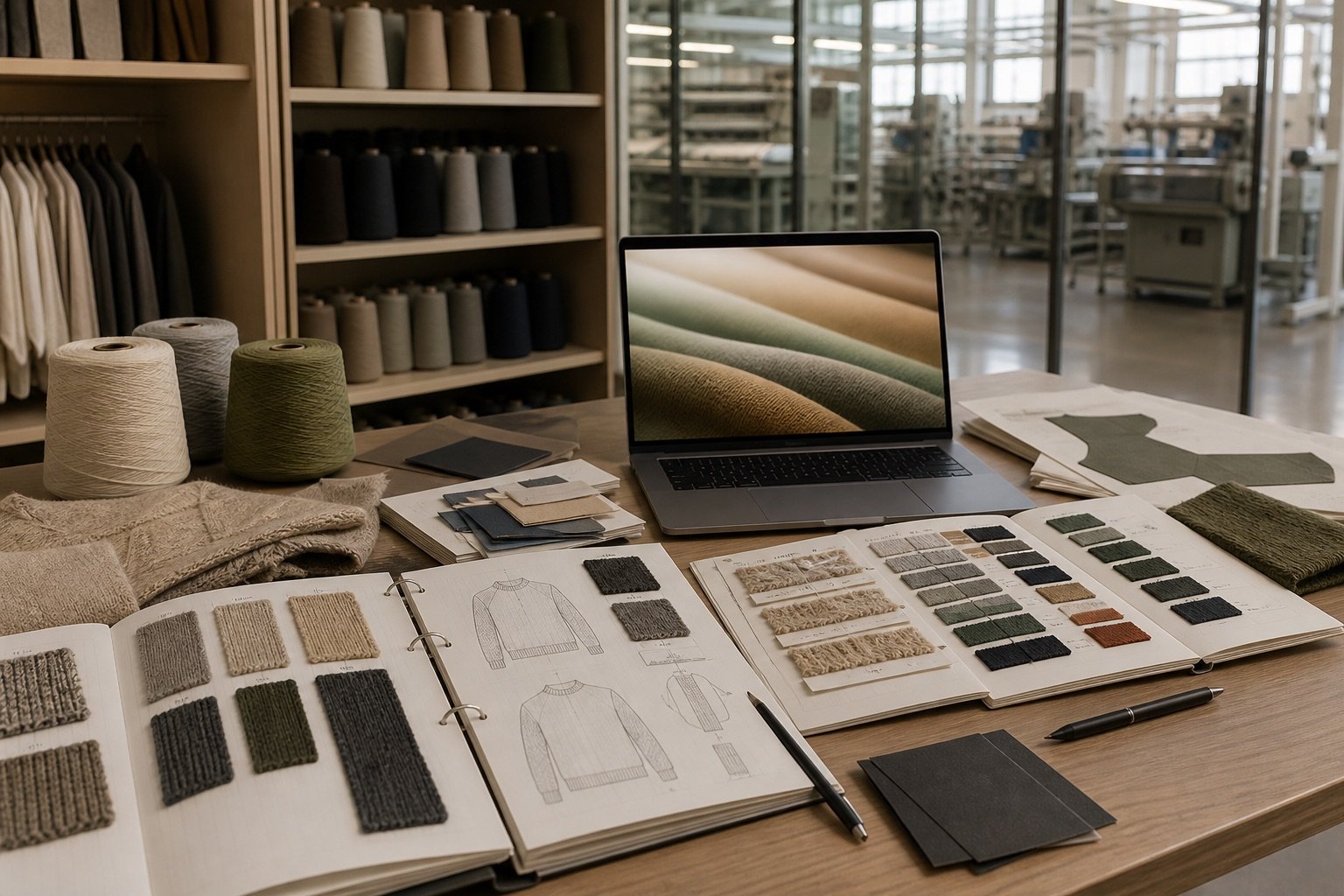
QUICK REFERENCE
Machine and needle-spacing reference influencing yarn suitability, stitch scale and fabric character.
Focused fabric trial for structure, color, yarn effect, weight or finishing before a garment sample.
Sample used to review measurements, proportion, balance and construction.
Pre-production reference confirming final materials, workmanship and presentation.
Selected sizes used to evaluate grading and size-to-size proportions.
Statistical inspection framework requiring buyer-defined levels and defect categories.
START A PROJECT
Send the specific yarn, gauge, fit, artwork or quality question you are evaluating and include the reference that makes it concrete.