Jacquard and intarsia can give a sweater, cardigan or knitted vest a distinctive visual structure, but the design file is only the beginning. Before approving bulk production, clothing brands and buying teams need to confirm how the artwork translates into yarn, knitting programming, garment dimensions and finishing.
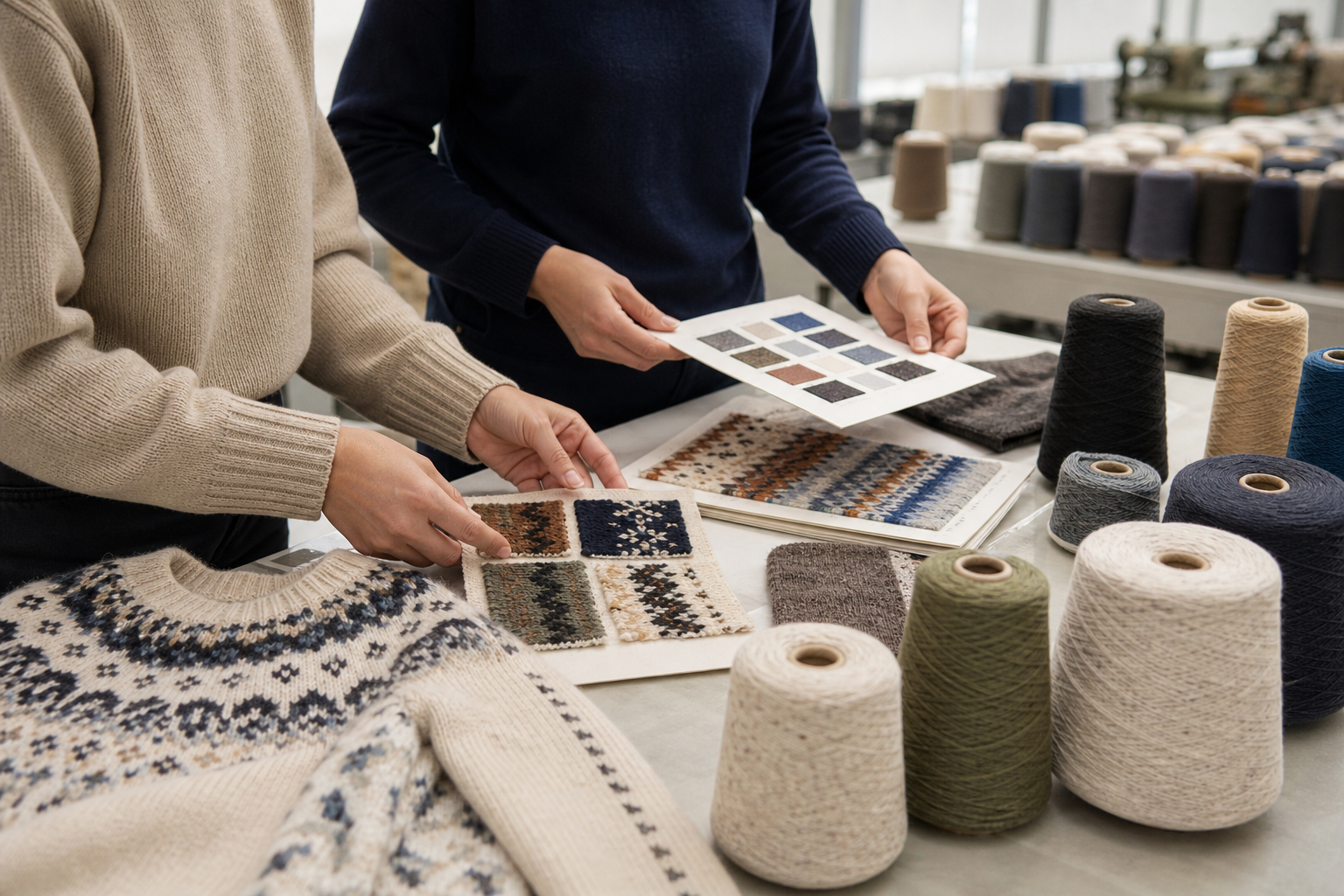
1. Start with a yarn and color plan that matches the design intent
For jacquard and intarsia knitwear development, the first review should connect the visual reference to a workable yarn and color plan. A development partner can help interpret the design, compare yarn options and identify where color contrast, surface texture or stitch definition may change the appearance of the finished garment.
Ask for a clear record of the selected yarn direction, color placements and any areas that need confirmation. This makes sample-based customization easier to review and gives the buying team a practical reference when checking later samples.
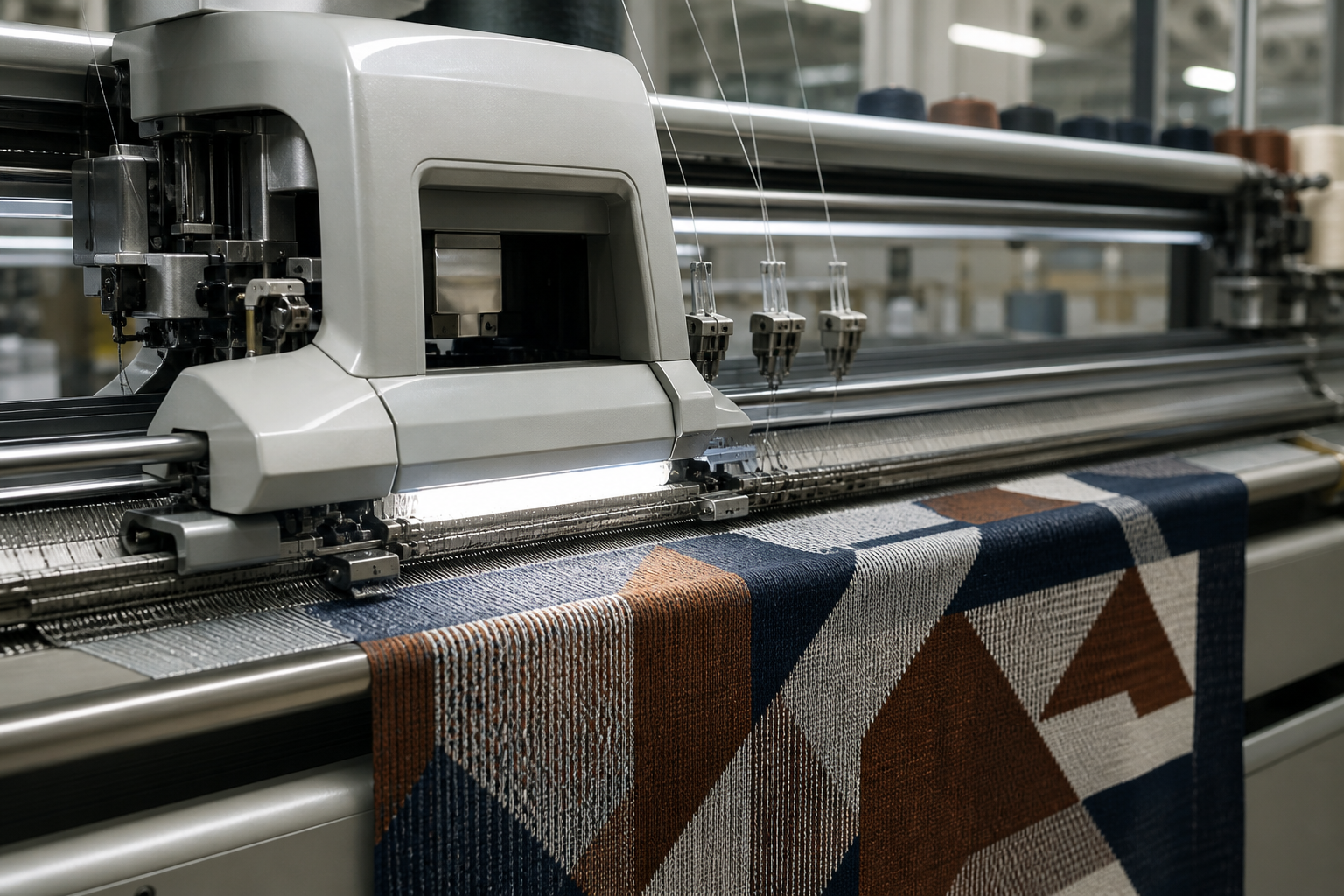
2. Check programming, motif scale and panel construction
Jacquard and intarsia depend on accurate knitting programming and controlled panel construction. Review the motif scale, repeat, placement and edges on the actual knitted panel rather than relying only on a flat artwork file. This is especially important when a pattern crosses the front, back, sleeves or joining points.
A useful development review also checks whether the selected structure supports the intended product category, such as a lightweight pullover, a structured cardigan or a multi-size style. Knitwear OEM and ODM teams can use sample development and pattern services to test these details before the production specification is finalized.
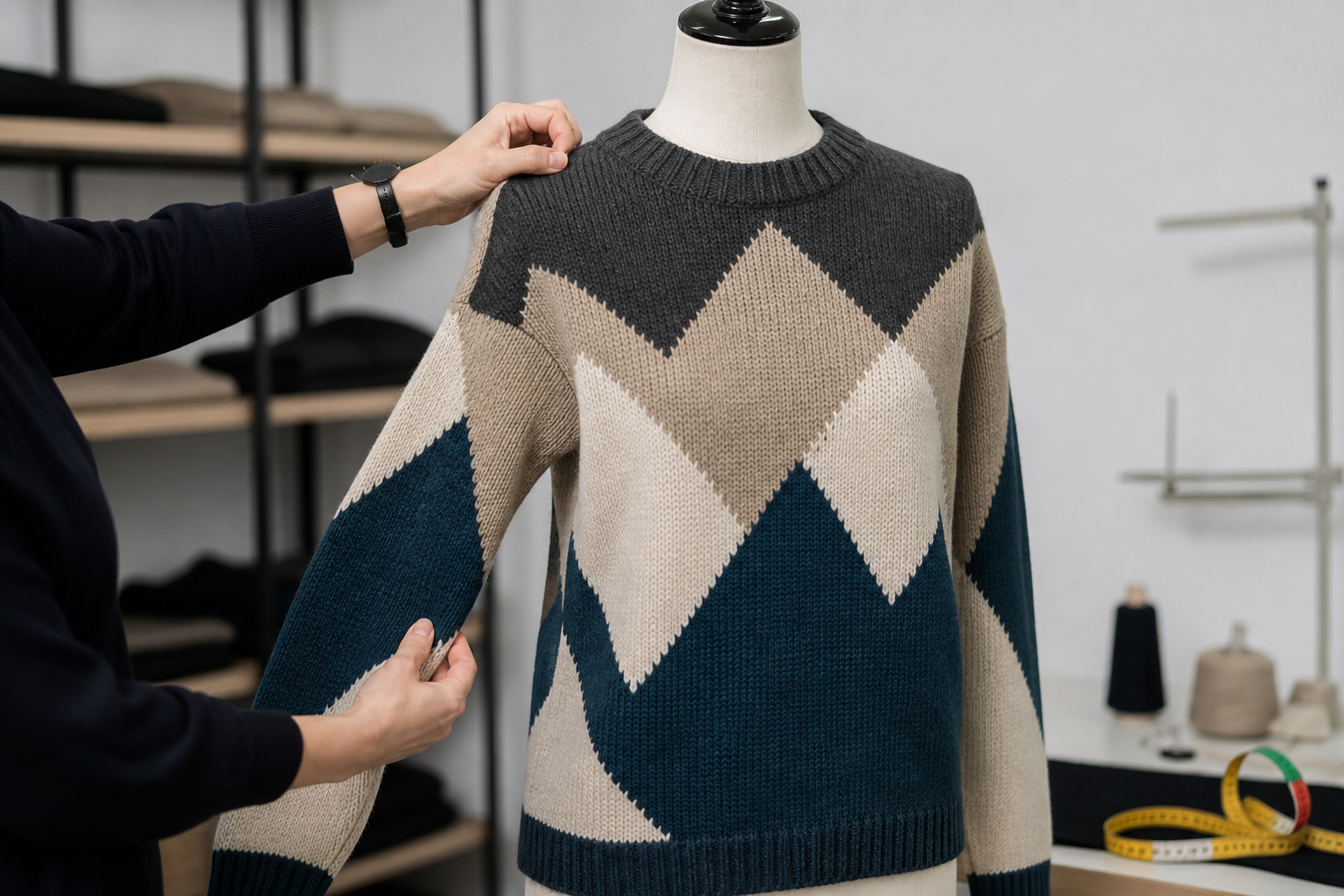
3. Evaluate fit, alignment and appearance on the assembled garment
A strong panel sample is not enough. The design should be reviewed after assembly, because fit adjustment can affect motif alignment, proportions and the visual relationship between body and sleeve pieces. Check the garment on the intended size range and note any areas that require adjustment before approval.
Look closely at shoulder joins, side seams, sleeve transitions, neckline shape and the way the motif sits after the garment is worn. A design-to-sample development process should leave room for fit adjustment and confirmation of the approved version before bulk production.
4. Confirm finishing and quality checkpoints before the bulk order
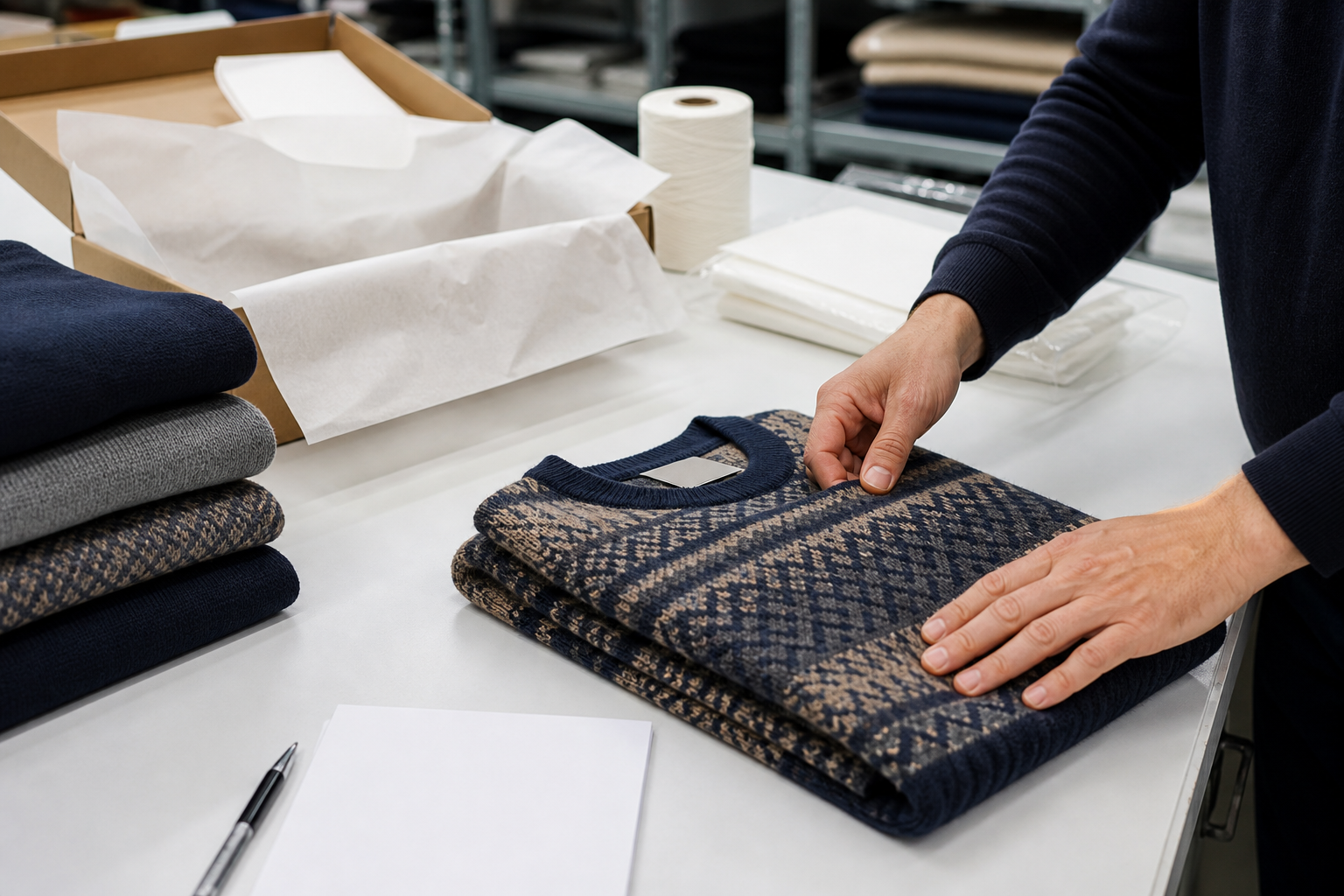
Before bulk production, confirm how the garment will be finished and inspected. For patterned knitwear, review finished garment appearance, surface consistency, assembly details, packaging requirements and any handling instructions that matter to the design.
WTBF describes quality checks across raw materials, knitted panels and assembly, finished garment appearance, and packaging and shipment. Keeping these checkpoints visible helps a buying team separate design approval from production approval and identify open items as project-dependent or to be confirmed.
FAQ
What is the difference between jacquard and intarsia knitwear?
Both techniques create patterned knitwear, but they manage color and structure differently. The best choice depends on the artwork, yarn plan, motif scale, garment construction and desired appearance. A sample review is the practical way to confirm the result.
Can a knitwear manufacturer develop from an existing sample?
Yes. Sample-based customization and pattern/sample services can be used to interpret an existing reference, develop a new sample and adjust fit before a bulk-production decision.
What should buyers approve before bulk production?
Buyers should approve the yarn and color direction, knitting programming outcome, motif placement, fit, assembly appearance, finishing expectations and packaging requirements. Any unresolved commercial or production detail should be treated as project-dependent or to be confirmed.
CTA
Need help developing a jacquard or intarsia style? Contact Wait To Butterfly for knitwear OEM, ODM, design-to-sample development and sample-based customization. Visit Wait To Butterfly, WhatsApp +1 (669) 358-6009, or email xyzzzlife@gmail.com.