Why sampling risk starts before the first sample
For a clothing brand, a knitwear sample is more than a visual prototype. It is an early test of whether the yarn, stitch structure, dimensions, hand feel, and finishing direction can work together in production. When one decision is made too quickly, the result may be a sample that looks right on a screen but changes after washing, finishing, or size grading.
The most practical way to reduce sampling risk is to treat development as a connected process. Yarn selection affects gauge and drape. Knitting programming affects texture and dimensions. Fit adjustment affects how the design translates across sizes. Quality checks determine whether the approved result can be repeated. Working through these links early gives brands a clearer path from concept to bulk production.
1. Start with yarn selection that matches the product brief
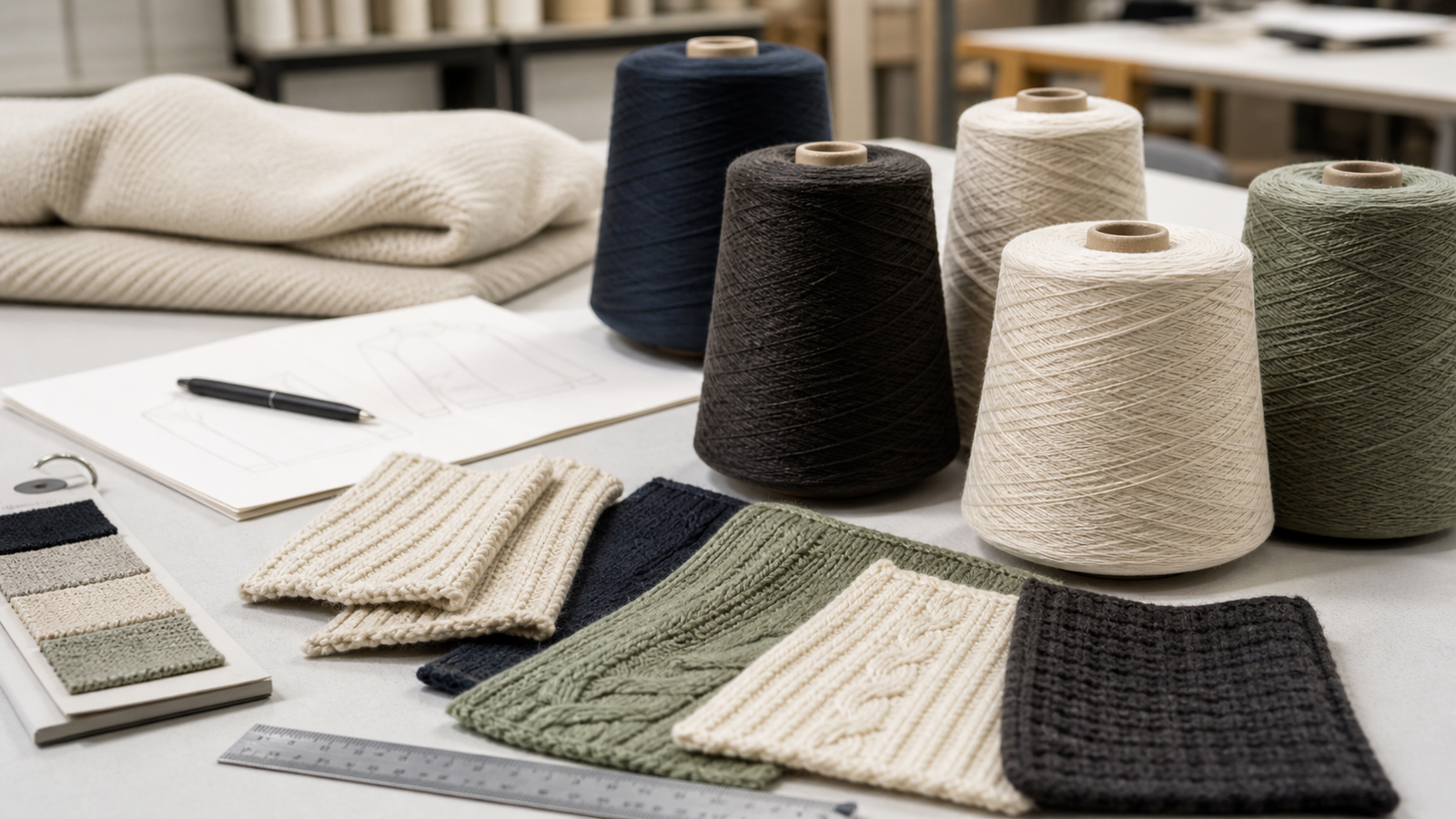
Yarn selection should begin with the intended product experience, not only a color reference. A lightweight women’s cardigan, a structured men’s pullover, and a soft babywear set may require very different decisions about fiber composition, yarn count, twist, elasticity, and surface character.
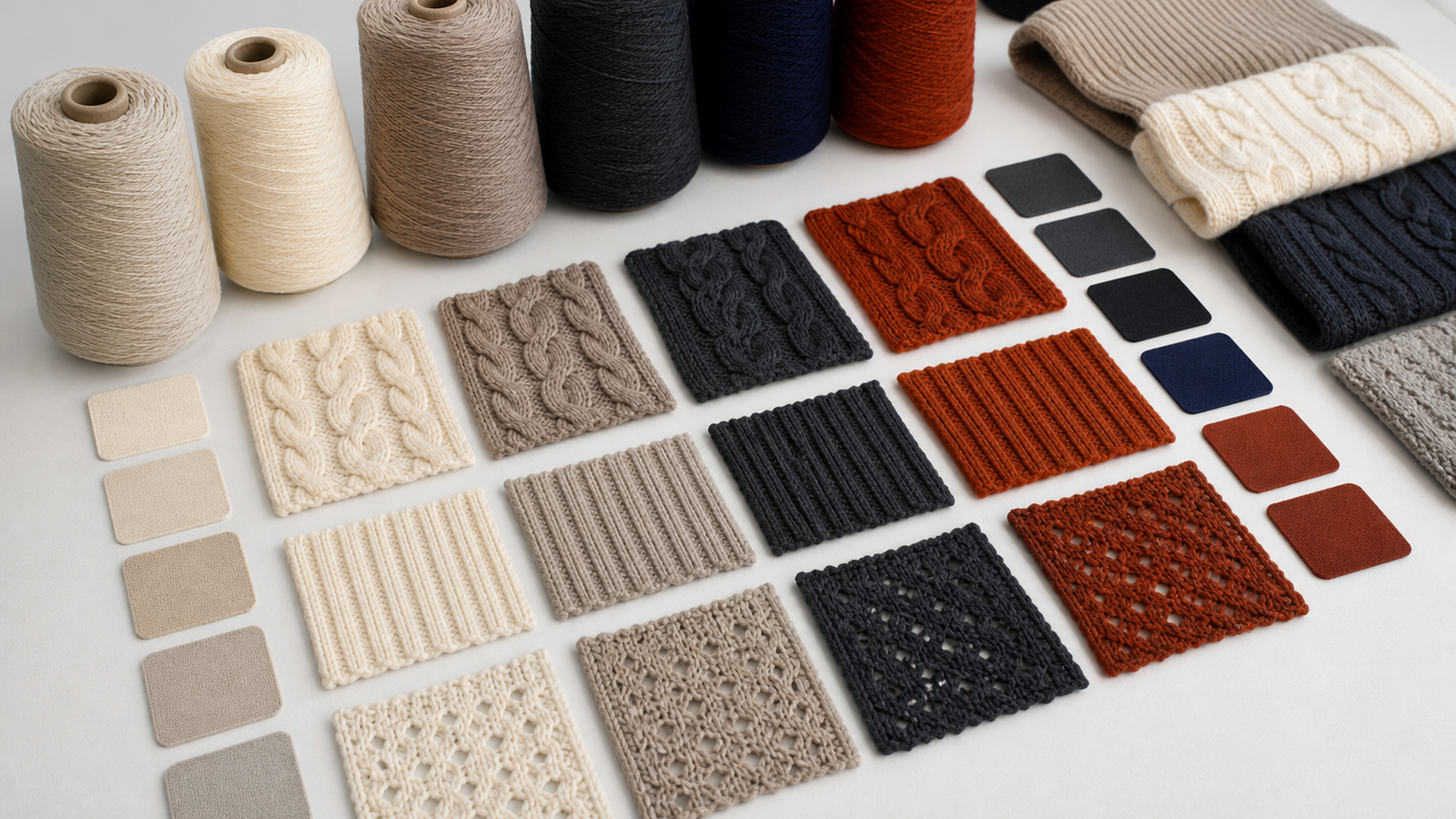
Development teams should align on the target hand feel, warmth, drape, stitch definition, pilling expectations, and care direction before knitting begins. It is also useful to identify where the yarn will interact with a specific technique. Cable knit and rib knit need different levels of structure than lace or openwork. Jacquard and intarsia require color and tension decisions that can influence the final appearance.
For a B2B knitwear manufacturing partner, the goal is to turn the brief into a workable yarn and construction direction, while keeping alternatives visible when the first choice is unavailable or does not deliver the desired result. This gives the brand a more stable basis for evaluating the first sample.
2. Use knitting programming to protect the design intent
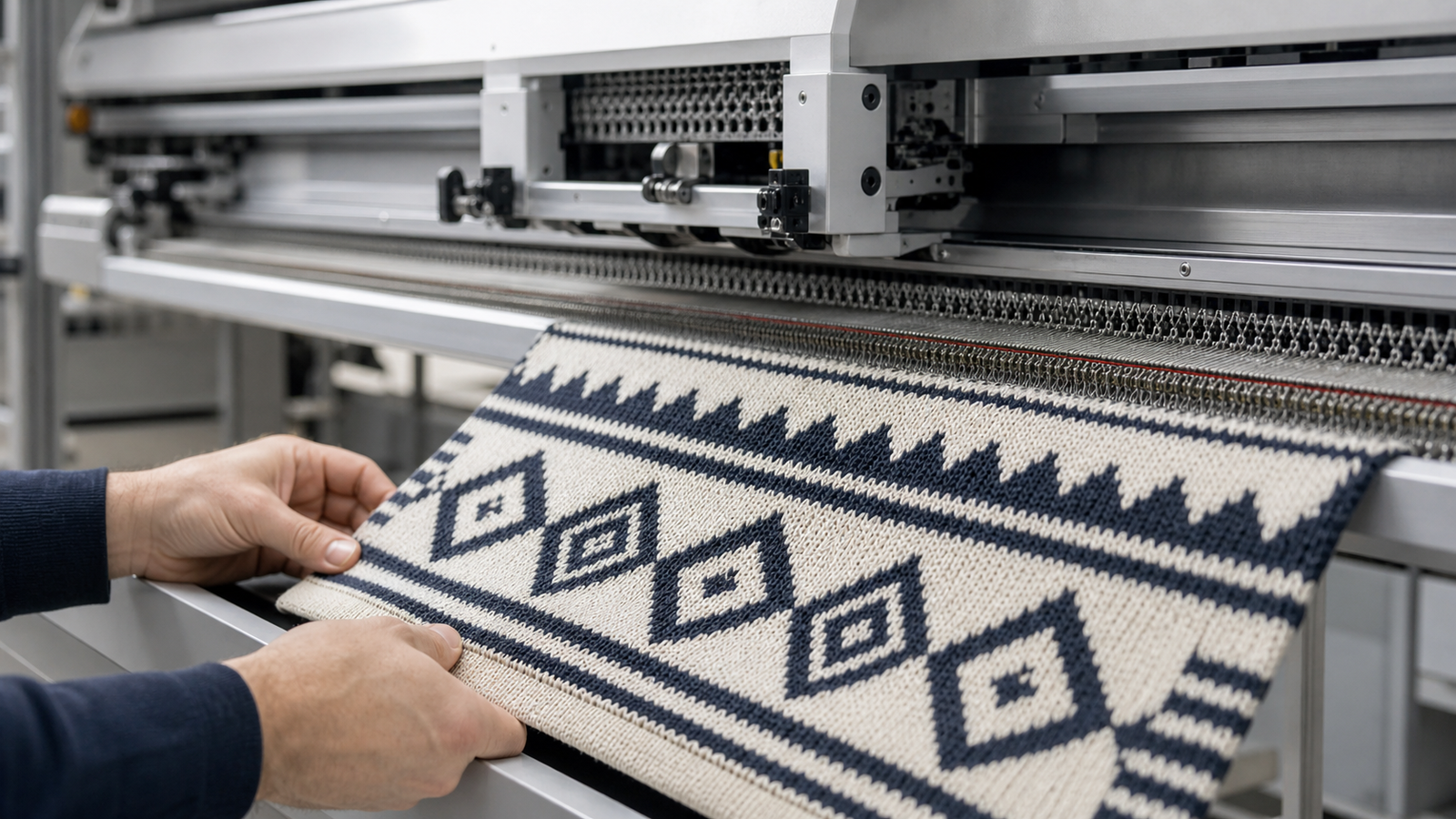
A knitwear design can change significantly when it moves from artwork or a reference garment into a machine program. Stitch density, motif scale, panel dimensions, shaping, and transitions between structures all need to be interpreted together. The programming stage is where technical decisions protect the original design intent.
This is especially important for fully fashioned knitting, engineered jacquard, intarsia, cable structures, and garments that combine multiple stitch techniques. Small changes in tension or stitch count can affect the balance between front and back panels, sleeve length, neckline behavior, and the way a motif sits on the body.
Brands can reduce revision cycles by supplying clear reference points: measurements, construction preferences, artwork or sample references, key visual priorities, and the areas where interpretation is flexible. A disciplined design-to-sample workflow helps the manufacturer identify what should be solved through programming, what should be solved through pattern changes, and what may need finishing or hand-finished detail.
3. Make fit adjustment a structured review, not a final correction
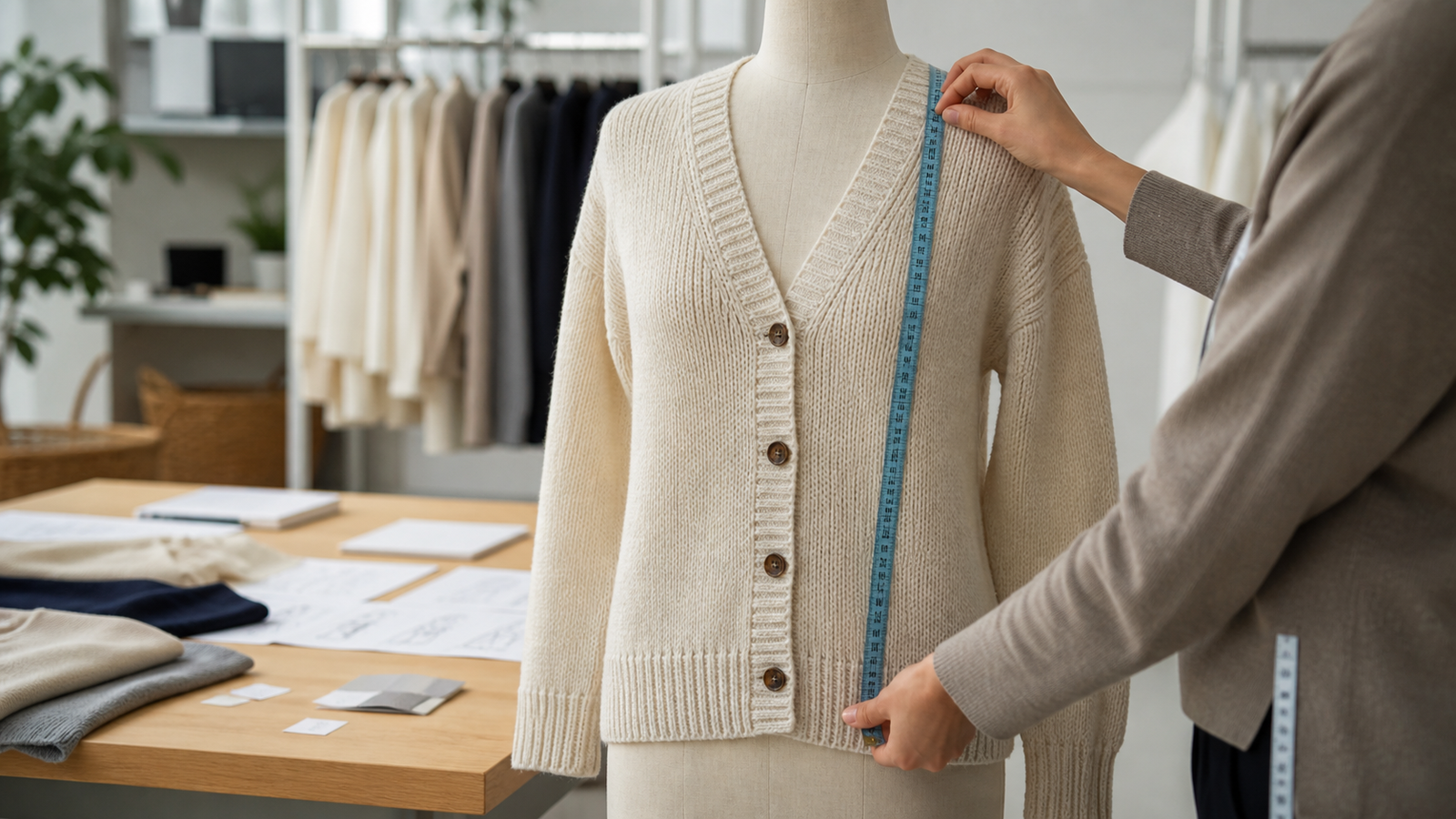
Fit should be reviewed as soon as the first workable sample is available. Waiting until the end of development can make it harder to tell whether an issue comes from the pattern, the yarn, the stitch structure, or the finishing method. A structured review separates these variables and makes the next adjustment more precise.
Useful checkpoints include garment measurements, balance, shoulder and armhole shape, sleeve mobility, neckline recovery, hem behavior, and the relationship between stitch tension and body dimensions. For multi-size requirements, the team should also confirm how the construction scales between sizes rather than assuming that one approved size will grade cleanly.
Sample-based customization is most effective when comments are specific and prioritized. For example, a brand may identify the body length as critical, the sleeve volume as adjustable, and the surface texture as non-negotiable. This gives the development team a practical order for fit adjustment and helps avoid changes that solve one area while creating a new problem elsewhere.
4. Link approval to repeatable quality checks
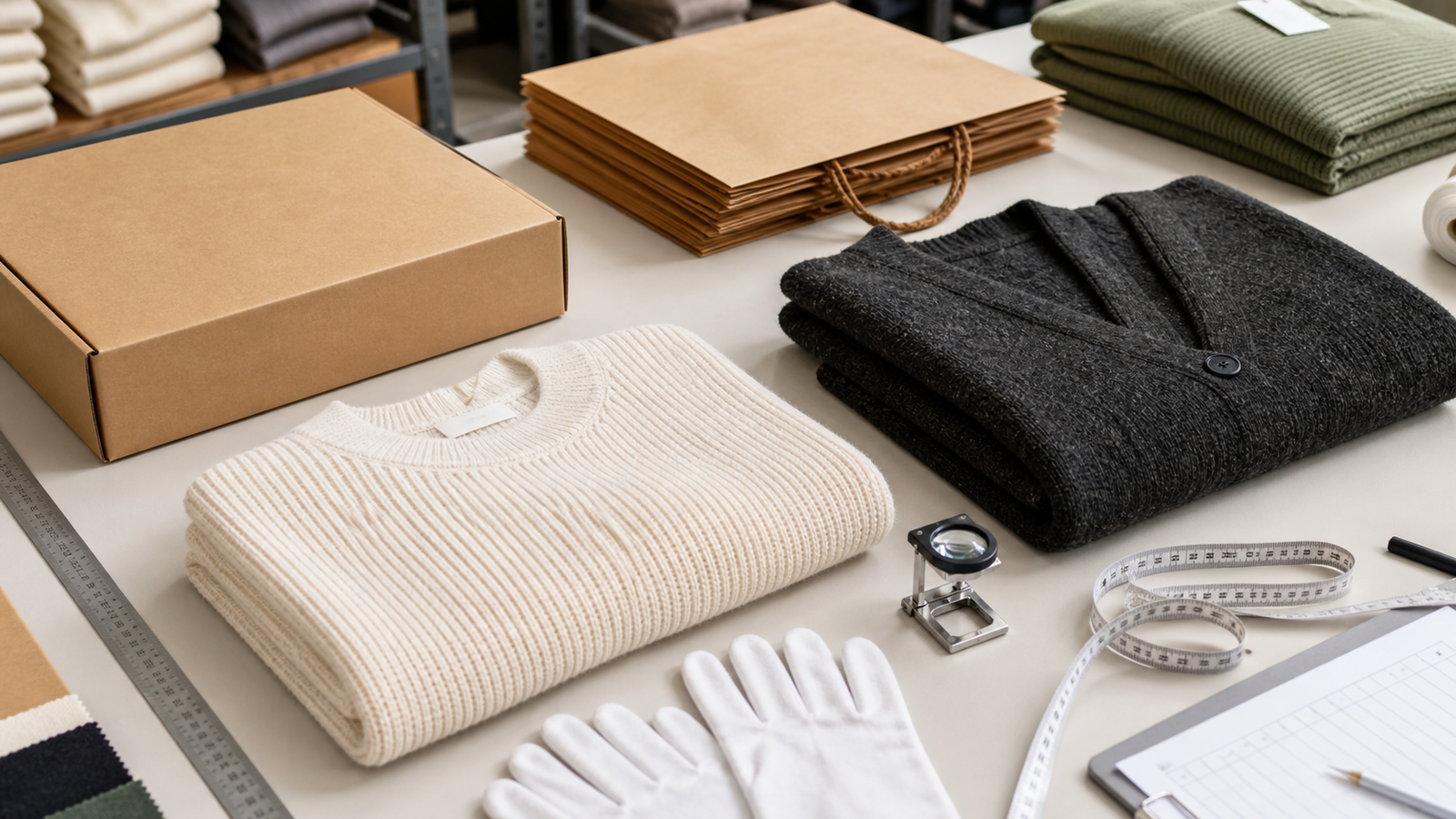
An approved sample is a reference point for bulk production, but it is not a substitute for ongoing inspection. A reliable knitwear workflow checks quality at multiple stages: raw materials, knitted panels and assembly, finished garment appearance, and packaging or shipment.
At the material stage, teams can confirm yarn identity, color direction, and visible defects. During knitting and assembly, they can review panel dimensions, stitch consistency, joining, shaping, and technique execution. Finished garment checks can cover appearance, measurements, finishing, and presentation. Packaging and shipment checks help protect the approved product as it moves to the buyer.
This stage-based approach gives brands a clearer record of what was checked and when. It also supports practical conversations when a correction is needed. For buyers comparing knitwear OEM or ODM partners, the important question is not only whether a supplier can make a compelling sample, but whether the development and quality process can carry the same intent into production.
Choosing a knitwear development partner
The right partner should be able to connect design interpretation, yarn selection, knitting programming, sample development, fit adjustment, bulk production, finishing, quality inspection, and packaging. Wait To Butterfly (WTBF) supports clothing brands, retailers, and buying teams with knitwear OEM, ODM, design-to-sample development, sample-based customization, and pattern/sample services.
Its capabilities cover sweaters, pullovers, cardigans, knitted vests, knitted dresses, skirts, coordinated sets, scarves, and hats for menswear, womenswear, childrenswear, babywear, and multi-size requirements. The production setup includes a 10,000-square-meter production area, 100+ employees, 500+ computerized flat knitting machines, and 100+ linking machines. Project timing and MOQ are project-dependent and should be confirmed for each brief.
FAQ
What is the first step in knitwear sample development?
Start by aligning the product brief with yarn direction, target hand feel, construction, measurements, and the techniques that are central to the design. This reduces ambiguity before programming and knitting begin.
How can a brand reduce knitwear sample revisions?
Provide prioritized comments, clear measurements, reference images or garments, and a distinction between non-negotiable design details and flexible areas. Early yarn and fit decisions also reduce avoidable revisions.
Does fully fashioned knitting help with fit?
Fully fashioned knitting can support shaped panels and precise construction, but the result still depends on yarn behavior, programming, measurements, and fit review. Suitability is project-dependent.
What quality checks should a knitwear buyer ask about?
Ask how the supplier checks raw materials, knitted panels and assembly, finished garment appearance, and packaging or shipment. The exact inspection criteria should be confirmed against the product brief.
Ready to reduce sampling risk?
Have a knitwear concept, reference garment, or sample that needs technical development? Contact Wait To Butterfly at waittobutterfly.com, WhatsApp +1 (669) 358-6009, or xyzzzlife@gmail.com to discuss the next step.