For clothing brands, retailers and buying teams, yarn selection is one of the earliest decisions that shapes a knitwear product. It influences hand feel, drape, stitch definition, color expression, wear expectations and the way a design moves from a sketch or reference sample into production. A clear yarn brief also helps a knitwear OEM or ODM partner identify the right development path before sampling begins.
1. Start with the product purpose and wearing experience
Begin by defining where and how the garment will be worn. A lightweight pullover for transitional weather may require a different yarn direction from a structured cardigan, a soft babywear style or a winter accessory. Consider the intended silhouette, target size range, layering needs and the balance between softness, shape retention and visual texture.
At the development stage, brands should describe the desired result in practical terms: smooth or textured surface, dry or soft hand, fluid or stable drape, matte or clean appearance, and a specific level of warmth. Reference garments, swatches and color standards can make this brief easier to interpret. When the exact fiber composition or performance requirement is not yet confirmed, it should remain project-dependent or to be confirmed rather than being assumed.
2. Match yarn behavior to the stitch structure
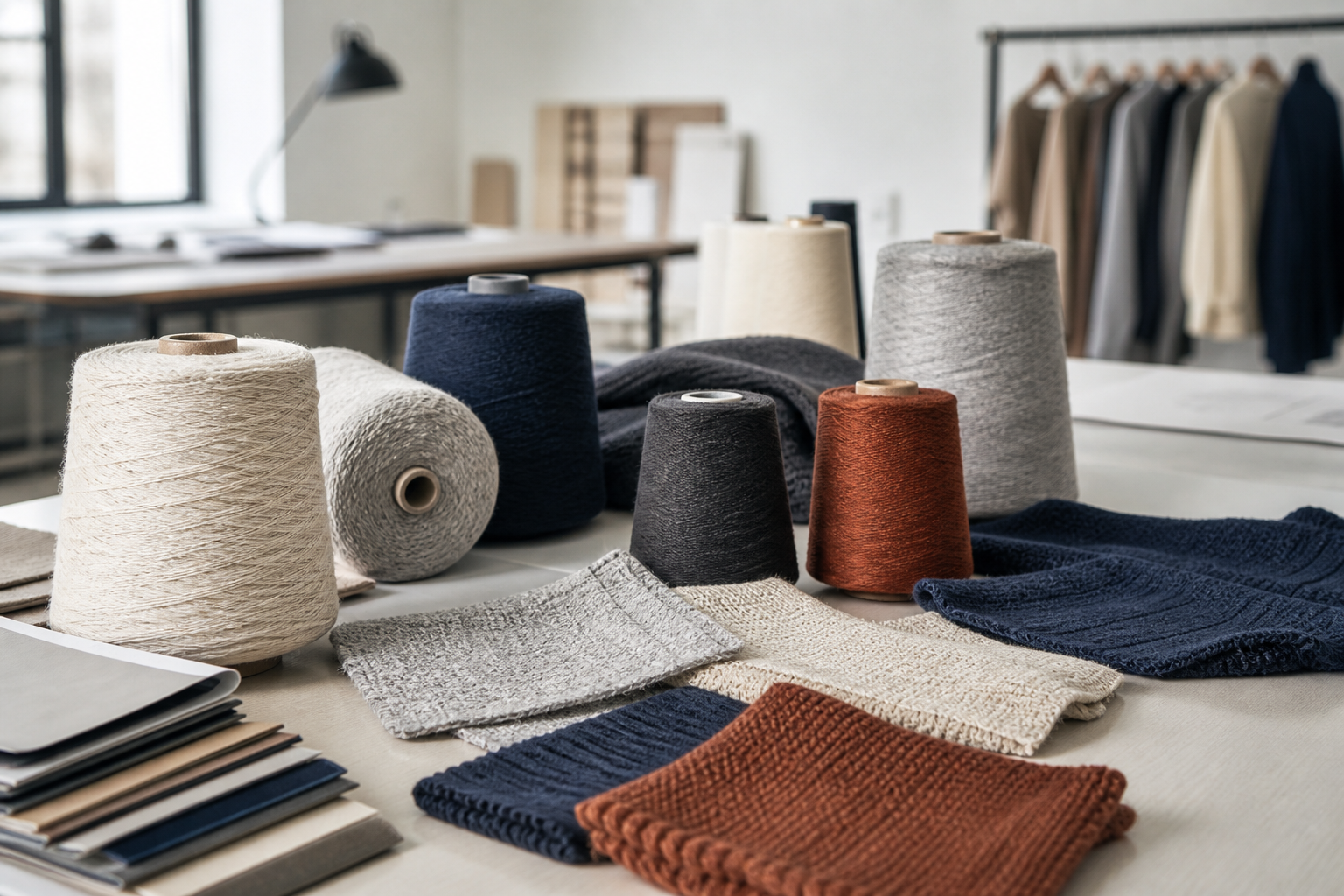
Yarn should be evaluated together with the intended knitting structure. Jacquard, intarsia, cable knit, rib knit, lace or openwork and fully fashioned knitting can each reveal different characteristics in the same yarn. Twist, thickness, elasticity, hairiness and color contrast affect stitch clarity, motif definition and the stability of knitted panels.
During sample development, a knitting partner can assess how the selected yarn behaves in programming, knitting and assembly. This is especially useful when a design includes colorwork, engineered shaping, embroidery, appliqué, sequins or hand-finished details. The goal is not simply to select a visually attractive yarn, but to confirm that the yarn and construction support the product concept.
3. Use samples to check fit, color and surface changes
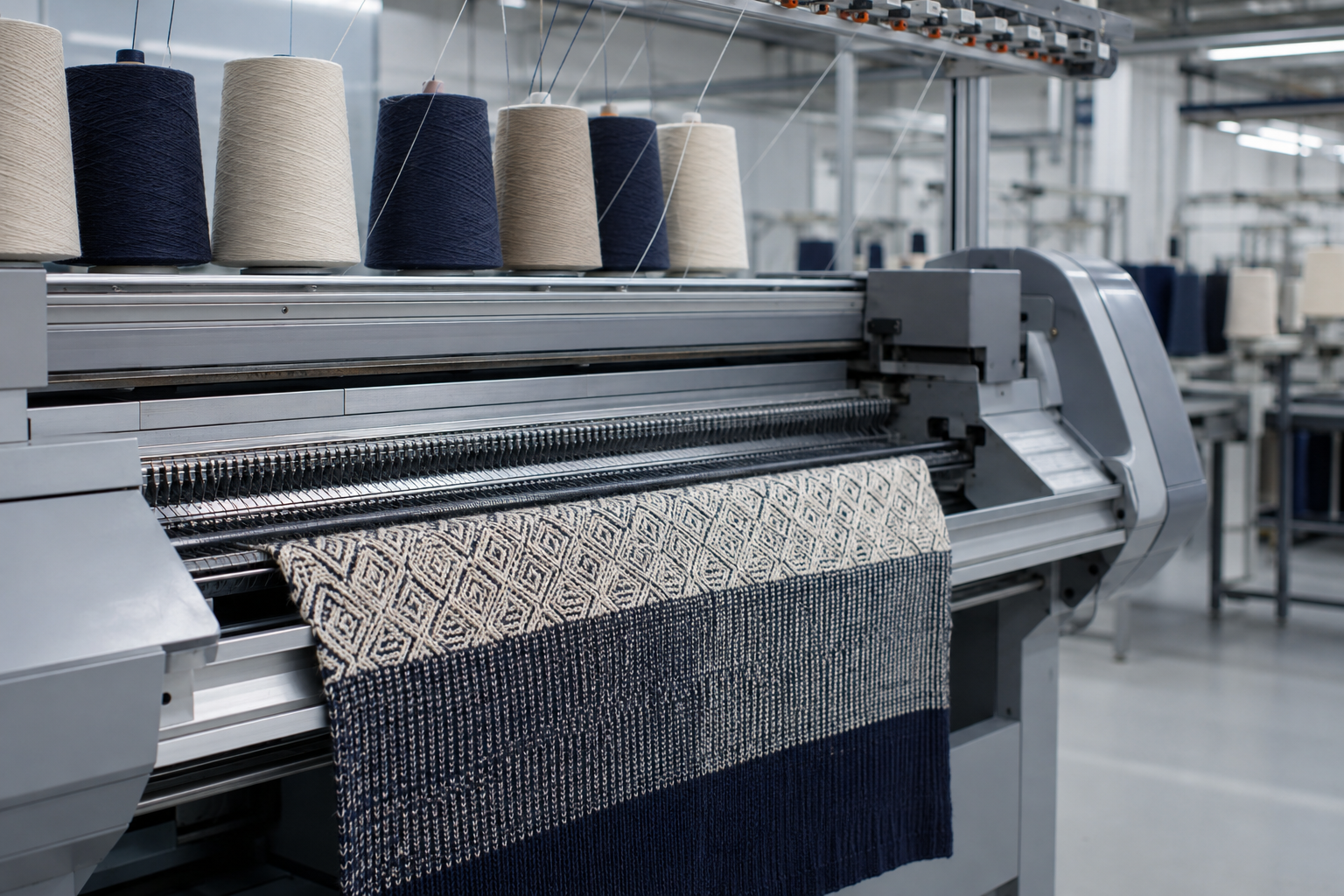
A yarn choice should be reviewed on the actual sample, not only as a loose cone or swatch. Compare the sample with the intended measurements and silhouette, then check recovery, panel dimensions, seam behavior, neckline appearance and the way the surface changes after finishing. For multi-size requirements, review whether the stitch scale and visual balance remain appropriate across sizes.
Brands should also compare colors under consistent lighting and record any adjustments needed to yarn, gauge, stitch density or pattern. If a sample is based on an existing garment, a knitwear development team can use sample-based customization and fit adjustment to translate the reference into a repeatable construction. Final specifications remain subject to project review and approval.
4. Confirm quality checkpoints before bulk production
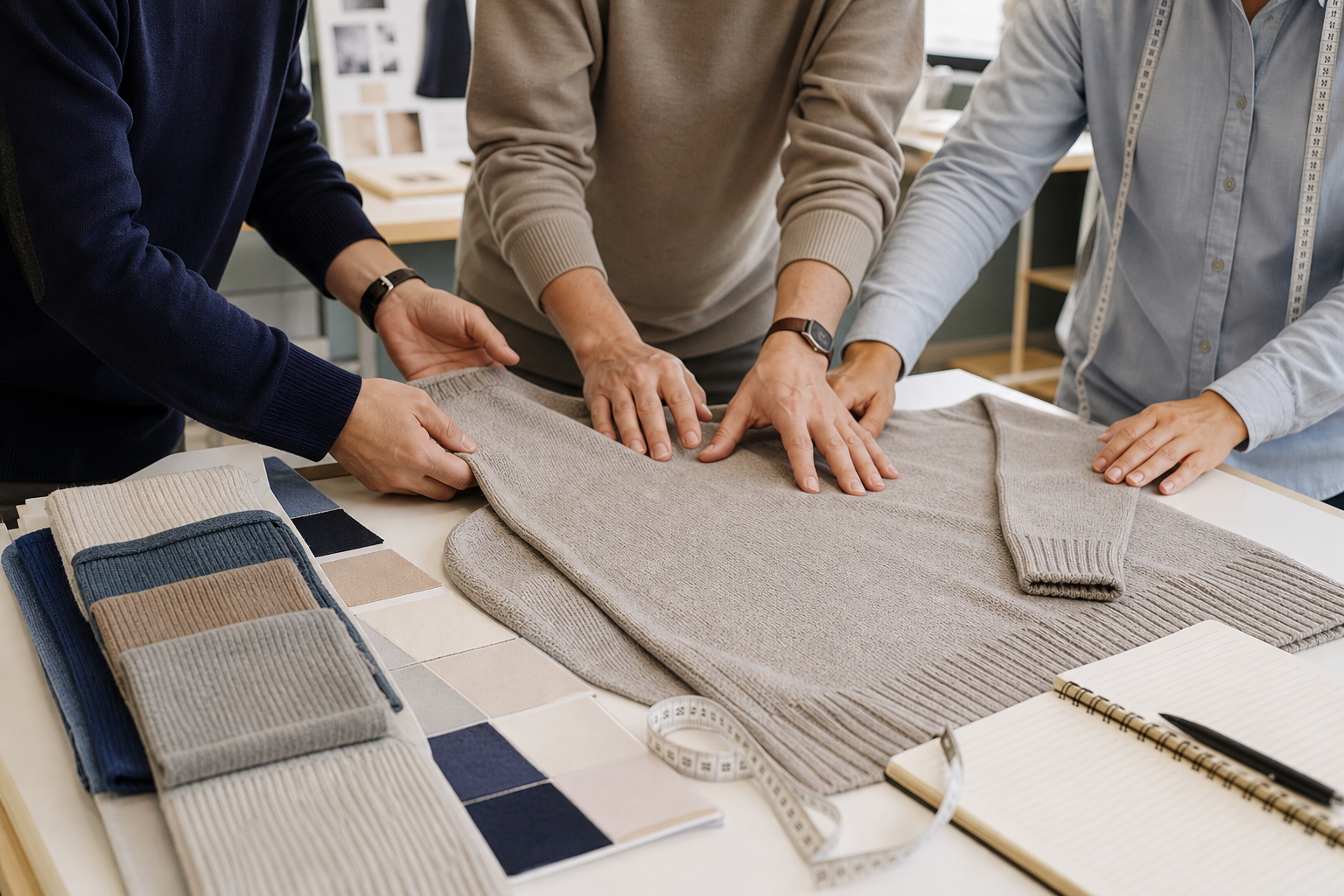
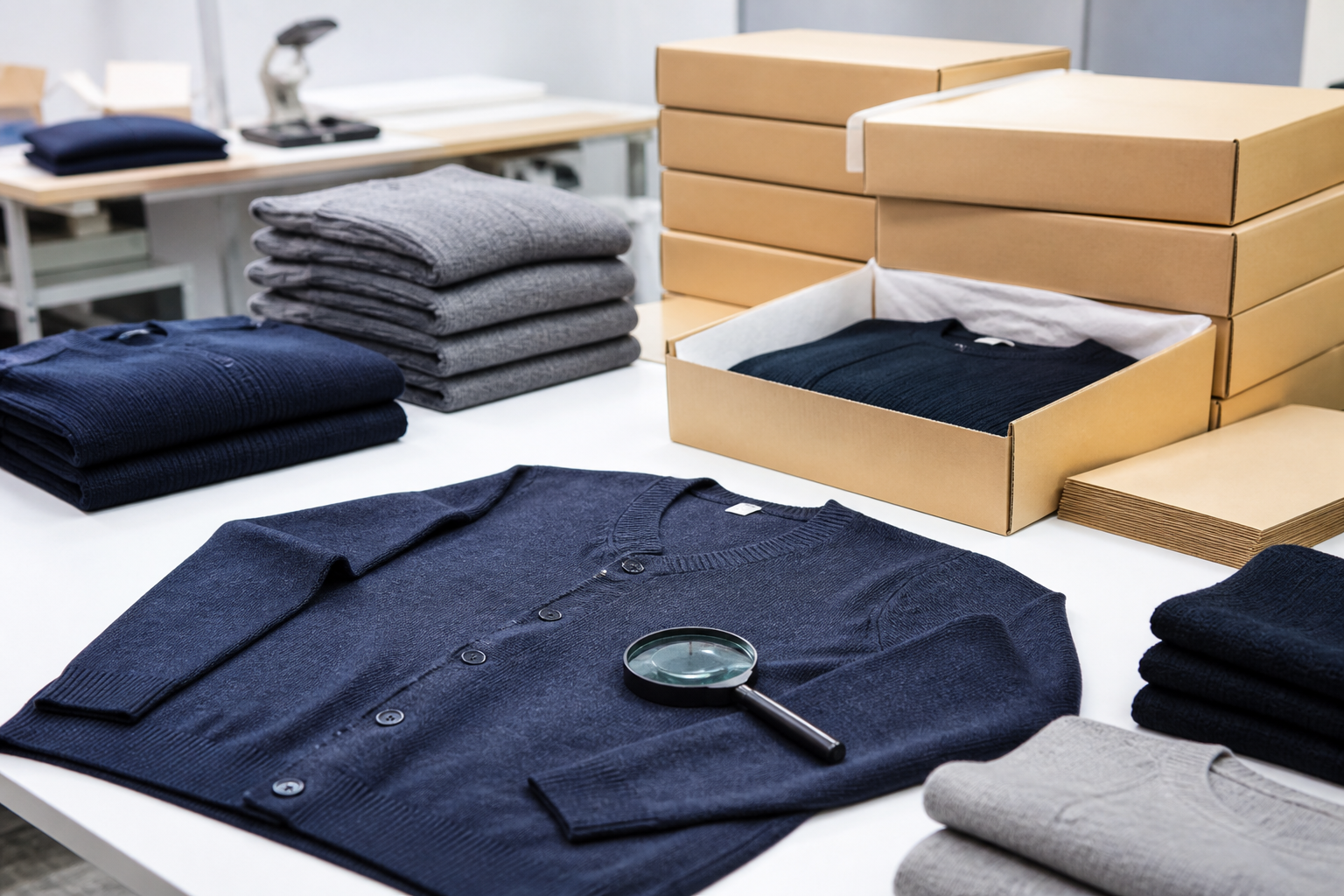
Before bulk production, connect yarn selection to a documented quality process. Checks can cover raw materials, knitted panels and assembly, finished garment appearance, and packaging or shipment readiness. Review the approved sample, yarn details, color references, measurements and finishing expectations together so that the production team has one clear standard.
This approach helps identify risks early, including unexpected shrinkage, uneven tension, color variation, weak recovery, surface change or packing issues. A development and manufacturing partner can support the workflow from yarn selection and knitting programming through sample development, fit adjustment, bulk production, finishing, quality inspection and packaging. Any MOQ, lead time or performance claim should be confirmed for the specific project.
FAQ
What information should a brand provide when asking for yarn recommendations?
Share the garment type, intended season, target hand feel, silhouette, stitch structure, color direction, size range and any reference samples. The more specific the product brief, the easier it is to compare suitable yarn options during development.
Can the same yarn be used for different knitwear structures?
Sometimes, but the result can change significantly across jacquard, intarsia, cables, rib, lace or fully fashioned constructions. Sampling is the practical way to check stitch definition, dimensions, recovery and surface appearance for the intended design.
How early should yarn selection happen?
It should be considered near the beginning of design-to-sample development, before programming and sample production are finalized. Earlier review gives the team more time to adjust construction, color, gauge and fit.
Does WTBF support sample-based knitwear development?
WTBF supports knitwear OEM, ODM, design-to-sample development, sample-based customization and pattern/sample services for clothing brands, retailers and buying teams. Contact the team to discuss the specific product and development requirements.
CTA
Need help translating a knitwear concept, reference garment or yarn direction into a production-ready sample? Contact Wait To Butterfly at https://waittobutterfly.com/, WhatsApp +1 (669) 358-6009 or xyzzzlife@gmail.com to discuss your project.