For clothing brands and retail buying teams, knitwear fit is shaped long before bulk production begins. Yarn behavior, stitch structure, garment dimensions, linking, finishing and the intended fit all influence how a sweater or cardigan looks and feels on the body. A sample that appears close to the target can still create avoidable risk if the review process does not connect measurements with construction decisions.
The most reliable approach is to treat sample development as a controlled learning cycle. The buyer and manufacturing partner define the intended fit, translate it into measurable specifications, review the first sample against those specifications, and record each adjustment before the next version is made. This creates a clearer path from design interpretation to production readiness for sweaters, pullovers, knitted vests, dresses, skirts and coordinated sets.
1. Define the intended fit before discussing measurements
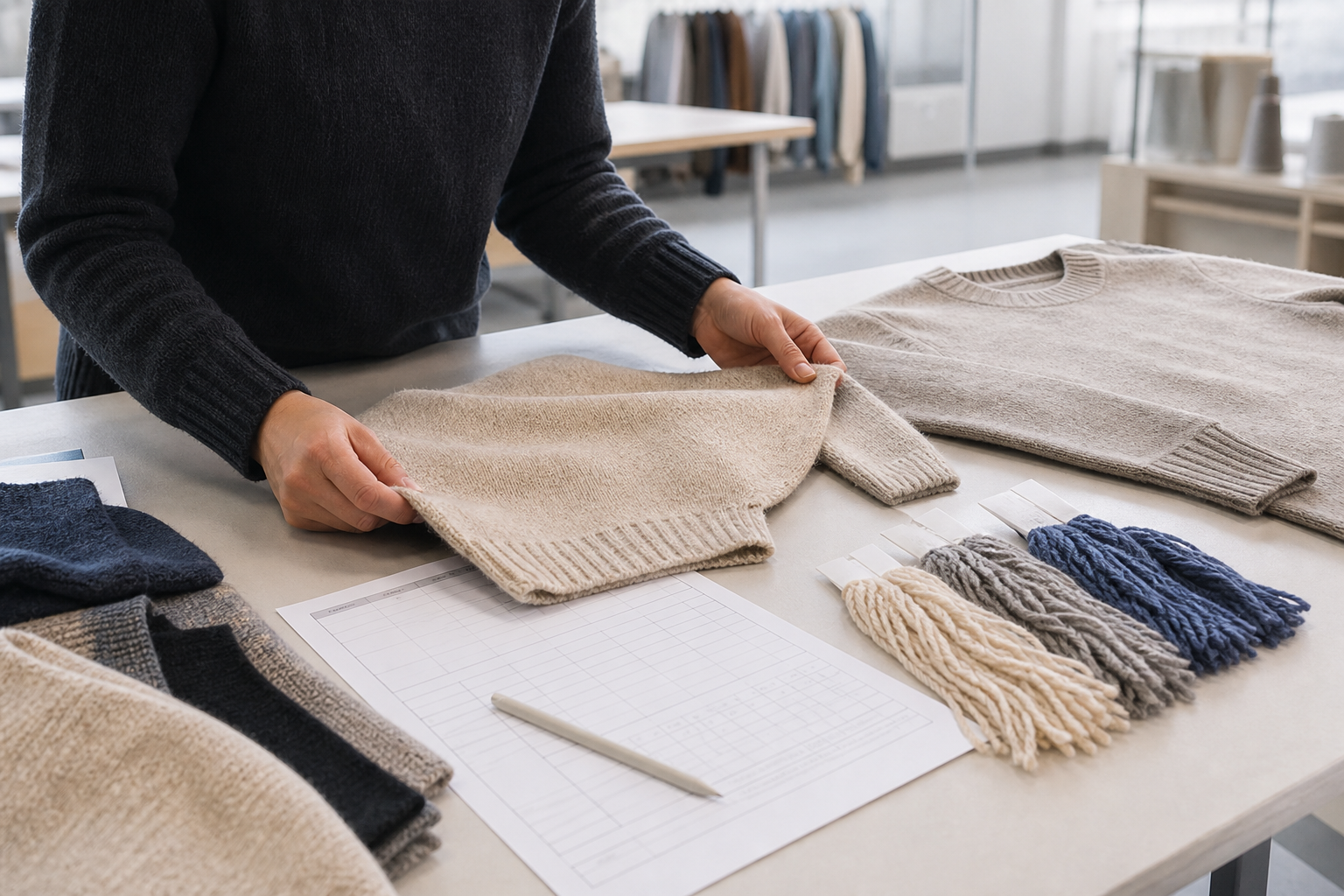
Words such as relaxed, fitted, oversized, cropped and straight are useful starting points, but they are not complete technical instructions. A relaxed cardigan for one brand may have a moderate body ease, while another brand may expect a dropped shoulder, fuller sleeve and longer back length. Buyers should therefore describe the visual intention and identify the garment measurements that control it.
Useful checkpoints include chest or bust width, body length, shoulder width, armhole depth, sleeve length, cuff opening, hem opening and neck dimensions. For multi-size requirements, the size range and grading expectations should also be discussed at the beginning. A measurement chart, reference garment or annotated sketch can help align the design team and the knitwear manufacturer before the first sample.
This step is especially important for sample-based customization. When a development request begins with a physical garment, the team should identify which dimensions are being preserved, which details are being adapted and which differences are intentional. Clear priorities make fit adjustment more efficient and reduce the chance that a visual change is mistaken for a measurement error.
2. Connect yarn and stitch structure to fit behavior
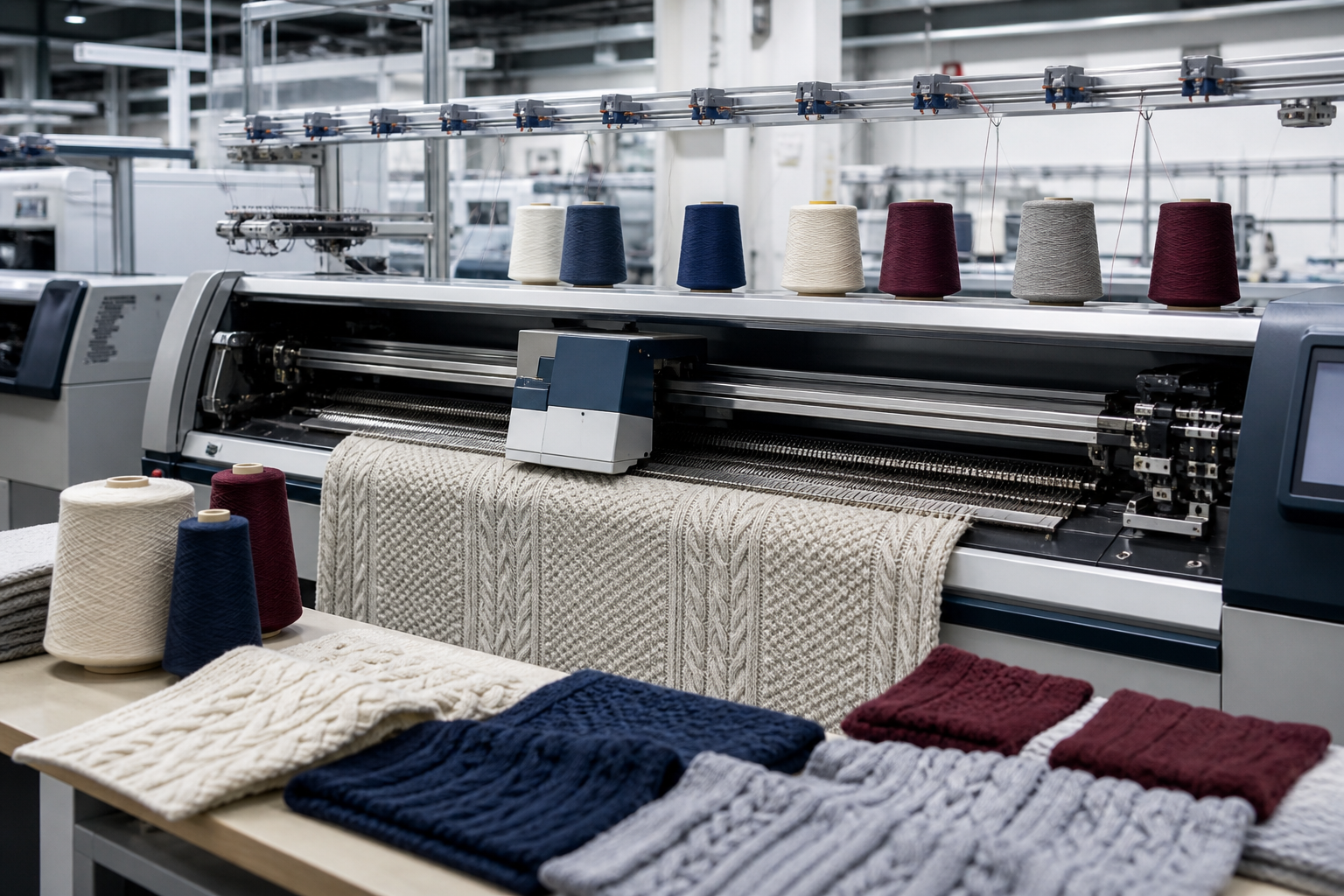
Knitted fabric is responsive. The same nominal measurement can behave differently depending on yarn composition, yarn count, stitch density, structure, finishing and garment weight. Rib knit can provide recovery at cuffs and hems, while lace or openwork may require careful handling because openness and drape affect the apparent dimensions. Cable knit, jacquard, intarsia and embroidery can also change local thickness and visual balance.
During knitwear sample development, buyers should ask how the selected yarn and construction are expected to influence stretch, recovery, drape, hand feel and dimensional stability. The purpose is not to demand a fixed answer before testing. It is to make the relationship visible so that a fit change can be evaluated alongside the material and knitting program.
A practical review records what changed between versions: yarn selection, stitch setting, panel dimensions, linking tension, wash or finishing treatment, or the measurement itself. This creates a useful development history and helps the team decide whether the next correction belongs in the pattern, the knitting programming, the yarn choice or the finishing process.
3. Review the sample on the right body and from multiple angles
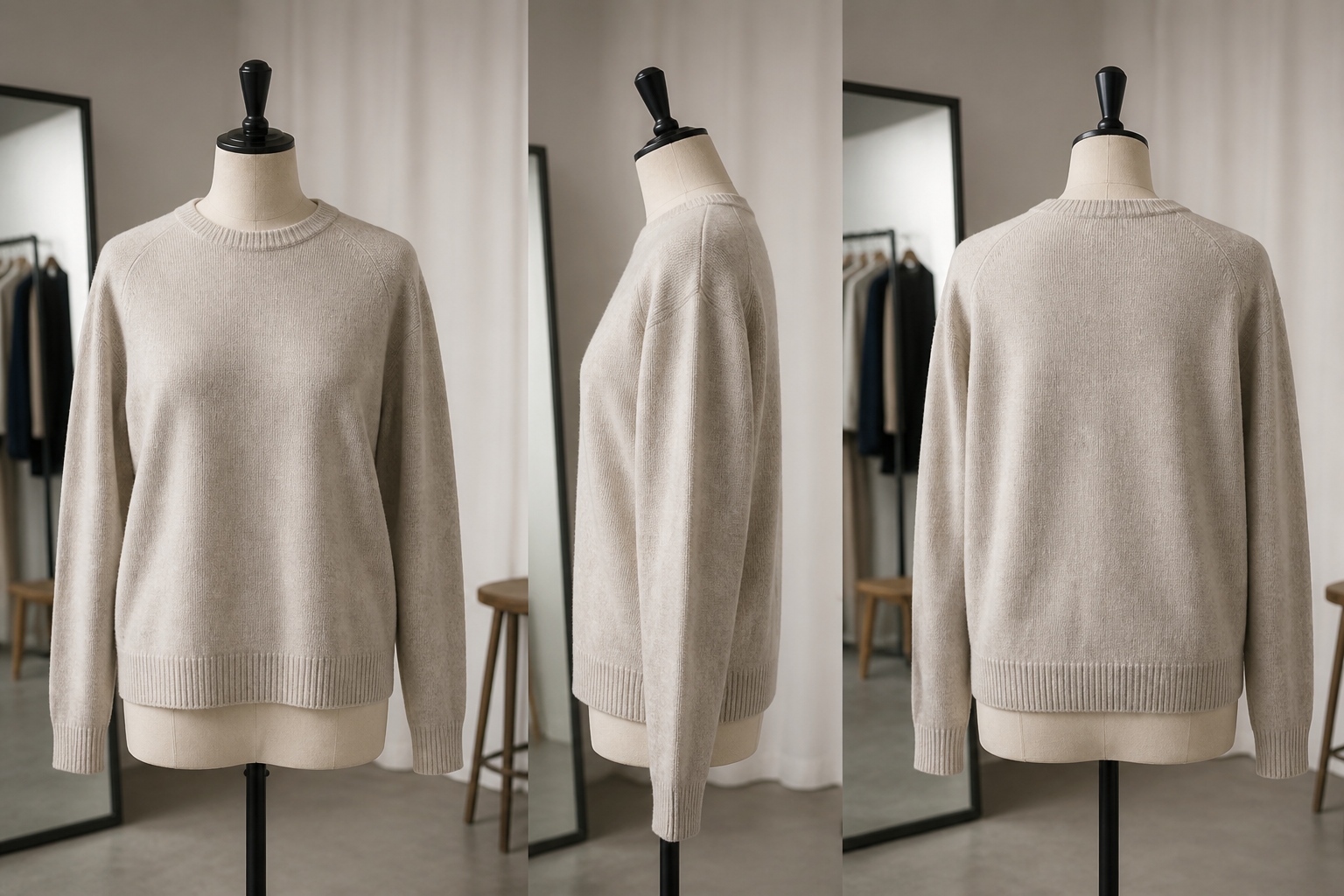
A fit review should examine the sample on a body that matches the intended size and silhouette as closely as possible. Buyers should check front, side and back views, then look at the garment while standing, moving the arms and sitting when relevant. The goal is to distinguish a true construction issue from a temporary effect caused by posture, styling or the sample being measured in an inconsistent way.
Important observations include shoulder placement, neckline balance, sleeve rotation, underarm comfort, diagonal drag lines, hem behavior and the relationship between body and sleeve volume. For dresses, skirts and coordinated sets, the review should also consider how the knitted pieces sit together and whether the proportions remain coherent across the outfit.
Photos, measurement records and concise comments make the adjustment cycle easier to follow. Instead of writing “make it better,” specify the location, direction and approximate priority: increase sleeve length, reduce hem flare, raise the armhole, widen the upper chest or improve neckline recovery. The final decision should still be confirmed by the buyer, but precise observations give the manufacturer a clearer technical starting point.
4. Turn fit comments into a controlled pre-production decision
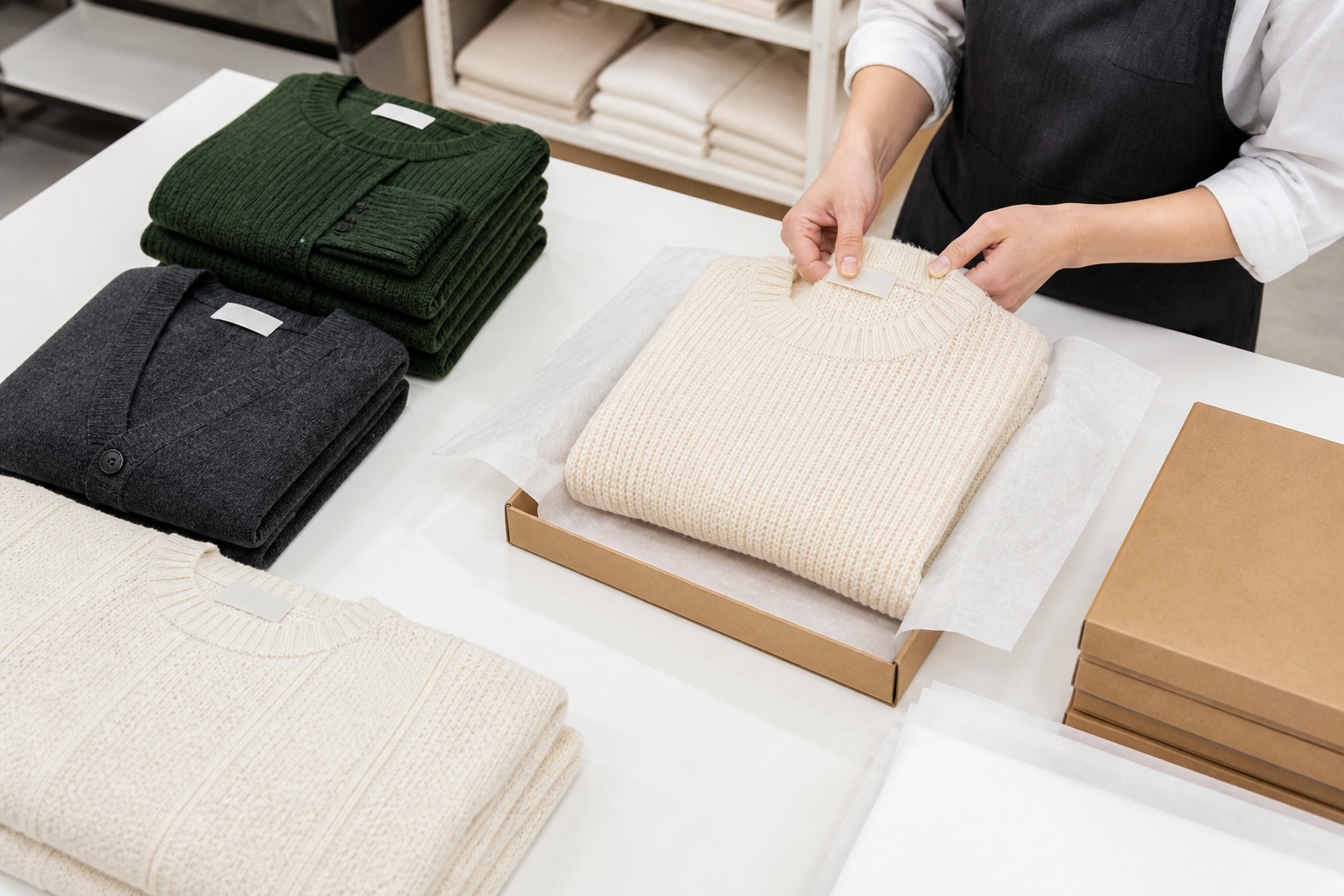
Not every difference needs another sample, and not every visual preference should be solved by changing measurements. At the end of each review, the team should separate must-fix issues from acceptable variation and record the approved direction. The final sample or approved specification should identify the measurements, construction details, finishing expectations and inspection points that will guide bulk production.
For a professional OEM or ODM workflow, fit approval connects with yarn selection, knitting programming, sample development, fit adjustment, bulk production, finishing, quality inspection and packaging. Quality checks can be planned around raw materials, knitted panels and assembly, finished garment appearance, and packaging or shipment preparation. This gives the buying team a practical handoff from development to production without relying on memory or scattered comments.
WTBF supports design interpretation, design-to-sample development, sample-based customization and pattern/sample services for clothing brands, retailers and buying teams. Its knitwear capabilities cover sweaters, pullovers, cardigans, knitted vests, knitted dresses, skirts, coordinated sets, scarves and hats, with options for menswear, womenswear, childrenswear, babywear and multi-size requirements. Project-specific MOQ and lead time should be confirmed for each development request.
FAQ
What information should a buyer send for knitwear sample development?
Send the design reference, target measurements, intended fit, size range, yarn or hand-feel preferences, construction details and any reference garment or annotated images. If an item is being customized from a sample, identify which dimensions and details must remain unchanged.
How many fit adjustments are needed before bulk production?
The number is project-dependent and should be confirmed during development. It depends on the design complexity, material behavior, starting information, size range and the difference between the reference and the target garment.
Can knitwear be developed from a physical sample?
Yes. Sample-based customization can be used as a starting point, provided the team confirms the intended changes, measurements, construction details and approval standards before proceeding.
What should be checked before approving a knitwear sample?
Check measurements, silhouette, comfort, stretch and recovery, stitch appearance, linking, finishing, embellishment placement where applicable, and the garment’s appearance from multiple angles. Project-specific quality requirements should be documented before bulk production.
Start with a clearer sample process
Need a clearer path from knitwear concept to approved sample? Contact Wait To Butterfly for knitwear OEM, ODM, design-to-sample development and sample-based customization. Visit waittobutterfly.com or contact WhatsApp +1 (669) 358-6009 and xyzzzlife@gmail.com to discuss your project.