
How Knitwear Buying Teams Can Review Stitch Density and Hand Feel Before Bulk Production
Stitch density and hand feel influence how a knitted garment fits, drapes and performs in wear. They also affect how a development sample represents the product a brand intends to place into bulk production. A sweater may use the right color and silhouette yet still feel too firm, too loose, too heavy or too transparent if its yarn, stitch structure and machine settings are not reviewed together.
For clothing brands, retailers and buying teams, the most useful review happens before bulk approval. A clear development brief, a representative sample and a structured quality check help turn subjective comments such as “softer” or “more compact” into practical development decisions.
1. Start with a hand-feel and performance brief
A useful brief describes the experience the garment should create: soft and fluid, dry and crisp, warm and lofty, compact and structured, or light enough for layering. Note the garment type, wearer group, size range and use case because different programs need different comfort and recovery priorities.
Include reference samples, yarn information when available, target stitch structures and areas that need special attention. Rib knit at cuffs, cable knit on the body, lace/openwork panels and fully fashioned shaping can all change perceived density. If the original yarn or construction is not confirmed, label it project-dependent and ask the manufacturing partner to propose options for sampling.
Wait To Butterfly can review design interpretation, yarn selection, knitting programming and sample development before fit adjustment and bulk production.
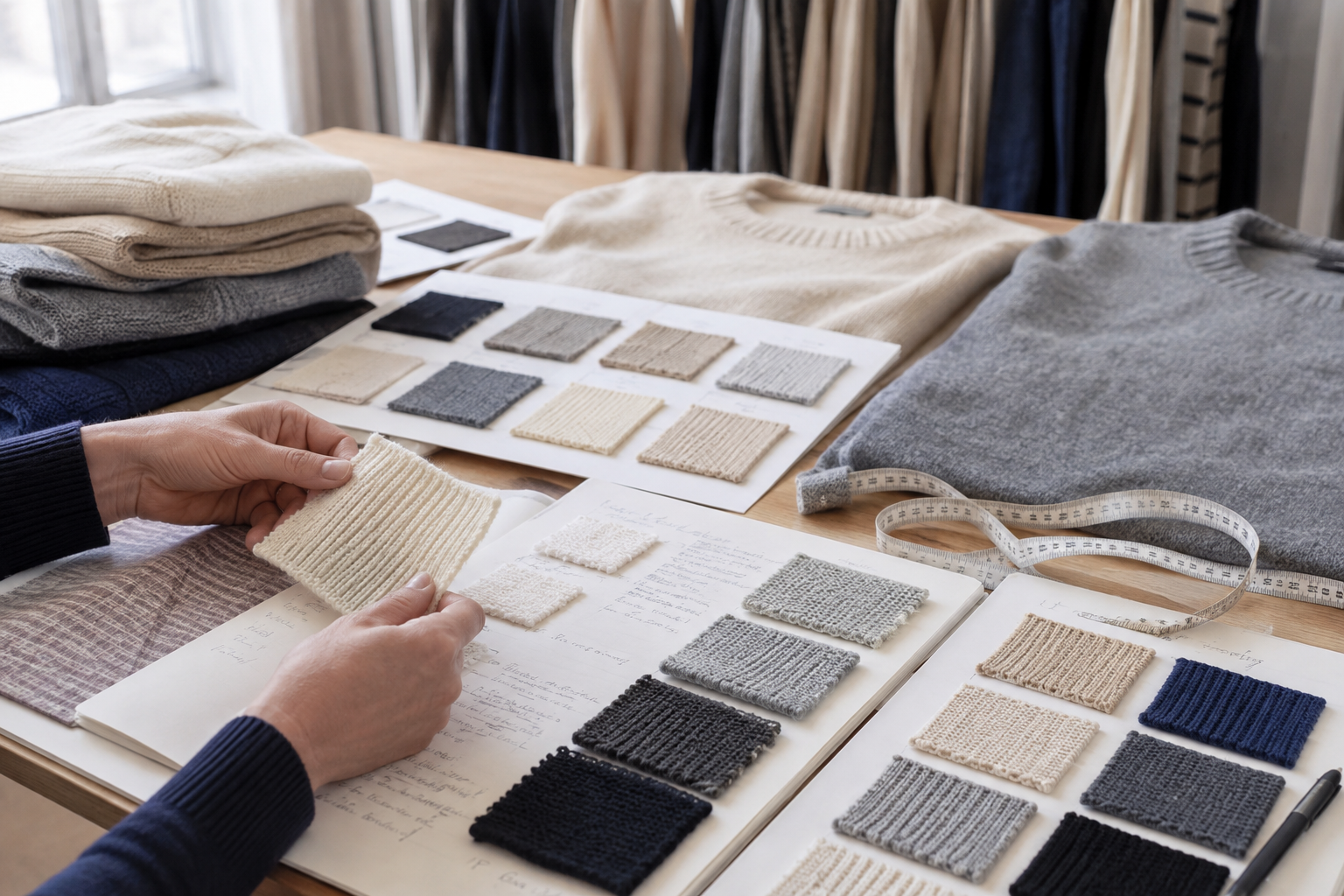
2. Review stitch density with yarn and machine settings
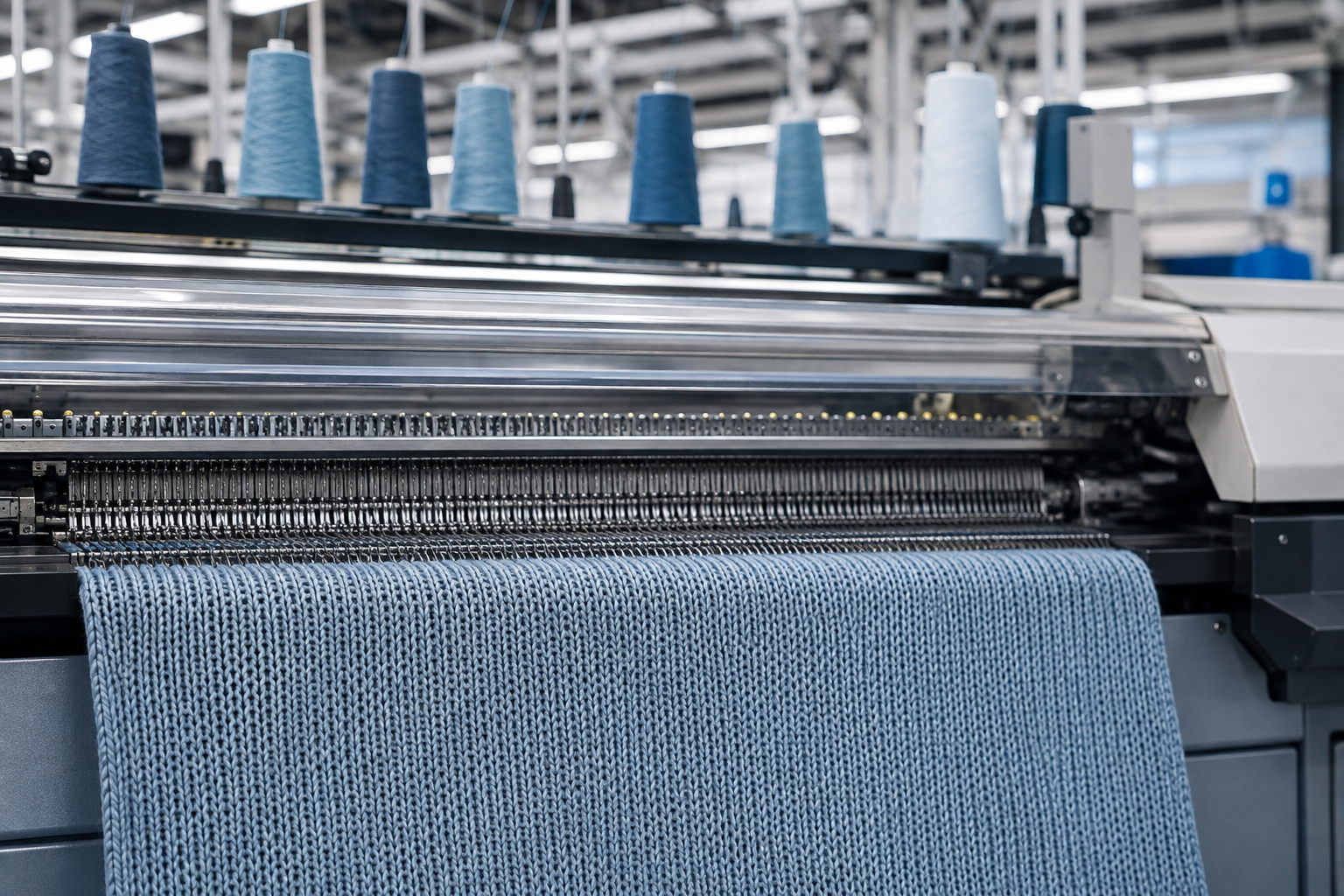
Stitch density should be reviewed as part of the whole knitted system. Yarn thickness, fiber composition, stitch type, loop length and machine programming can work together to create a tighter or more open fabric. The same silhouette may feel very different when produced with a different yarn or stitch structure.
Ask for swatches or sample areas that make the comparison visible: a plain knit body, a ribbed edge, a textured panel or an openwork section. Look at coverage, surface regularity, elasticity and recovery after gentle stretching. For jacquard or intarsia, review how added structure affects weight and flexibility. Computerized flat knitting supports controlled sampling, while the exact setup remains project-dependent.
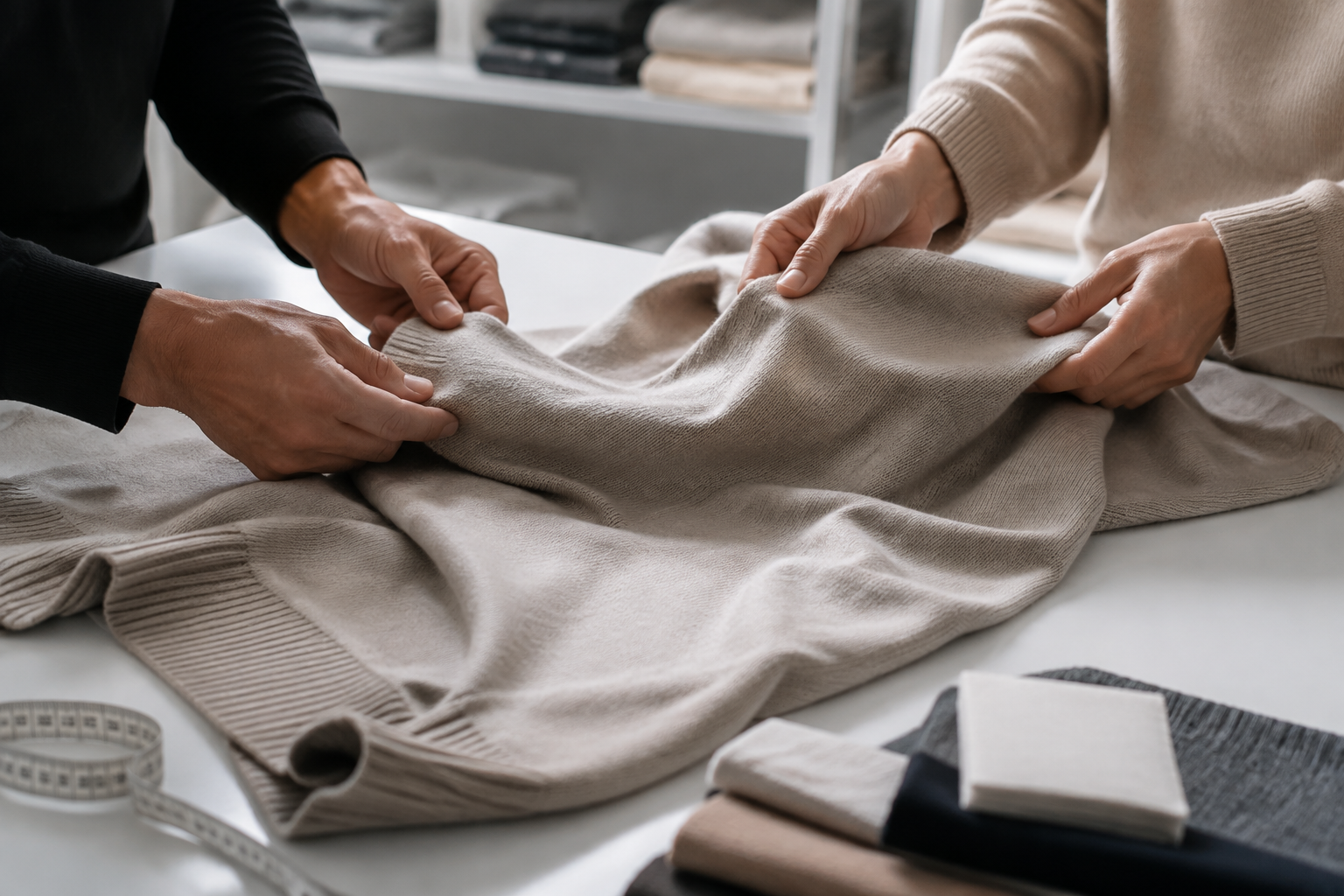
3. Compare hand feel, fit and recovery on a representative sample
Hand feel should not be approved from a small swatch alone. Review a representative garment or key sample panels so the team can assess density across the body, sleeves, neckline and finishing details. Check comfort, drape, surface character and whether seams or linked areas create noticeable stiffness.
Fit and hand feel are connected. A loose fabric can lengthen under its own weight, while a compact fabric may resist movement or make a garment appear shorter. Check key measurements, then assess recovery at cuffs, hems and other stretched areas. For childrenswear, babywear and multi-size requirements, consider whether construction remains comfortable and proportionate across the intended size set.
Keep a short approval record with dated comments, reference photos and a decision for each issue: approve, revise or confirm at the next sample.
4. Carry the approved feel into finishing and inspection
Once the sample direction is approved, the production handoff should identify the intended stitch density, fabric behavior and finishing expectations. Any approved change in yarn, stitch structure or finishing should be documented before the bulk run.
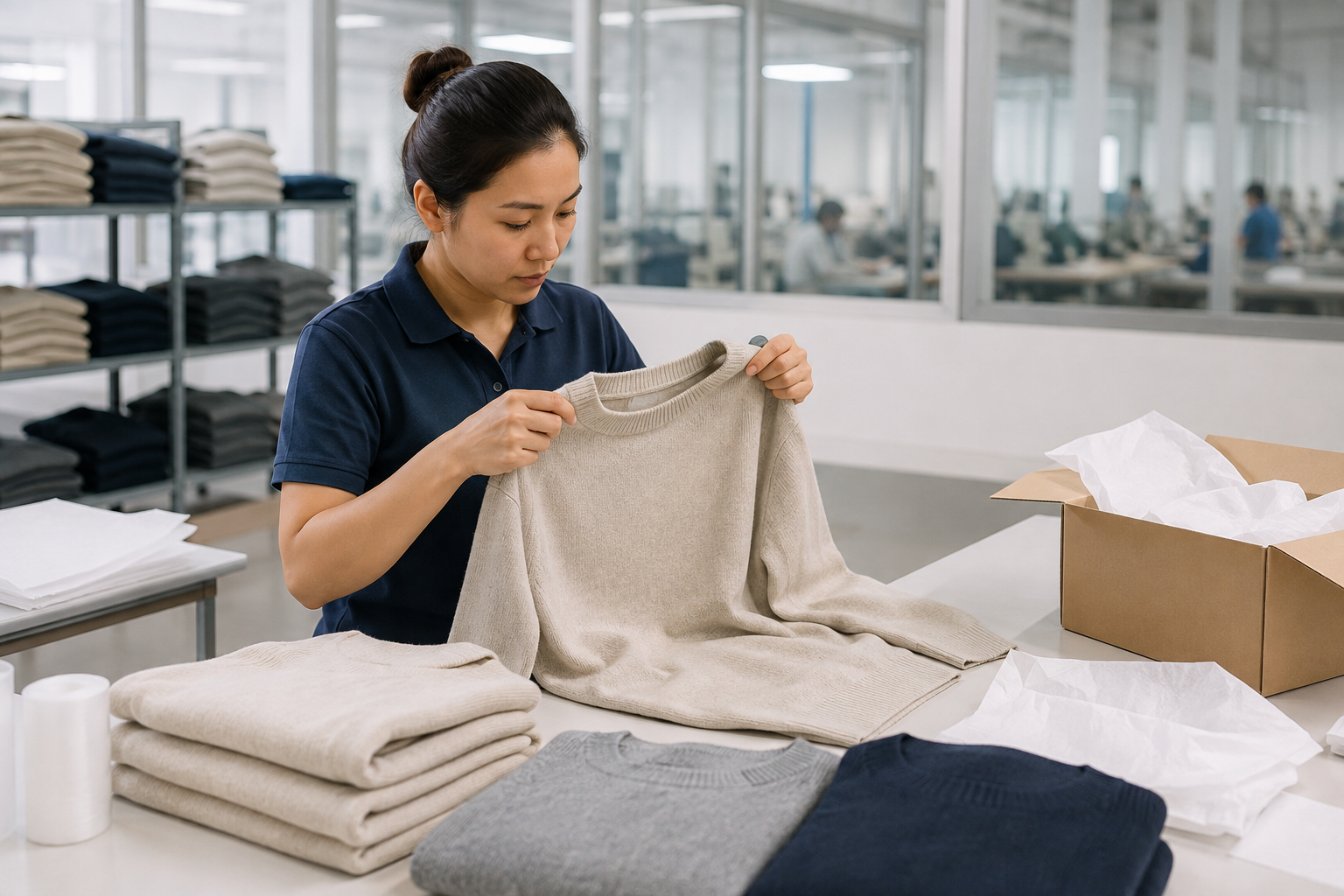
Quality review should cover raw materials, knitted panels and assembly, finished garment appearance, and packaging or shipment readiness. Inspect panel consistency, visible holes or tight spots, distortion, seam comfort and overall shape. If a result is outside the approved direction, isolate the issue and confirm corrective action before shipment.
Wait To Butterfly supports knitwear OEM, ODM, design-to-sample development, sample-based customization and pattern/sample services. Its stated resources include a 10,000-square-meter production area, 100+ employees, 500+ computerized flat knitting machines and 100+ linking machines. MOQ and lead time are project-dependent and should be confirmed for each program.
FAQ
What is knitwear stitch density?
It describes how closely loops are formed in knitted fabric. It affects coverage, weight, stretch, drape and perceived firmness, and should be reviewed with yarn and stitch structure.
How can a brand evaluate knitwear hand feel?
Use a clear feel brief, compare physical swatches and a representative garment, and record softness, firmness, drape, recovery, comfort and surface appearance with dated approval comments.
Can a manufacturer adjust density after the first sample?
The development team may review yarn, stitch structure and knitting programming to propose a revision. The feasible adjustment depends on the design, yarn and project requirements.
What should be checked before bulk approval?
Check the approved sample against the brief, including yarn, stitch density, hand feel, fit, recovery, appearance and construction, then continue checks through packaging and shipment.
Plan the next knitwear development review
Ready to turn a reference garment or concept into a clearer knitwear sample? Contact Wait To Butterfly at waittobutterfly.com, WhatsApp +1 (669) 358-6009, or xyzzzlife@gmail.com to discuss your requirements.