A strong knitwear sample is more than a visual reference. It is the first working version of a product that must be translated into yarn, stitch structure, measurements, finishing, and repeatable production decisions. When a brand moves from sample approval to a production order, small gaps in communication can change the handfeel, proportions, surface character, or overall appearance of the garment.
For clothing brands, retailers, and buying teams, the solution is a structured sample-to-bulk handoff. The handoff should make the approved product understandable to the development and production teams while keeping unresolved decisions visible. A knitwear OEM or ODM partner can support this process through design interpretation, yarn selection, knitting programming, sample development, fit adjustment, bulk production, finishing, quality inspection, and packaging.
1. Turn the approved sample into a production-ready brief
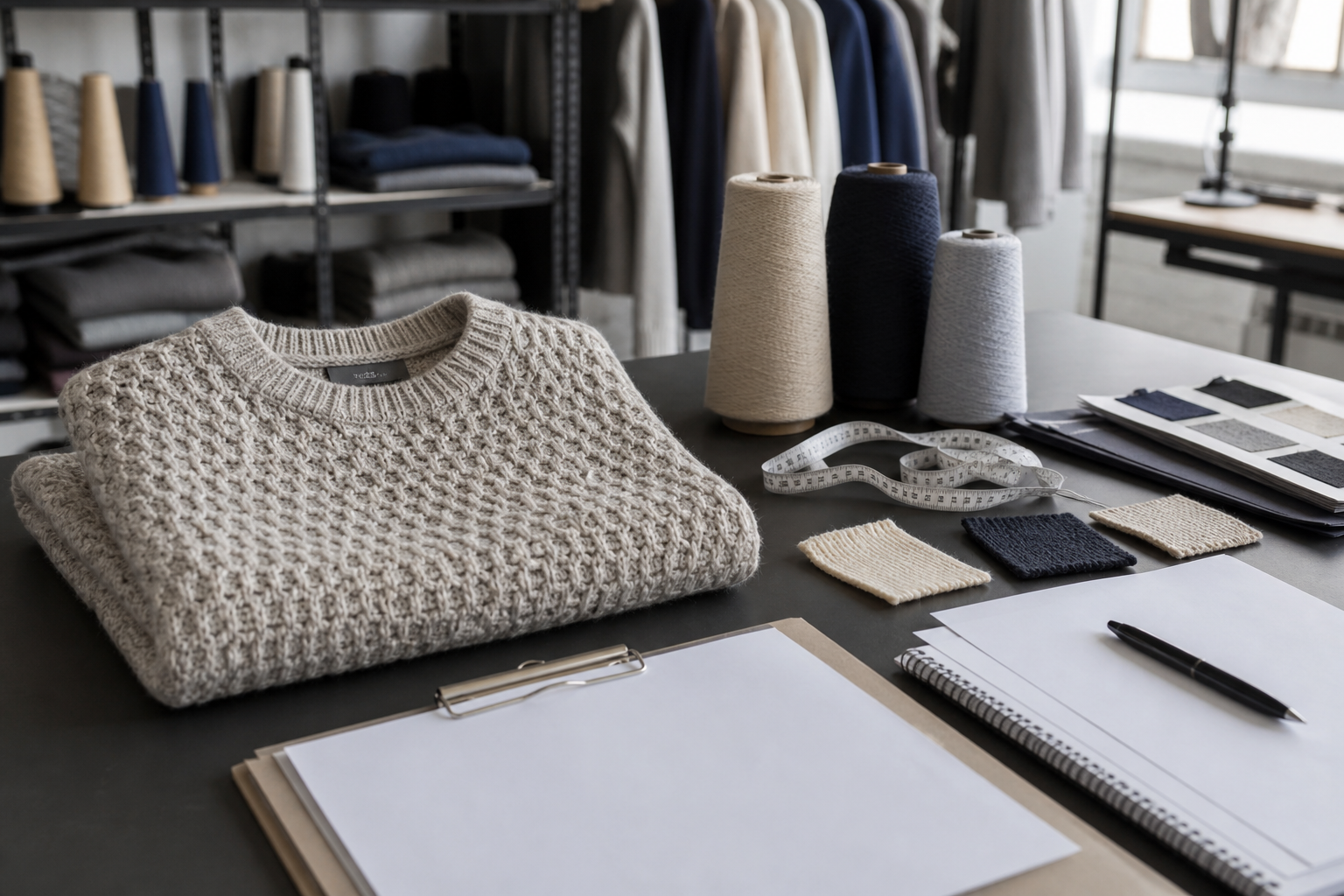
Begin with a concise brief that identifies what must remain unchanged and what can still be adjusted. Record the approved silhouette, key measurements, yarn direction, stitch or pattern placement, color references, trims, labels, finishing expectations, and packing requirements. If the garment is based on a buyer’s sample, note which elements are reference points and which elements are open for development.
This is also the right stage to confirm the size range and the size-set plan. A single approved size does not automatically explain how the garment should behave across menswear, womenswear, childrenswear, babywear, or multi-size requirements. The brand and supplier should agree which measurements need special attention during grading and fit review.
The brief should separate confirmed information from project-dependent items. For example, MOQ, lead time, final packaging configuration, and commercial terms should be marked project-dependent or to be confirmed unless they have already been agreed. This prevents assumptions from becoming production instructions.
2. Lock construction decisions before bulk knitting
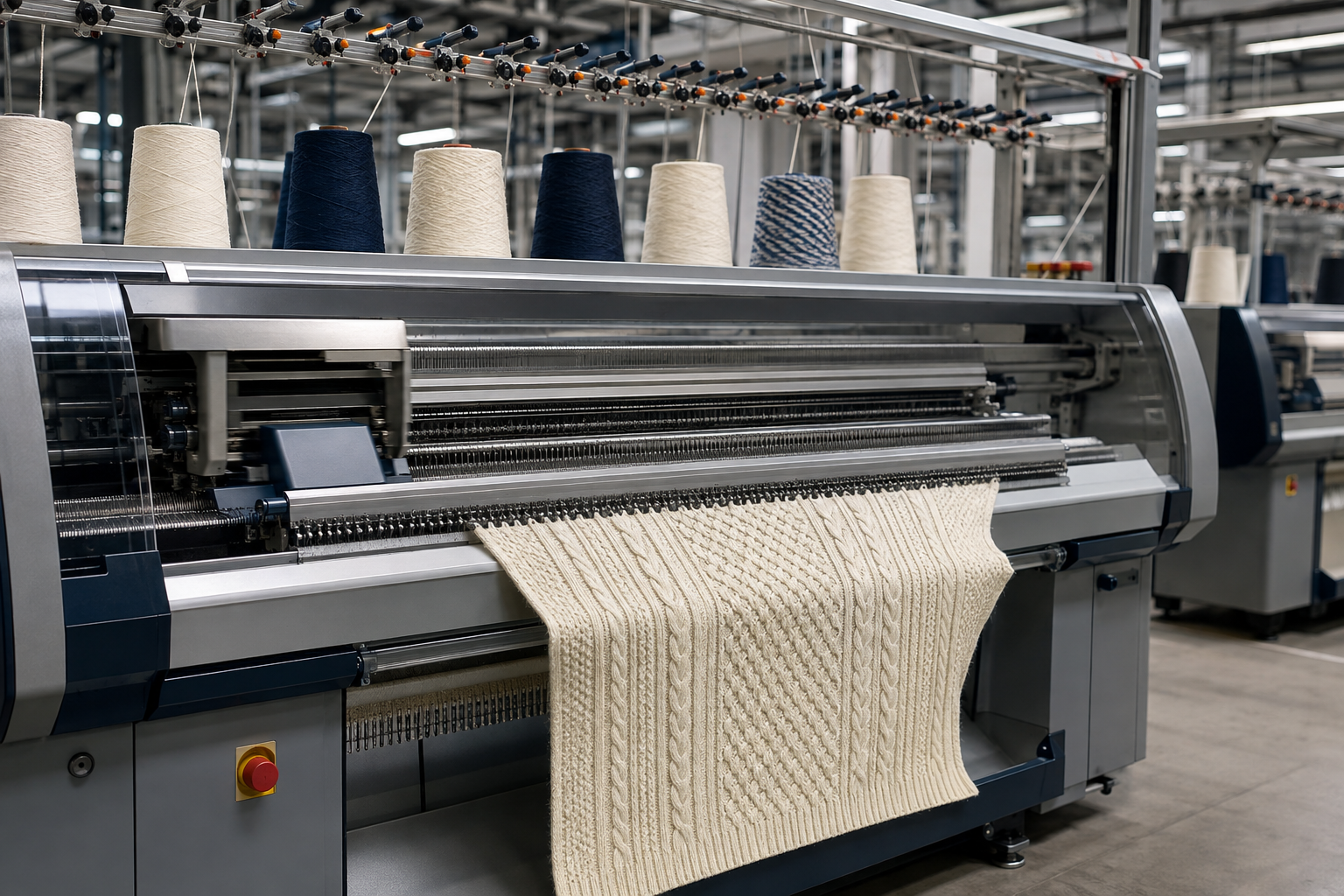
The next handoff connects the approved appearance to the machine and construction plan. Confirm the yarn composition and count, gauge direction, stitch structure, panel construction, linking approach, and any special techniques such as jacquard, intarsia, cable knit, rib knit, lace or openwork, fully fashioned knitting, embroidery, flocking, printing, appliqué, sequins, crochet, or hand-finished details.
Construction details influence both appearance and performance. A dense cable may affect weight and stretch, while an openwork structure may require a different finishing or inspection focus. Pattern placement must also be translated into machine programming and panel dimensions so that the production team can reproduce the approved design consistently.
A practical review compares the sample with the written specification and the proposed knitting plan. Any difference in yarn, gauge, stitch density, decoration, or panel shape should be resolved before the bulk order proceeds. This is where a development and manufacturing partner’s sample-based customization and pattern/sample services can reduce avoidable interpretation risk.
3. Use a representative size to protect fit and proportions
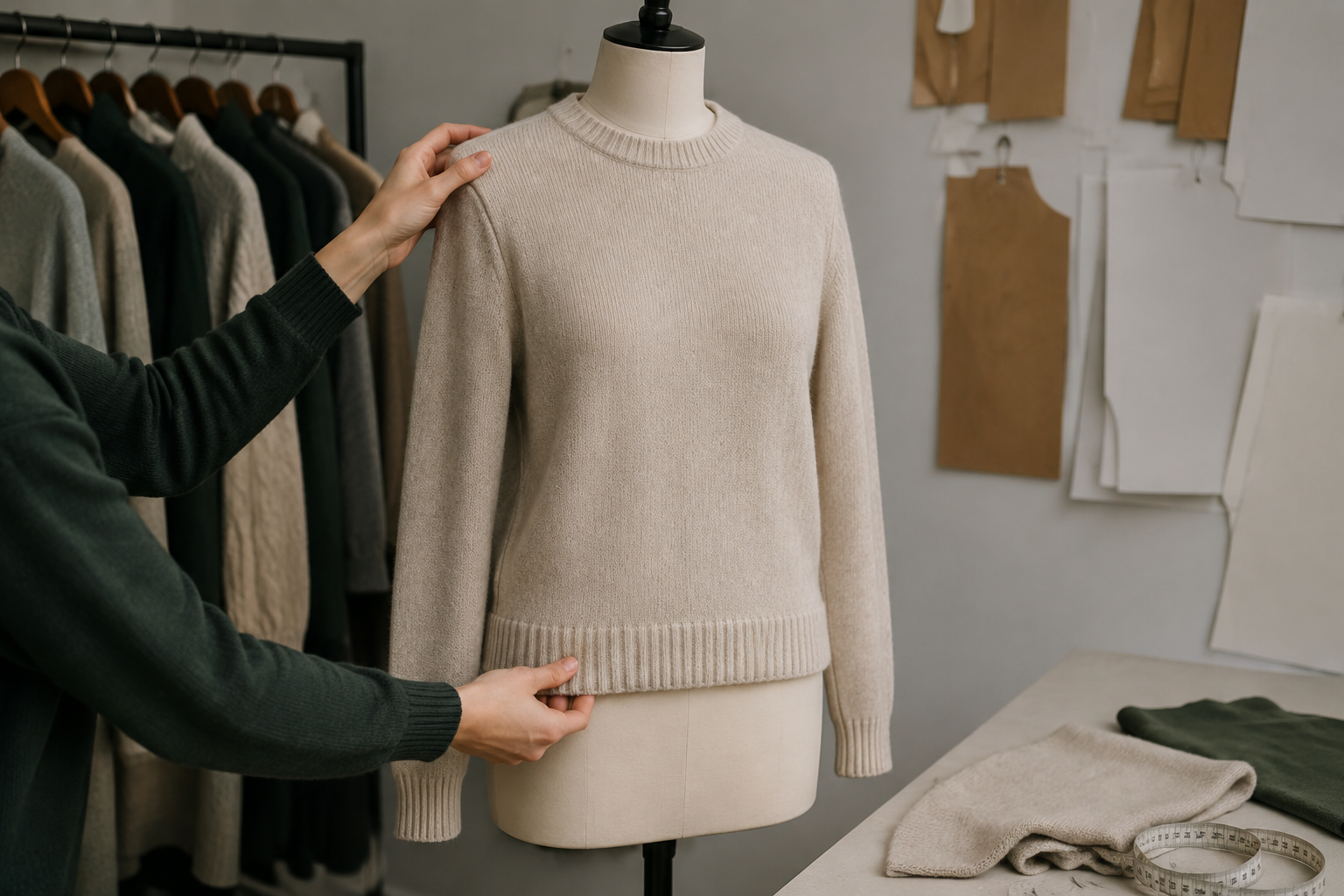
Fit approval should not rely only on the original sample size. Select a representative size that reflects the main commercial range, then review the garment after knitting and finishing. Check key measurements, neckline and armhole balance, sleeve length, body length, ease, rib recovery, and the relationship between pattern placement and the garment’s finished proportions.
For a multi-size program, review how the shape changes between sizes rather than treating grading as a simple proportional enlargement. The brand should identify measurements that are most sensitive to visual or functional change. A small shift in sleeve pitch, shoulder width, or body length can affect the perceived balance of a sweater even when the overall measurement table appears close.
Record comments in a version-controlled approval note. Distinguish required corrections from acceptable variation, and identify whether the next sample is for fit, construction, color, decoration, or final appearance. This gives the knitting and linking teams a clear target for the next iteration.
4. Carry approval into finishing, inspection, and packing
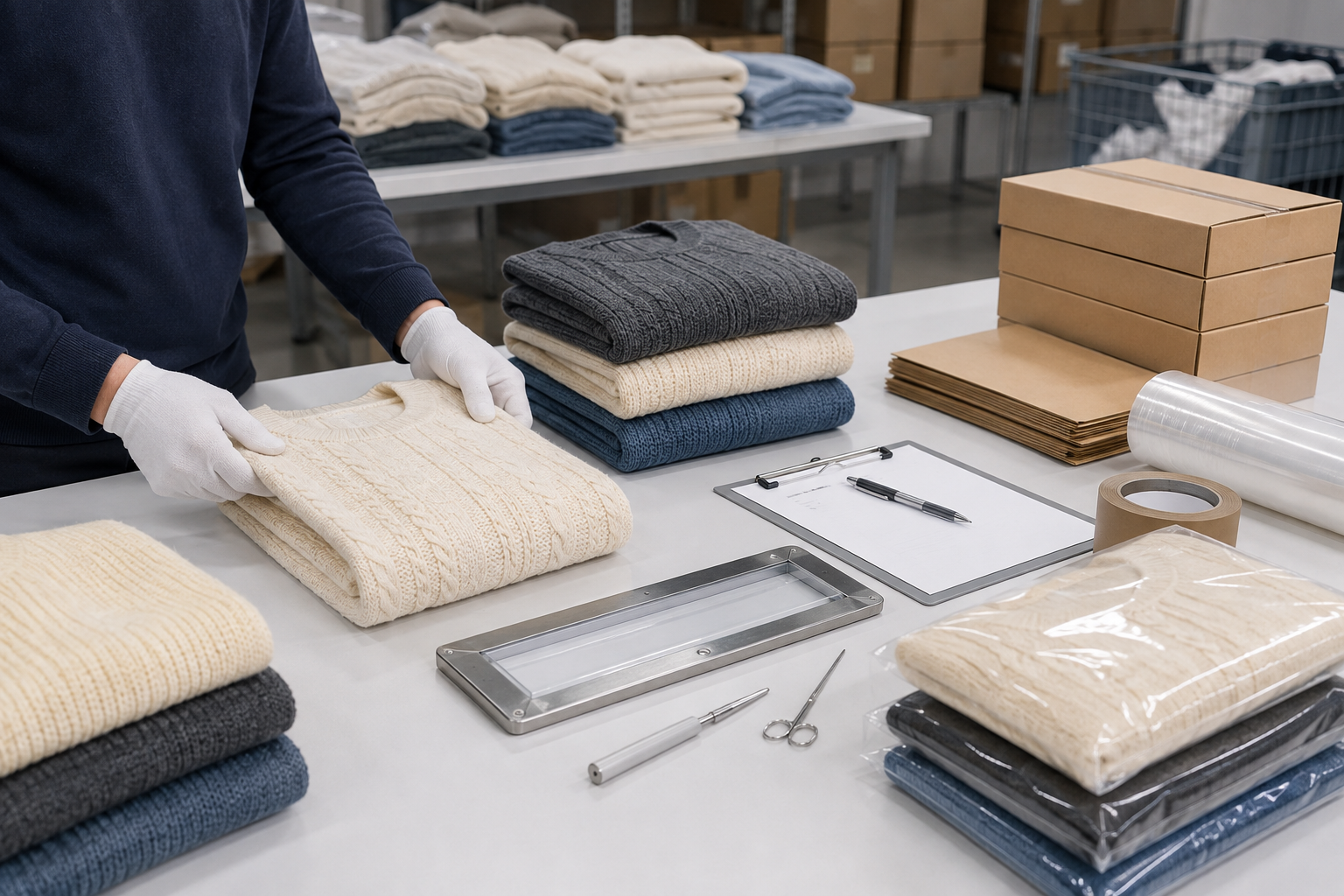
The handoff is incomplete until the approved intent is connected to finished-garment checks. WTBF’s quality process covers raw materials, knitted panels and assembly, finished garment appearance, and packaging or shipment readiness. These checkpoints can be aligned with the risks identified during development.
For example, a patterned sweater may require close attention to color placement, motif alignment, and panel matching. A delicate or hand-finished style may need focused review of surface consistency and attachment security. Finished appearance checks should consider measurements, shape, sewing or linking quality, loose yarns, stains, holes, and the overall presentation expected by the brand.
Packing instructions should also be documented before production is complete. Confirm folding, hangtags, labels, polybags or other packaging components, carton markings, and any buyer-specific requirements that are already approved. If a requirement is not yet known, leave it marked to be confirmed instead of filling the gap with an assumption.
FAQ
What should a knitwear sample-to-bulk handoff include?
It should include the approved sample reference, measurements and size range, yarn and color direction, stitch and decoration details, construction notes, fit comments, finishing expectations, quality checkpoints, packing requirements, and a clear list of confirmed versus project-dependent items.
Why is a representative-size review important?
A representative-size review shows whether the approved design logic carries into production sizing. It helps the team identify proportion, ease, and grading issues before bulk production rather than discovering them after finished garments are packed.
Can a knitwear manufacturer work from a buyer’s sample?
Yes. A development and manufacturing partner may provide sample-based customization, design interpretation, pattern/sample services, and fit adjustment. The exact construction and commercial plan remains project-dependent and should be confirmed during development.
What information is still project-dependent?
MOQ, lead time, final packaging, pricing, and other commercial or operational details are project-dependent unless confirmed for the specific style and order. Brands should request confirmation rather than assume a standard value.
Ready to plan your next knitwear handoff?
Need to move a sweater, cardigan, vest, dress, skirt, coordinated set, scarf, or hat from an approved sample toward bulk production? Contact Wait To Butterfly to discuss design interpretation, yarn selection, sample development, knitting programming, fit adjustment, finishing, quality inspection, and packaging for your project.
Visit Wait To Butterfly or contact WhatsApp +1 (669) 358-6009 and xyzzzlife@gmail.com.
Suggested internal-link anchor text: knitwear OEM and ODM development; knitwear design-to-sample development; knitwear quality inspection process; sample-based knitwear customization.