
Decorative details can define a knitwear collection, but they also affect construction, handle, durability, cost and production control. Before approving bulk production, clothing brands and buying teams should evaluate each decoration as part of the garment rather than as an isolated visual feature. The goal is to confirm that the detail can be reproduced, finished and inspected consistently.
1. Match the decorative idea to the knit structure
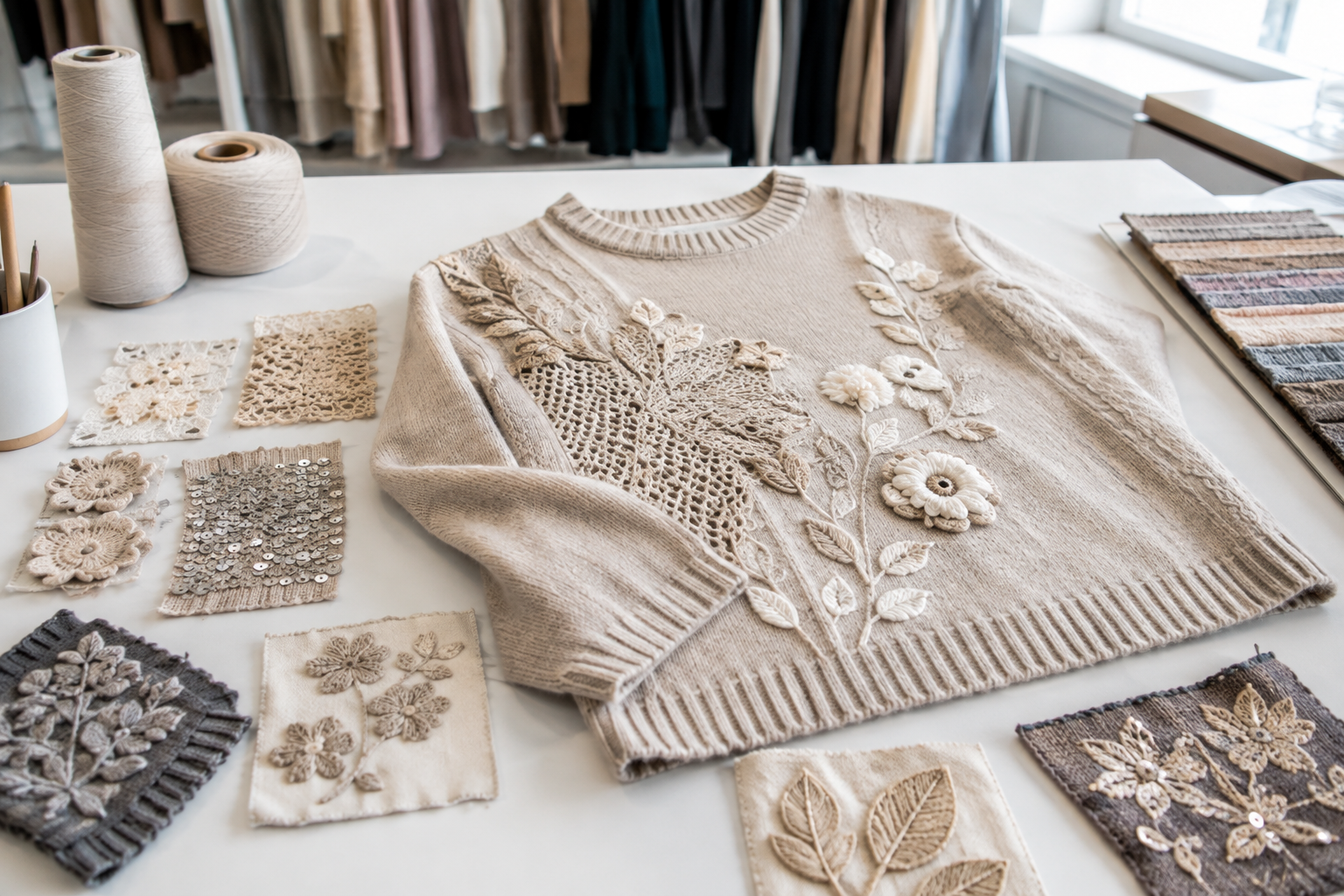
Begin by checking how the decoration interacts with the base knit. A cable, rib, lace or openwork structure may need a different attachment approach from a smooth jersey ground. Review placement, scale, weight, stretch, recovery and the way the detail changes the garment’s hand feel.
For jacquard and intarsia, inspect motif edges and color transitions across panels. For embroidery, flocking, printing or appliqué, review the surface effect and whether the application restricts stretch. For crochet, sequins and hand-finished details, confirm whether the intended look depends on skilled manual work or can be integrated into a repeatable production sequence.
2. Confirm placement and alignment across panels
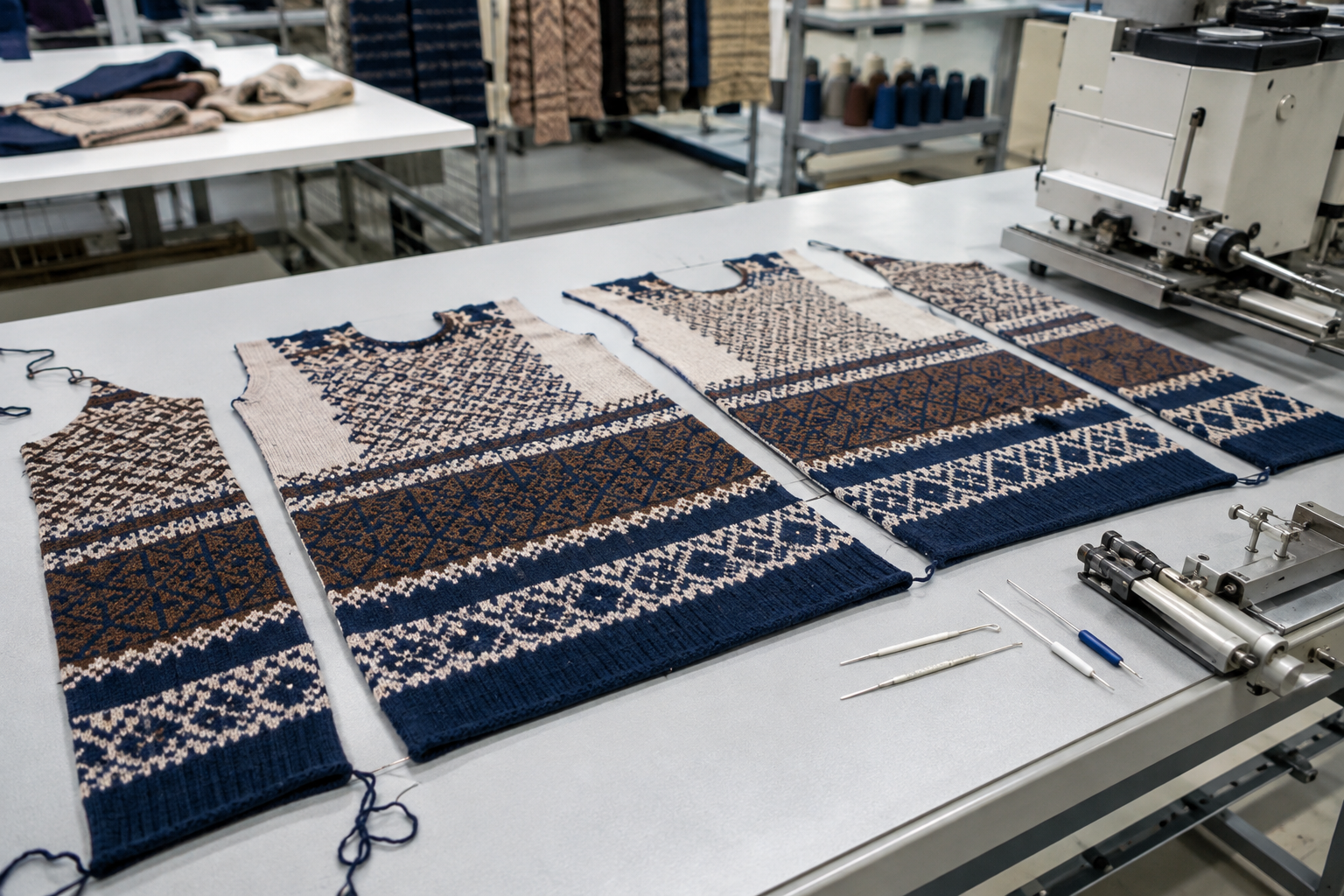
Decoration should be reviewed against the pattern and panel construction, not only on a flat sample. Check how motifs align at the front, back, sleeves, shoulders, side seams and joining points. A small placement change can affect visual balance, grading and the amount of knitting or finishing work required.
Ask the development team to document the reference points used for alignment. Computerized flat knitting and fully fashioned construction can support accurate shaping, but the final result still depends on panel handling, linking and finishing. This is especially important for coordinated sets, dresses and multi-size programs.
3. Test comfort, durability and care behavior
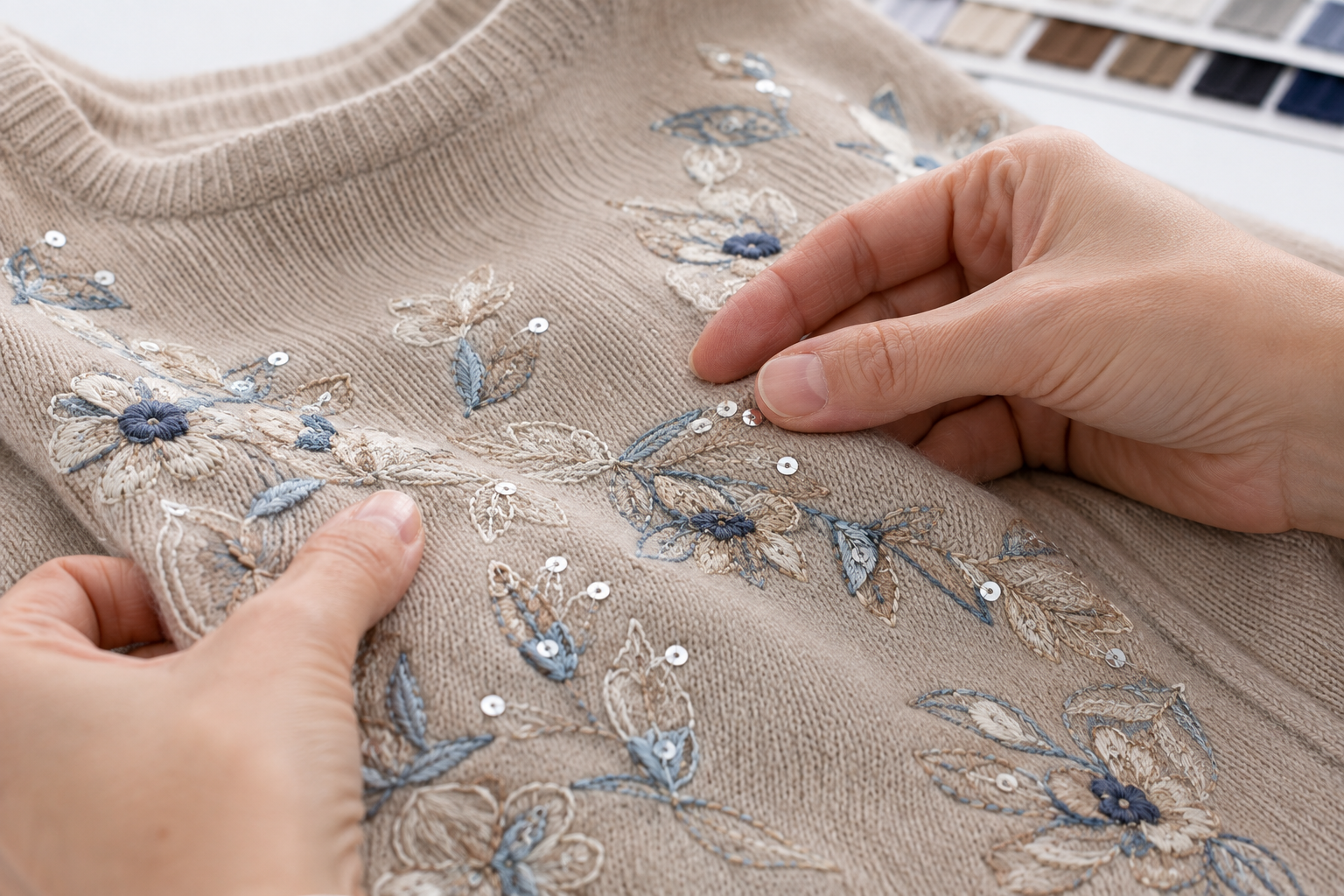
A decoration can look correct during approval and still create problems in wear. Review surface friction, sharp or loose elements, added weight, stretch recovery and comfort at contact areas such as the neckline, cuff and underarm. Check whether the detail pulls the knit out of shape or creates a visible difference after pressing and finishing.
Care testing should be project-dependent and based on the buyer’s requirements. Observe whether embroidery puckers, flocking changes surface character, sequins catch, appliqué edges lift or printed areas crack when the garment is flexed. Where a test method, care standard or performance requirement is not yet confirmed, mark it for approval rather than making an unsupported claim.
4. Turn the approved detail into a production control point
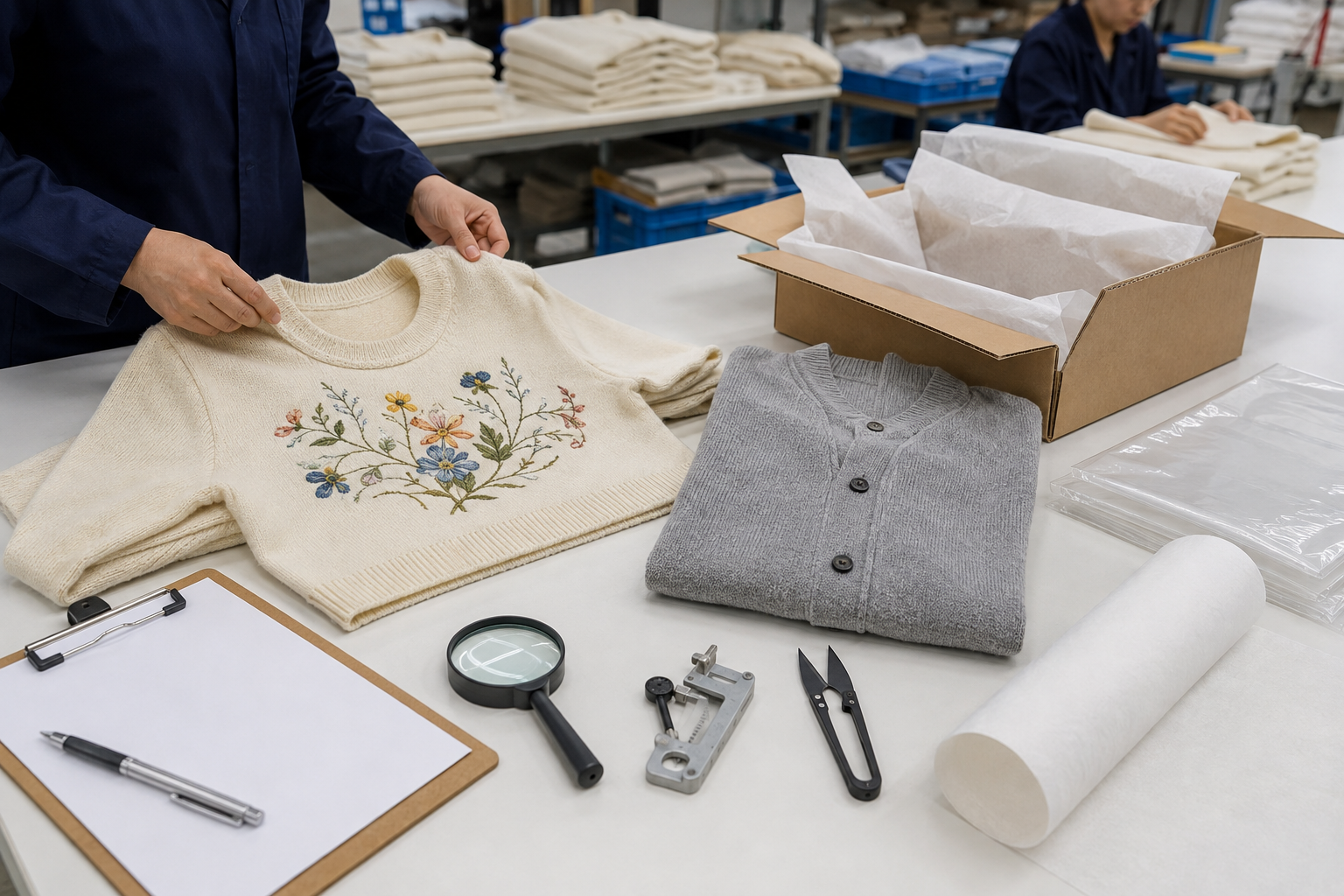
The final step is to define how the decoration will be checked during sampling and bulk production. Record artwork references, placement points, color approvals, acceptable variation, attachment method and finishing instructions. Quality inspection should cover the finished garment’s appearance, security of decorative elements, shape, loose ends and packaging presentation.
A capable knitwear OEM or ODM partner can connect design interpretation, knitting programming, sample development, fit adjustment, finishing, inspection and packaging into one development workflow. MOQ, lead time and any special testing remain project-dependent and should be confirmed for the specific style before production approval.
FAQ
Which knitwear decorations need the most production review?
Details that add weight, restrict stretch, require manual attachment or cross panel seams deserve early review. Examples include sequins, appliqué, dense embroidery, crochet and complex placement motifs.
How can buyers check decorative alignment?
Review the detail against pattern reference points on each panel, then inspect joining areas such as shoulders, side seams and sleeve connections.
Can decoration be added to sweaters and cardigans after knitting?
Often, yes, depending on the design and material. Embroidery, flocking, printing, appliqué, sequins and hand-finished details may be applied after knitting, while jacquard and intarsia are generally integrated into the knitted structure.
Are decoration costs and lead times standard?
No. They depend on the technique, artwork, coverage, manual work, quantity, size range and finishing requirements.
CTA
Need to develop a decorated knitwear style from concept to production? Wait To Butterfly supports clothing brands, retailers and buying teams with knitwear OEM, ODM, design-to-sample development, sample-based customization and pattern or sample services. Visit waittobutterfly.com, contact WhatsApp +1 (669) 358-6009, or email xyzzzlife@gmail.com.