Sample-based customization gives clothing brands a practical starting point: an existing garment, swatch, image, or construction idea that communicates the intended result. The challenge is that a reference sample rarely explains every production decision. It may show the silhouette but not the yarn selection, knitting structure, tolerances, finishing expectations, or packaging requirements.
For brands, retailers, and buying teams, the goal is not to copy a sample blindly. It is to translate the reference into decisions that a knitwear development and manufacturing partner can review, test, adjust, and carry into bulk production. A clear development brief reduces avoidable revisions while leaving room for technical recommendations during sampling.
1. Document what the reference sample communicates—and what it does not
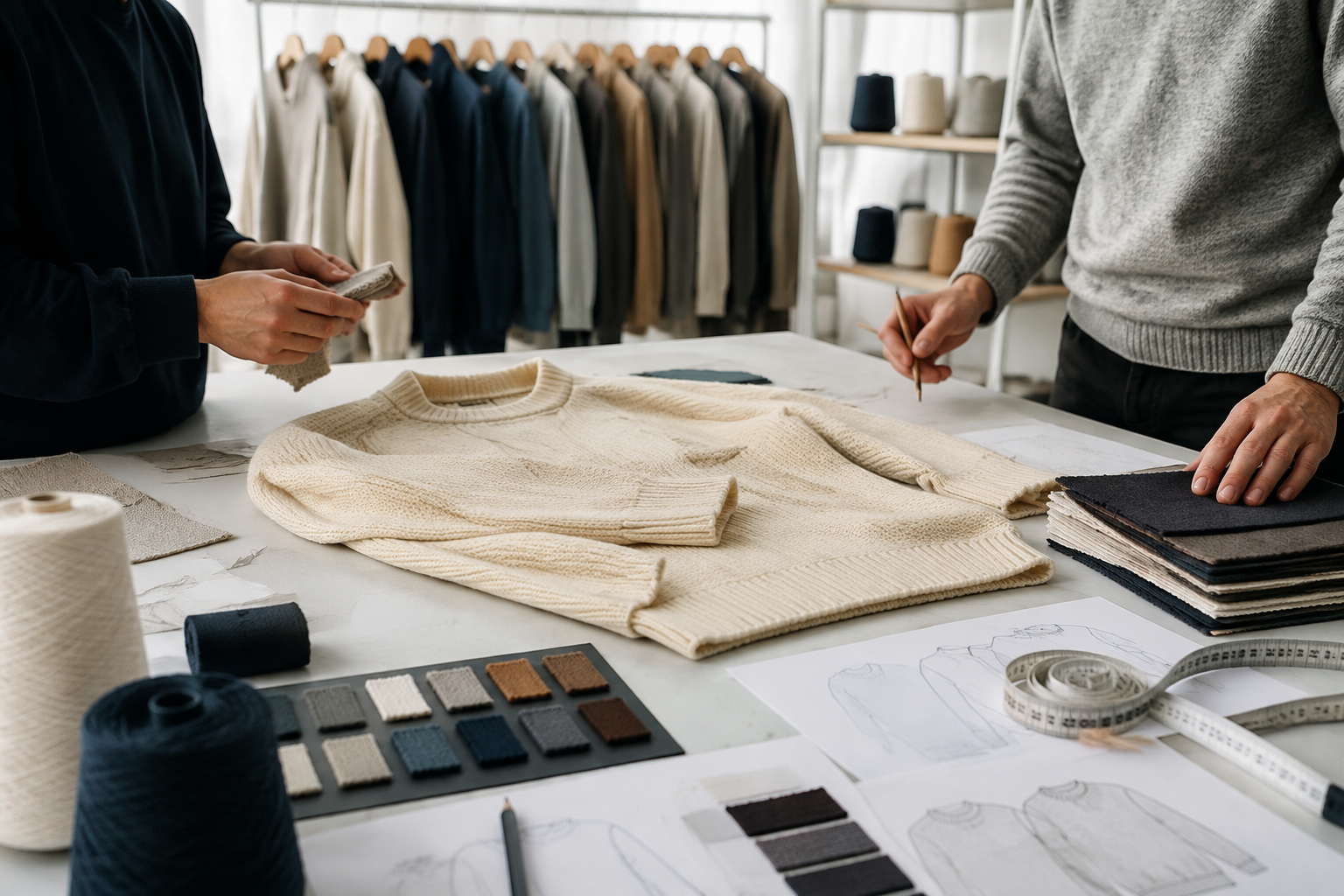
Start by separating visible requirements from assumptions. Record the product category, intended wearer, overall silhouette, measurements, color direction, artwork, decoration, and any details that must remain recognizable. Note whether the reference is a finished garment, a competitor sample, a hand-knit example, a sketch, or a combination of inputs.
Then list open questions. The reference may not identify fiber content, yarn count, gauge, stitch density, construction method, or acceptable variation. It may also be made in a different size or material. These gaps should be marked for review rather than silently filled with guesses.
Useful search phrases for this stage include “sample-based knitwear customization,” “knitwear development brief,” and “reference garment to production sample.” Target region: global B2B apparel buyers. Language: English.
2. Translate appearance into yarn, stitch, and machine decisions
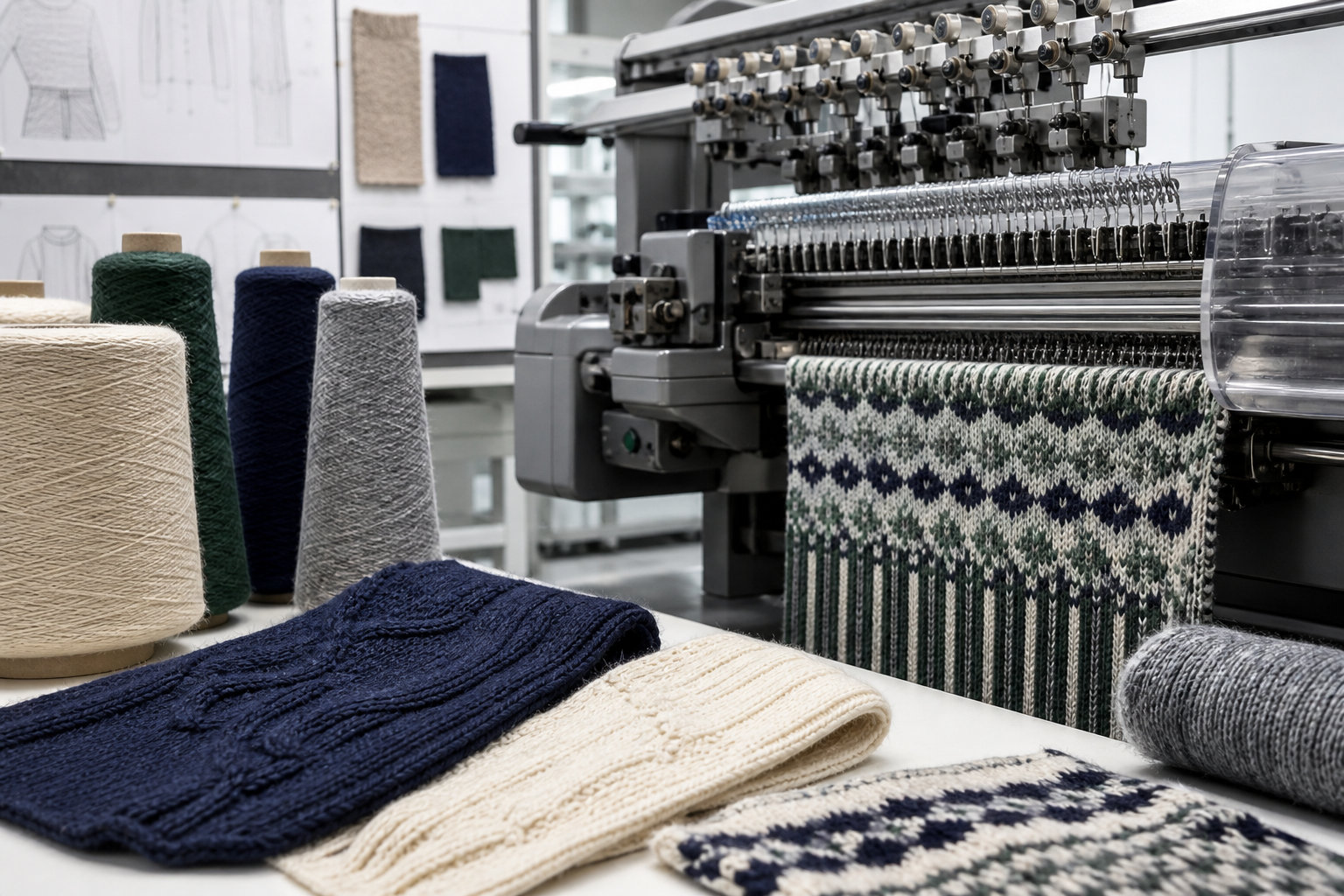
The same visual effect can be created through different combinations of yarn, stitch structure, and knitting programming. A soft-looking sweater may depend on yarn character, loop formation, finishing, or the interaction of several choices. A graphic motif may require jacquard, intarsia, embroidery, printing, appliqué, or another decoration route.
Ask the development team to explain which decisions are being tested and why. Depending on the product, the review may involve rib knit, cable knit, lace/openwork, fully fashioned knitting, or other structures. Computerized flat knitting machines and linking equipment help convert the approved direction into repeatable panels and assembly steps, but the exact setup remains project-dependent.
Keep the brief specific about the desired hand feel, stretch, recovery, surface character, and visual priorities. Leave technical alternatives open where the reference does not provide enough information. This makes the first sample a purposeful test instead of a simple pass-or-fail copy.
3. Build a disciplined sample review loop
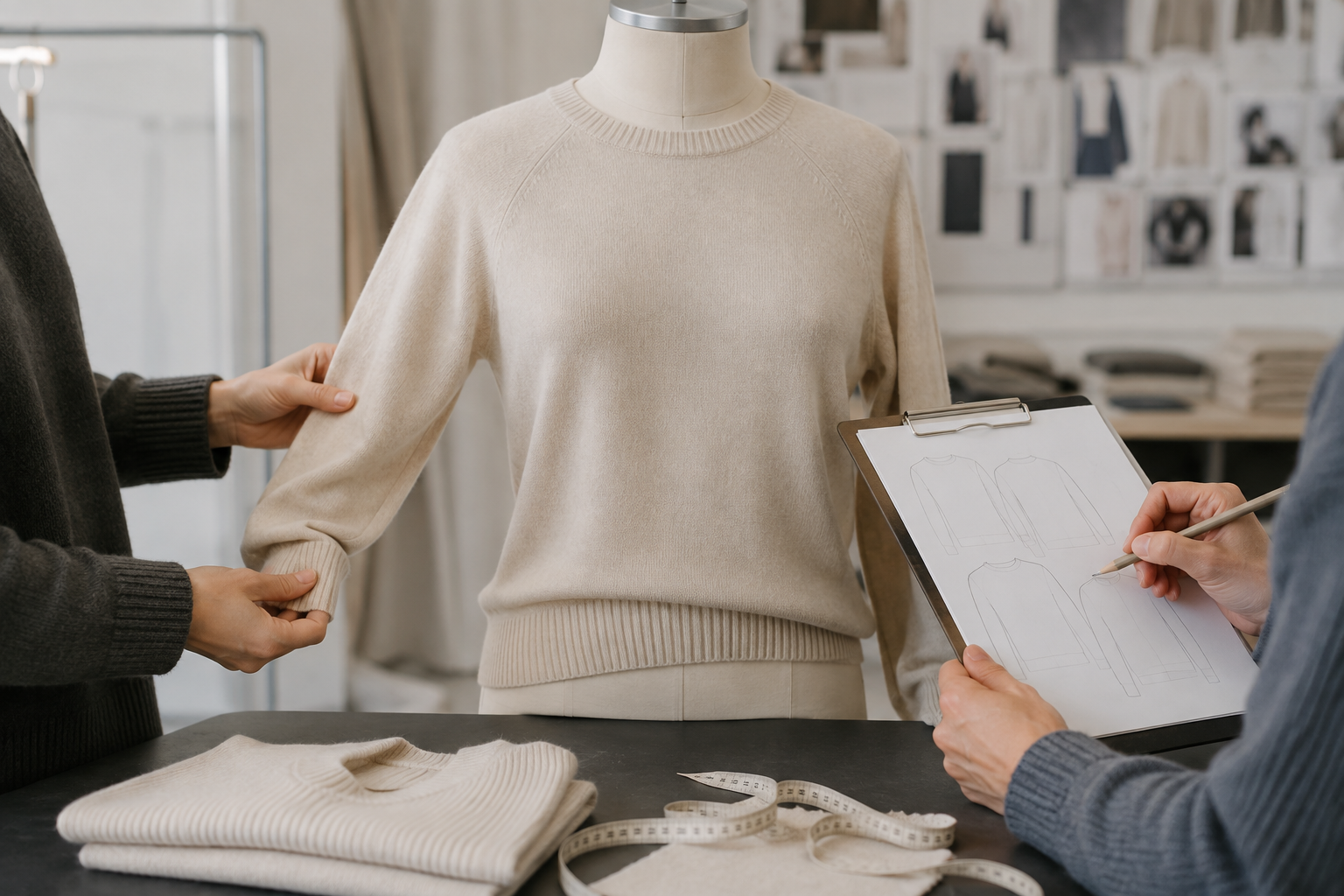
When the first sample is ready, review it against the brief in a fixed order. Check the overall silhouette, key measurements, proportions, stitch definition, placement of artwork or decoration, sleeve and neckline balance, and the relationship between panels and seams. Use a representative size for the main fit review, then identify which comments apply across the size range.
Make comments observable and prioritized. “The body feels wrong” is less useful than “increase the finished body length by the agreed measurement while preserving the hem proportion.” Separate must-change items from preferences and questions. Include annotated photos or marked measurements when possible, and confirm which changes affect pattern, knitting programming, yarn, linking, finishing, or packaging.
A development partner can then make fit adjustment and sample revisions with a traceable set of decisions. For multi-size requirements, the approved sample should also become a reference point for measurement and construction consistency, while final grading details remain to be confirmed for the project.
4. Carry approved details into finishing, inspection, and packaging
Fewer sampling revisions only help if the approved intent survives the handoff to production. Before bulk production, confirm the final sample reference, specification notes, approved color direction, decoration placement, measurement comments, labeling instructions, and packaging expectations. Identify any unresolved item as project-dependent or to be confirmed.
Quality checks should be considered at more than one point: raw materials, knitted panels and assembly, finished garment appearance, and packaging/shipment. This sequence helps the team catch a yarn or panel issue before it becomes a finished-garment problem, and it gives buying teams clearer checkpoints for approval.
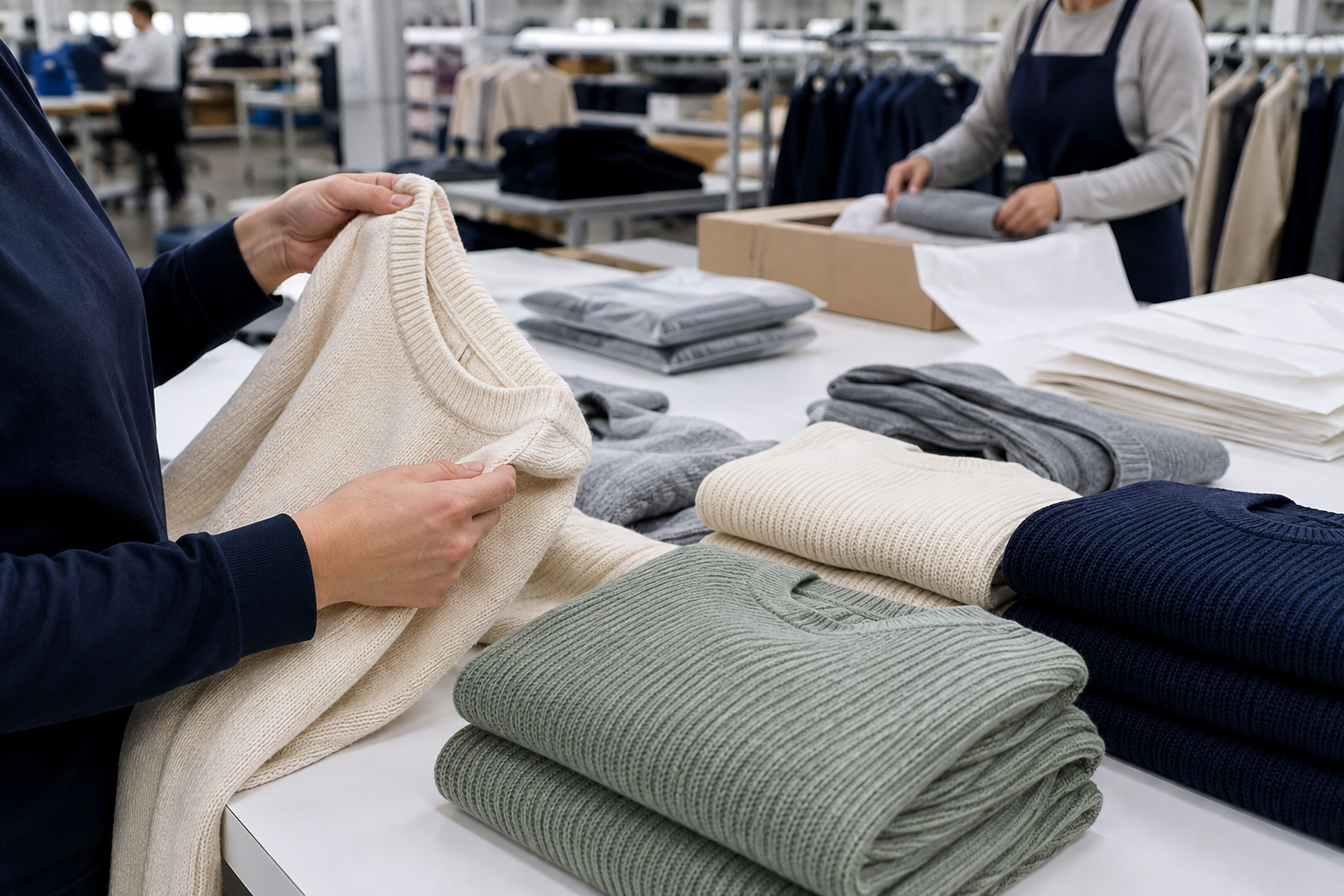
For brands seeking a knitwear OEM or ODM partner, a practical workflow can cover design interpretation, yarn selection, knitting programming, sample development, fit adjustment, bulk production, finishing, quality inspection, and packaging. Wait To Butterfly supports sample-based customization and pattern/sample services for sweaters, pullovers, cardigans, knitted vests, dresses, skirts, coordinated sets, scarves, and hats across menswear, womenswear, childrenswear, babywear, and multi-size requirements.
FAQ
What can a clothing brand use as a knitwear reference sample?
A brand can provide a finished garment, swatch, sketch, image, existing pattern information, or a combination of references. The development brief should identify which characteristics are essential and which details are open for technical review.
Can a reference sample be customized for a different product category?
Often, yes, but the change may affect yarn, structure, measurements, programming, assembly, finishing, and fit. The feasibility and revision path are project-dependent and should be confirmed during sample development.
How many revisions should a brand expect?
There is no universal number. Revision needs depend on the completeness of the reference, the clarity of the brief, the product complexity, and the fit or appearance priorities. A structured comment loop helps the team focus each revision.
Does sample approval confirm bulk-production details?
It establishes an important reference, but production notes, size requirements, quality checkpoints, finishing, and packaging should still be confirmed before bulk production.
Develop from your reference sample
Have a reference garment or knitwear concept to develop? Share the sample, images, measurements, and priority details with Wait To Butterfly for a project-based review. Visit waittobutterfly.com or contact WhatsApp +1 (669) 358-6009 / xyzzzlife@gmail.com.