
How Clothing Brands Can Review Knitwear Sleeve and Cuff Specifications Before Sampling
Sleeves and cuffs strongly influence how a knitted garment fits, moves, and feels in daily wear. They also affect yarn consumption, knitting programming, linking, finishing, and the way a garment is inspected before shipment. For a clothing brand or retail buying team, reviewing these details before sampling can make a development brief more useful and reduce avoidable revisions.
The review does not need to begin with a complicated technical pack. It should begin with a clear product intention: the silhouette, the expected hand feel, the amount of ease, the way the cuff should sit, and the conditions in which the garment will be worn. Those decisions give a knitwear development partner a practical basis for selecting yarn, stitch structure, and sample measurements.
1. Turn the design intention into a sleeve and cuff brief
Start by describing the sleeve as part of the garment’s overall proportion. Note whether the style is fitted, straight, relaxed, dropped-shoulder, balloon-shaped, or intentionally oversized. A sleeve measurement by itself is not enough because the same length can look very different depending on the shoulder, armhole, and body ease.
The brief should identify the key measurements to review: sleeve length from the agreed reference point, bicep width, cuff opening, cuff height, and the intended relationship between the cuff and the wrist or lower arm. If the design uses a thumb opening, turn-back cuff, contrast cuff, slit, or decorative edge, include a sketch or sample reference and explain what must remain visually consistent.
Also record the intended wearing experience. A cuff for a lightweight layering sweater may need a different recovery and bulk from a cuff for a winter pullover. If the final measurements, tolerance, or wear conditions are still undecided, mark them as project-dependent or to be confirmed rather than implying a universal standard.
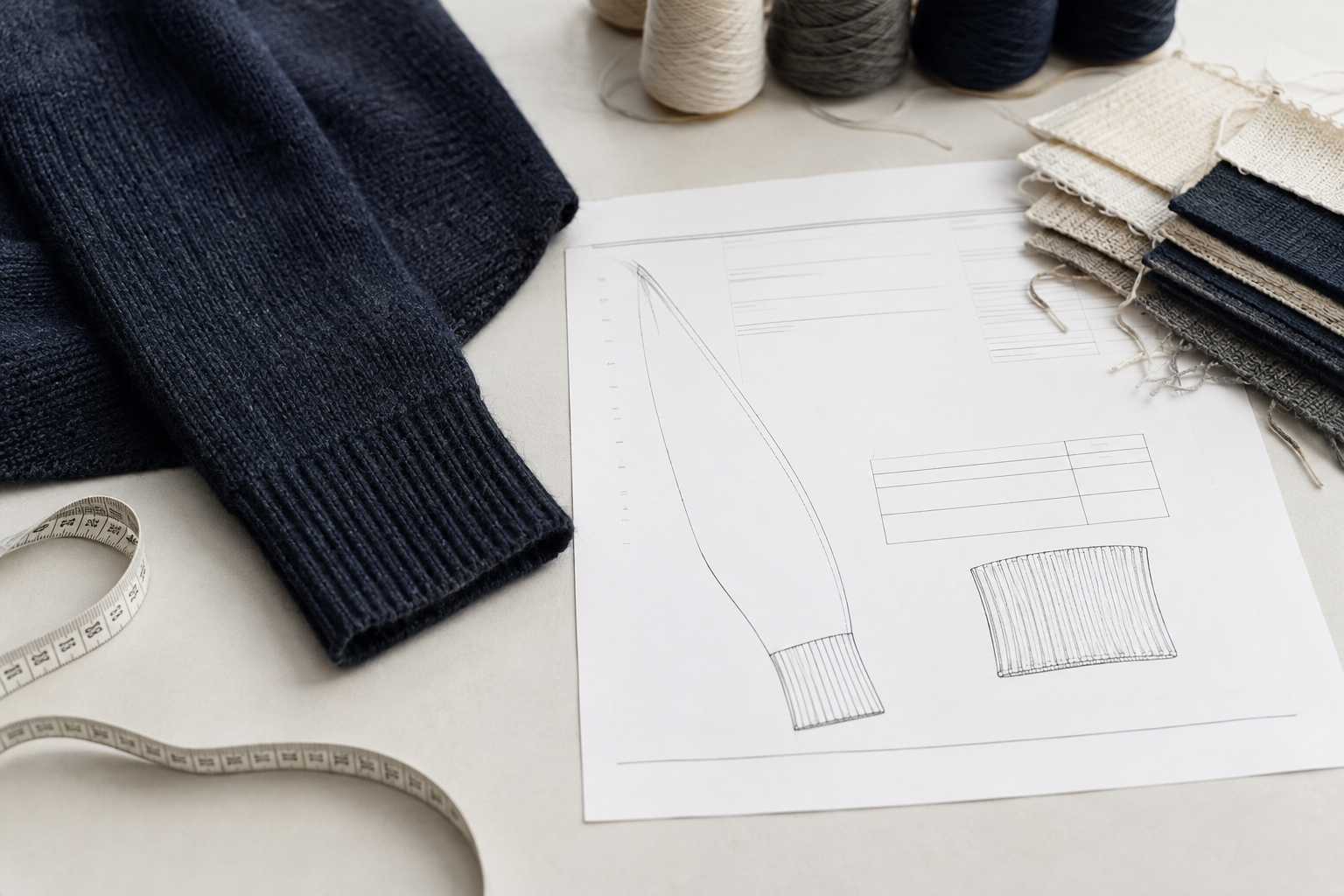
2. Check how yarn and stitch structure support the cuff
Cuff performance depends on more than the cuff rib count. Yarn selection, stitch density, stitch type, finishing method, and the transition between sleeve body and cuff all influence appearance and recovery. A rib knit cuff may create a close fit, while a less elastic structure can support a softer or more relaxed look. The appropriate choice depends on the product brief and sample evaluation.
Ask the development team to show how the sleeve body transitions into the cuff. Review whether the change in structure looks intentional, whether the cuff is proportionate to the sleeve, and whether the edge has enough stability for the design. Where the sleeve includes jacquard, intarsia, cable knit, lace/openwork, embroidery, or other decoration, check that the cuff does not create an awkward break in the visual rhythm.
Computerized flat knitting can support shaped panels and controlled stitch changes, but the programmed construction still needs to be assessed as a physical sample. The useful question is not simply whether a machine can produce the structure. It is whether the resulting sleeve has the required hand feel, surface definition, flexibility, and appearance after finishing.
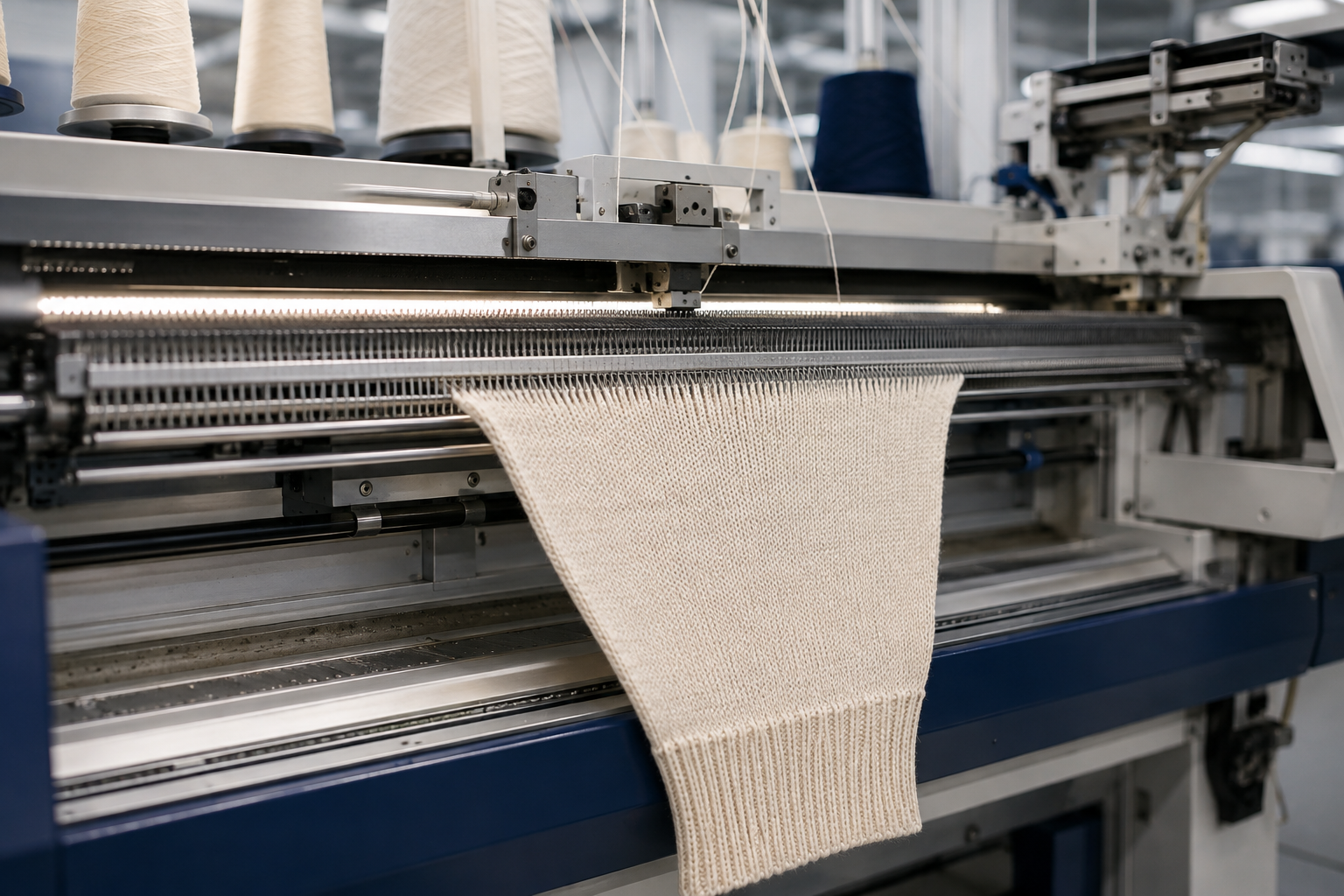
3. Review sleeve fit, movement, and recovery on a representative size
Evaluate the first sample on the size that best represents the main commercial fit, or on the agreed representative size if the range is multi-size. Check sleeve length in a natural standing position and again with the arm slightly bent. This helps distinguish a true length issue from a sleeve that is being pulled by the shoulder, armhole, or cuff.
Look at the bicep, elbow, and wrist together. A sleeve can have the correct cuff opening but still feel restrictive if the upper sleeve is too narrow. Conversely, extra ease can cause pooling at the wrist or make the cuff twist. Review the cuff while the garment is relaxed and after gentle extension. The team should record whether it returns evenly, whether the rib columns remain aligned, and whether the edge feels too tight, too loose, or appropriate for the intended wear.
For a size range, confirm how the sleeve and cuff logic will be graded. A cuff opening should not be scaled without considering the wearer’s proportion and the fabric’s stretch. Pattern and sample services can help translate the approved fit intent into a repeatable size set, but the full range should remain project-dependent until the required measurements and tolerances are confirmed.
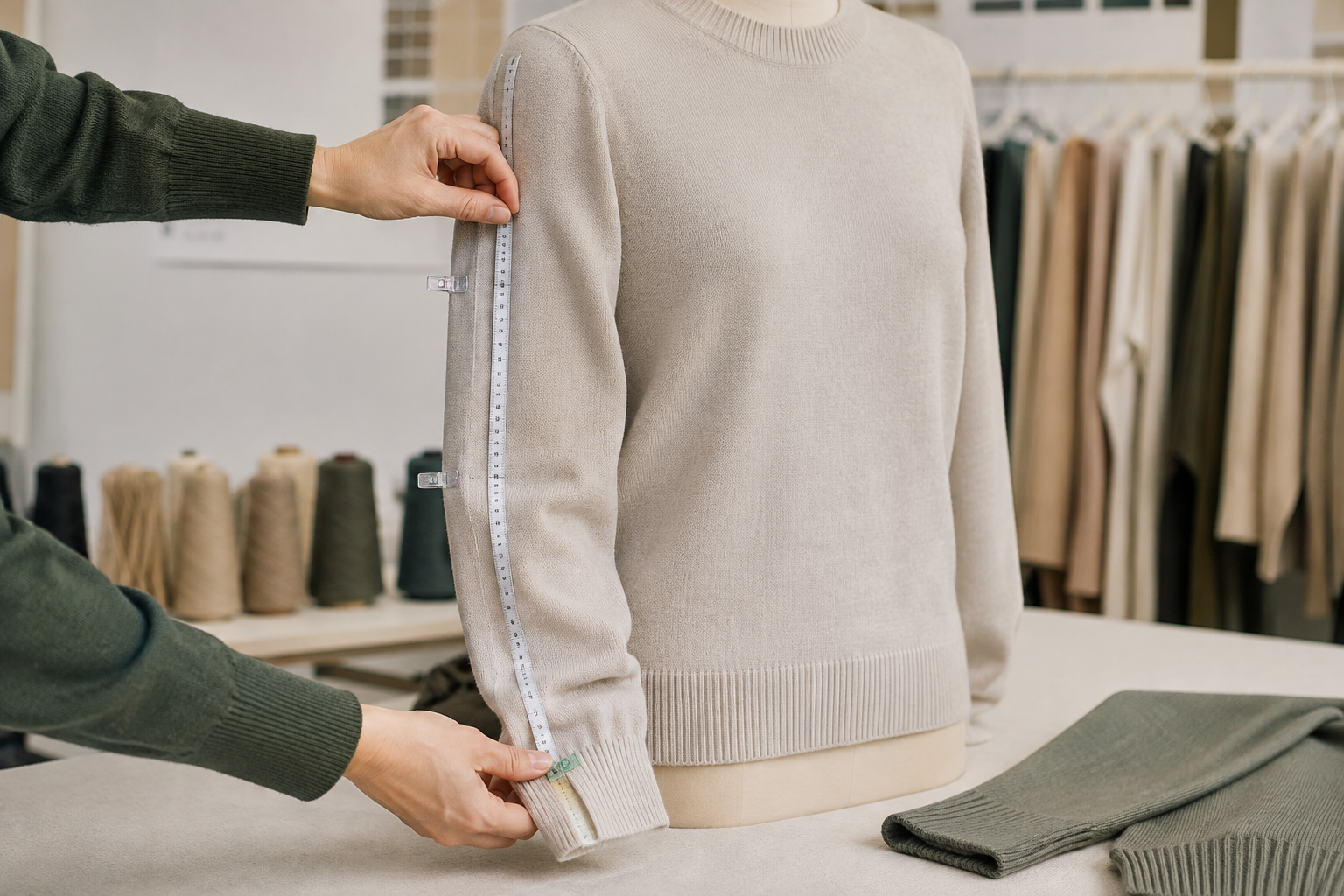
4. Confirm finishing, inspection, and packing expectations
Sleeves and cuffs should be reviewed again after the planned finishing process. Washing, pressing, steaming, and handling can change dimensions, surface character, and cuff recovery. The development brief should state which appearance is approved and which changes require another review. If a wash recipe or final measurement tolerance is not yet confirmed, label it to be confirmed.
Before bulk production, align the inspection points with the garment’s risk areas. Raw materials should be checked first, followed by knitted panels and assembly. On the finished garment, inspect sleeve symmetry, cuff height, edge appearance, stitch consistency, loose ends, decoration placement, and overall fit. Packaging and shipment checks should confirm that folding and packing do not permanently distort the cuff or compress the sleeve shape.
This sequence gives buying teams a simple approval trail: the intended design, the knitted construction, the representative-size fit, and the finished-garment condition. It also creates clearer communication between design, sampling, production, quality inspection, and packaging teams.

Frequently asked questions
What should a knitwear sleeve specification include?
Include the sleeve silhouette, reference point for sleeve length, bicep and cuff measurements, cuff height, construction or decoration notes, intended hand feel, fit reference, and any required measurement tolerances. Unconfirmed details should be marked to be confirmed.
Is rib knit always the best cuff construction?
No. Rib knit is one option for elasticity and definition, but the best construction depends on yarn, stitch structure, garment weight, fit intent, and finishing. It should be validated on the physical sample.
How should a buying team check cuff recovery?
Check the cuff at rest, extend it gently, and observe whether it returns evenly without twisting or remaining stretched. Compare the result with the intended fit and hand feel rather than relying on an assumed universal number.
Can sleeve specifications be adapted across menswear, womenswear, childrenswear, and babywear?
Yes, but each product category and size range needs its own fit intent and measurement review. Multi-size requirements should be confirmed through representative samples and a clear grading plan.
When should sleeve and cuff details be approved?
Approve them after the sample reflects the intended yarn, construction, finishing, and fit. If any of those inputs changes, the sleeve and cuff should be reviewed again before bulk production.
Call to action
Wait To Butterfly supports clothing brands, retailers, and buying teams with knitwear OEM, ODM, design-to-sample development, sample-based customization, and pattern/sample services. The process can cover design interpretation, yarn selection, knitting programming, sample development, fit adjustment, bulk production, finishing, quality inspection, and packaging.
To discuss a sleeve and cuff development brief, visit waittobutterfly.com or contact WhatsApp +1 (669) 358-6009 / xyzzzlife@gmail.com.