
For a knitwear product, care performance is part of the product brief—not an afterthought added when a garment is ready to ship. A sweater, cardigan, knitted dress or babywear style can look correct during sampling yet need a different care approach once yarn, stitch structure, finishing and packaging are reviewed together.
Buying teams can reduce avoidable revisions by discussing care requirements early with a knitwear development and manufacturing partner. The goal is to connect the intended customer experience with practical decisions about yarn selection, knitting programming, garment construction, finishing, quality inspection and packaging. Where a care method has not been validated, it should remain project-dependent or to be confirmed rather than being assumed.
1. Start With the Intended Care Experience
Before choosing a yarn or finalizing a label, define how the customer is expected to care for the product. Consider whether the item is a lightweight fashion pullover, a structured cardigan, a lace/openwork design, a knitted dress, a scarf, a hat or a childrenswear style. The intended use, silhouette, surface texture and target price all affect the level of care guidance a brand may need to communicate.
Create a short care brief that records the desired hand feel, appearance after care, dimensional expectations and any customer constraints. This gives the development team a clear reference when reviewing yarn options and sample results.
Do not treat a generic care symbol as a substitute for product validation. Final care wording and symbols should be confirmed against the actual yarn, construction, finishing route and applicable market requirements. If testing or market-specific labeling review is still pending, mark the requirement to be confirmed.
2. Connect Yarn and Stitch Structure to Care Risk
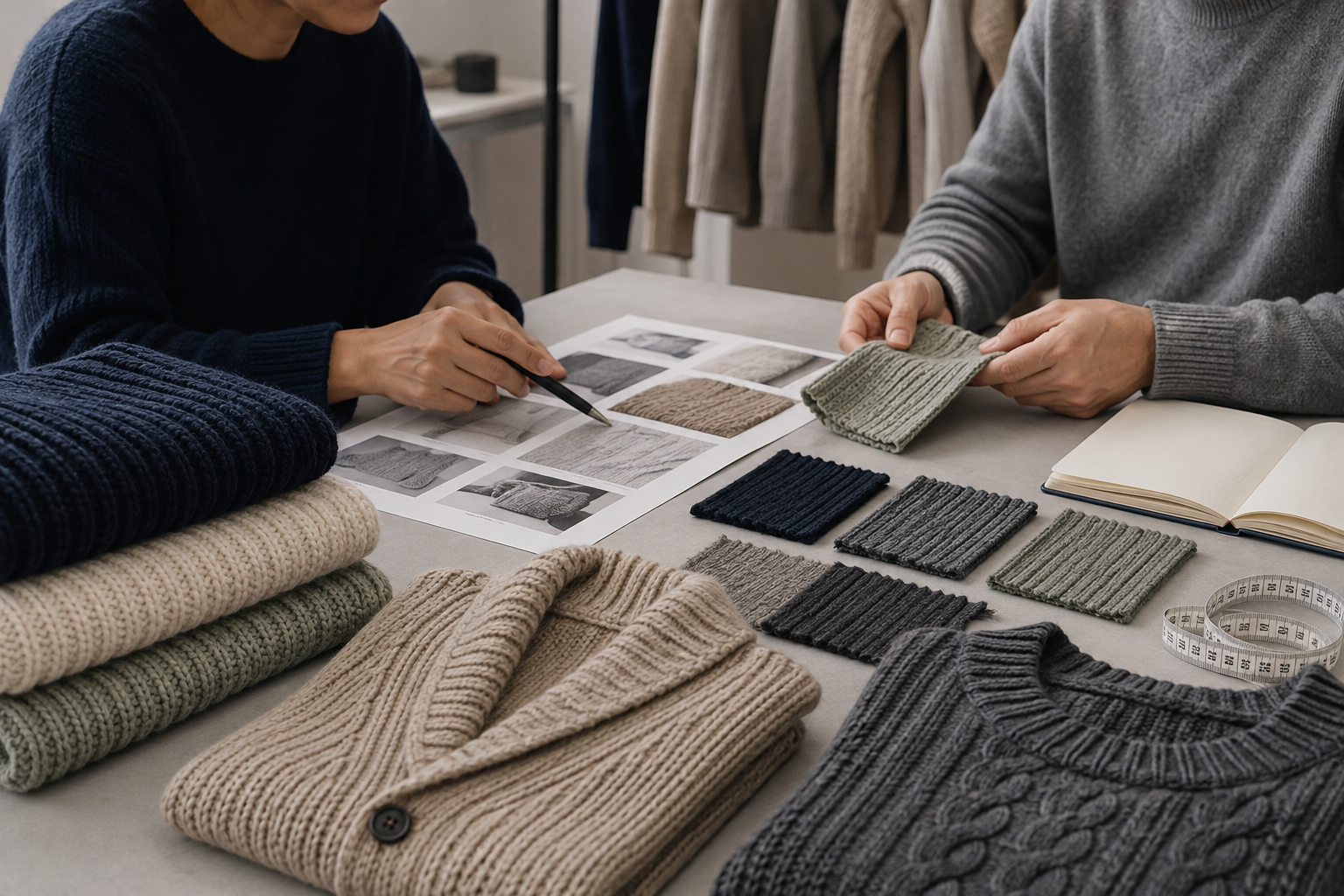
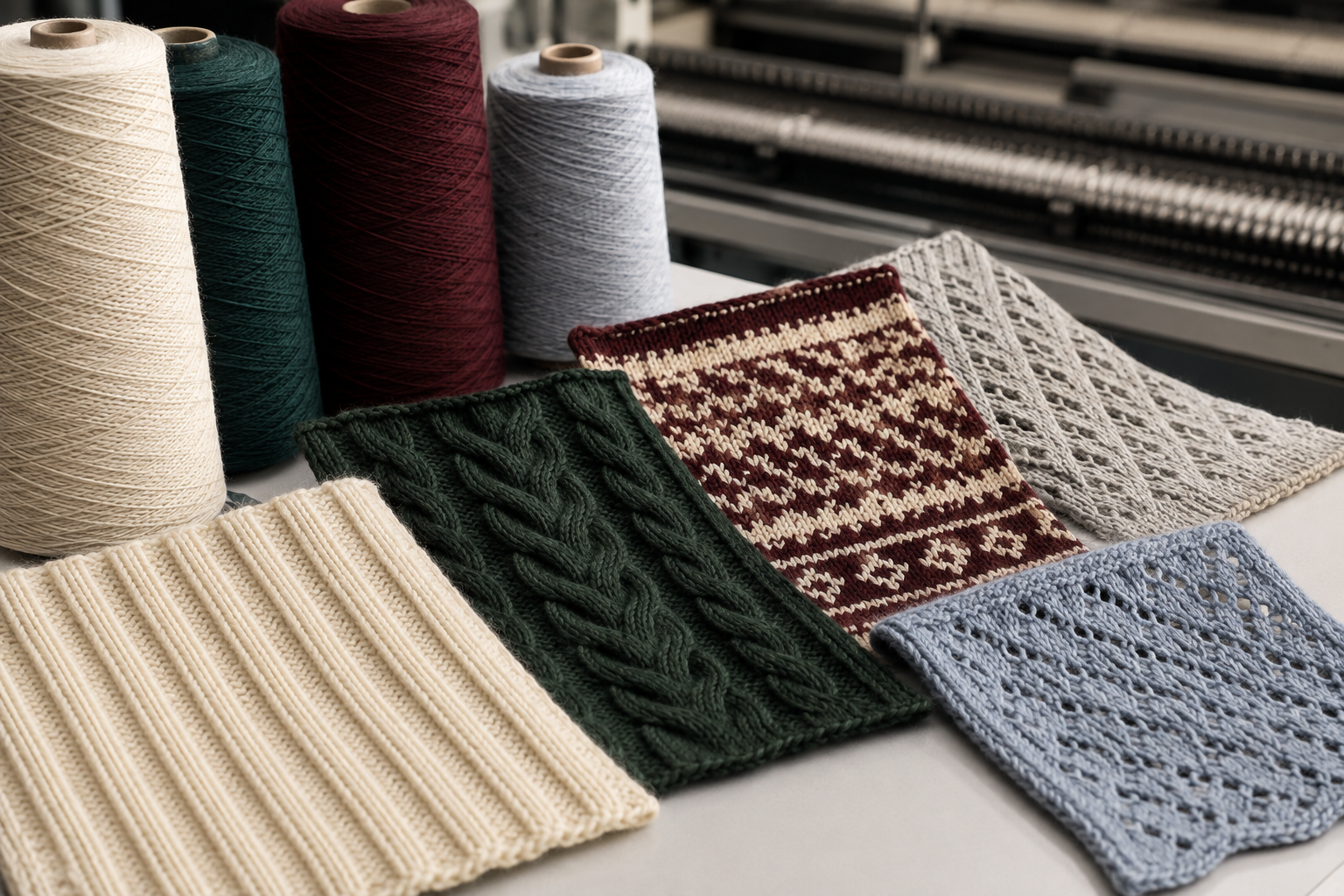
Yarn selection and stitch structure influence how a garment may respond to handling, moisture, agitation, heat and drying. A dense rib knit, cable knit, jacquard, intarsia, lace/openwork panel and fully fashioned construction each create different review points. The relevant question is whether the selected combination supports the product’s intended appearance and use.
During development, review yarn composition, yarn count, ply, stretch behavior and surface character alongside the programmed stitch structure. Openwork or dimensional texture may require closer attention to shape retention and snag exposure. A multi-color design may need review of contrast, surface consistency and appearance after the planned care process.
A knitwear OEM or ODM partner can translate the brief into yarn selection, knitting programming and sample development decisions. WTBF’s process covers design interpretation, yarn selection, knitting programming, sample development and fit adjustment before bulk production.
3. Validate Care Expectations on Representative Samples
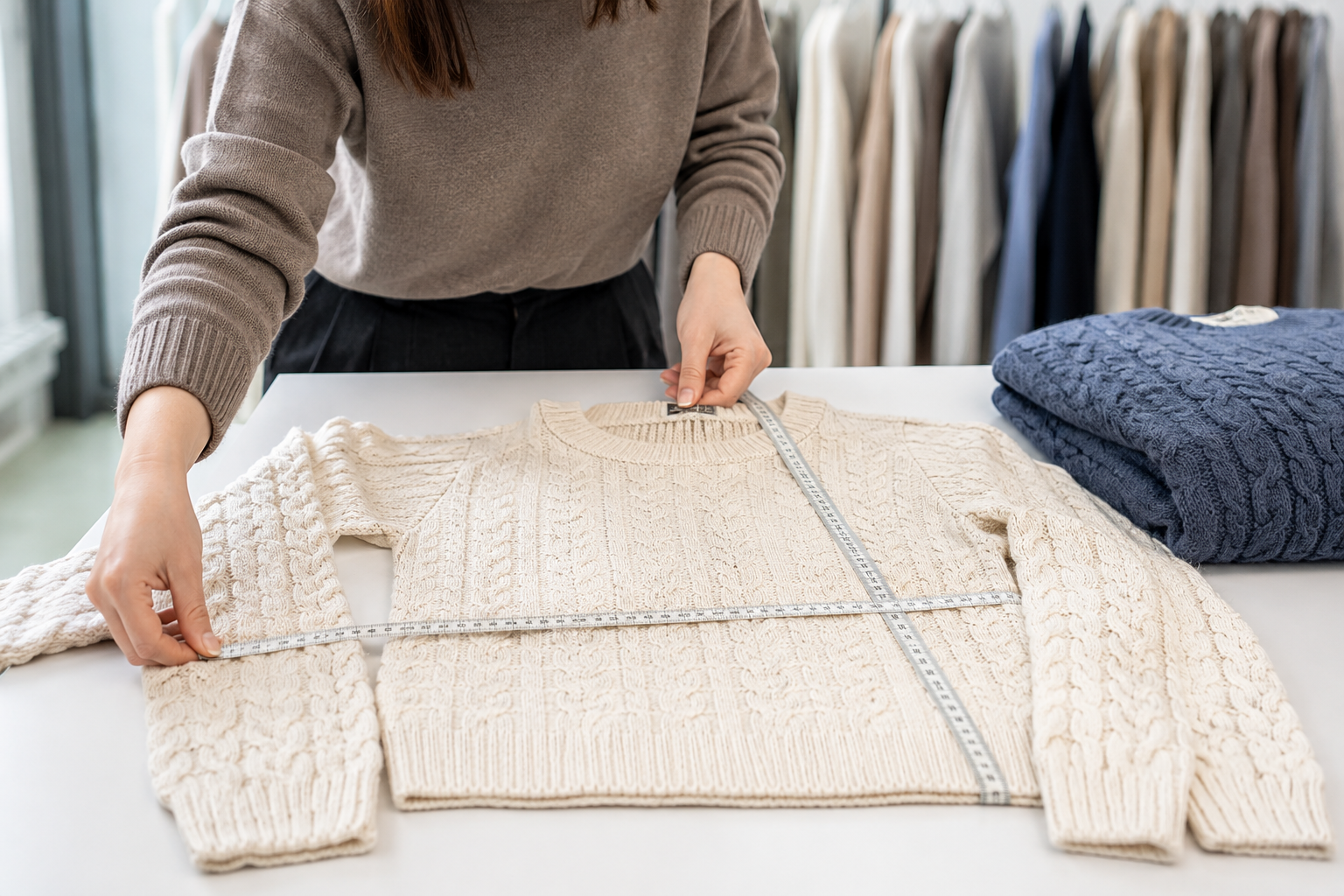
Care review is most useful when performed on representative samples rather than on a flat specification alone. The sample should reflect the intended yarn, stitch structure, construction, measurements and relevant finishing direction. For multi-size programs, the final review approach is project-dependent.
Record measurements and appearance before and after the agreed review process. Check length, width, sleeve and hem behavior, neckline shape, surface texture, color appearance, pilling or fuzzing observations, and overall hand feel. For embroidery, flocking, printing, appliqué, sequins, crochet or hand-finished details, inspect whether the decoration remains compatible with the intended care experience.
Keep the review practical and traceable: identify the sample, yarn, construction, process conditions and observations. If a result is not acceptable, adjust the yarn, stitch density, finishing route, measurements or care communication before approving bulk production.
4. Confirm Finishing, Inspection and Packaging Details
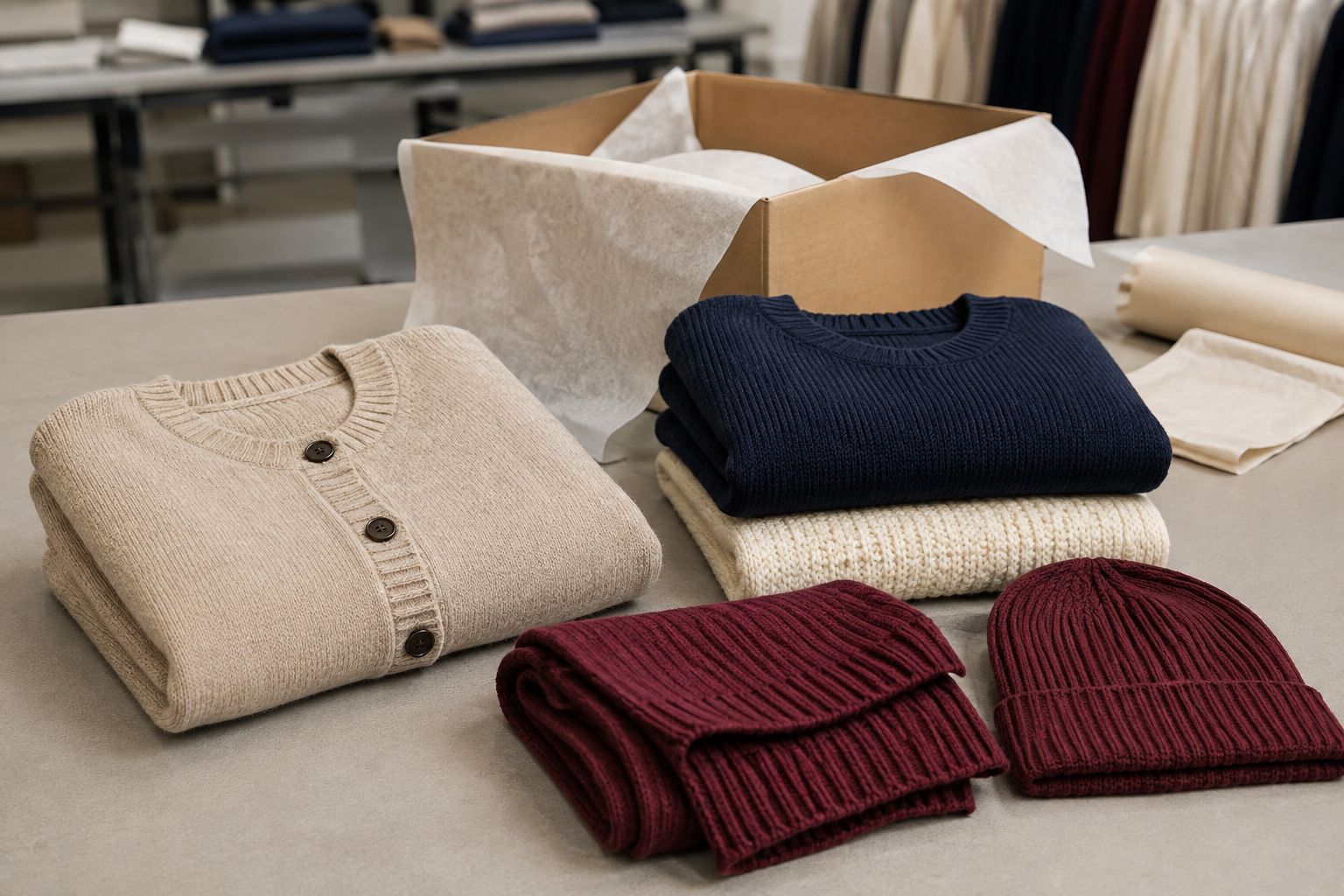
Care expectations should be checked again after finishing and before shipment. Finishing can affect appearance, measurements and hand feel, so the finished garment—not only the knitted panel—should be reviewed. WTBF’s stated quality checks cover raw materials, knitted panels and assembly, finished garment appearance, and packaging/shipment.
For the final review, compare the approved sample with production garments and confirm that care information is consistent with the validated product. Check label placement and readability, garment appearance, measurement tolerance, loose ends, decoration security and packaging conditions. Packaging should protect the garment without creating unnecessary compression, moisture exposure or distortion; the precise packaging method remains project-dependent.
A final care checklist should identify the approved yarn and construction, sample reference, inspection points, open questions and any requirement still to be confirmed.
FAQ
When should a clothing brand discuss knitwear care requirements?
Discuss them during the development brief, before yarn and stitch structure are finalized. Early discussion connects care expectations with sampling, fit adjustment, finishing and inspection.
Can the final care label be decided from fiber composition alone?
Not reliably. The final recommendation should consider the actual yarn, stitch structure, construction, finishing and validated review results, as well as target-market requirements.
What should be recorded during a knitwear care review?
Record the sample reference, yarn and construction, measurements before and after review, appearance, hand feel, decoration observations, packaging notes and any open requirement to be confirmed.
Does every knitwear style need the same care review?
No. A lightweight pullover, cable-knit cardigan, lace dress, decorated style and babywear item can have different review priorities.
CTA
Have a knitwear concept, reference sample or care brief to develop? Contact Wait To Butterfly for knitwear OEM, ODM, design-to-sample development, sample-based customization and pattern/sample services. Visit waittobutterfly.com or contact WhatsApp +1 (669) 358-6009 and xyzzzlife@gmail.com.