
A knitwear development brief should explain what the garment needs to communicate, how it should feel, and where pattern changes are expected to occur. A reference image may show a cable, jacquard, intarsia, rib or lace/openwork effect, but it rarely explains the production decisions behind that appearance. Buyers and product teams can reduce ambiguity by identifying the garment category, target wearer, silhouette, fit direction, key visual zones and acceptable variations before sampling.
For example, a sweater with a clean body and a statement front panel needs a different brief from a cardigan that combines all-over jacquard with ribbed edges. Note whether the pattern is intended for the front only, mirrored across panels, placed on sleeves, or continued through a coordinated set. Also record whether the priority is graphic clarity, softness, stretch recovery, lightness, warmth or a hand-finished look. These notes give a knitwear OEM or ODM partner a practical framework for interpreting the design.
Useful search phrases include “knitwear development brief,” “custom knitwear pattern development,” and “OEM sweater design to sample.” For any construction detail that remains undecided, mark it as project-dependent or to be confirmed rather than treating a visual assumption as a final specification.
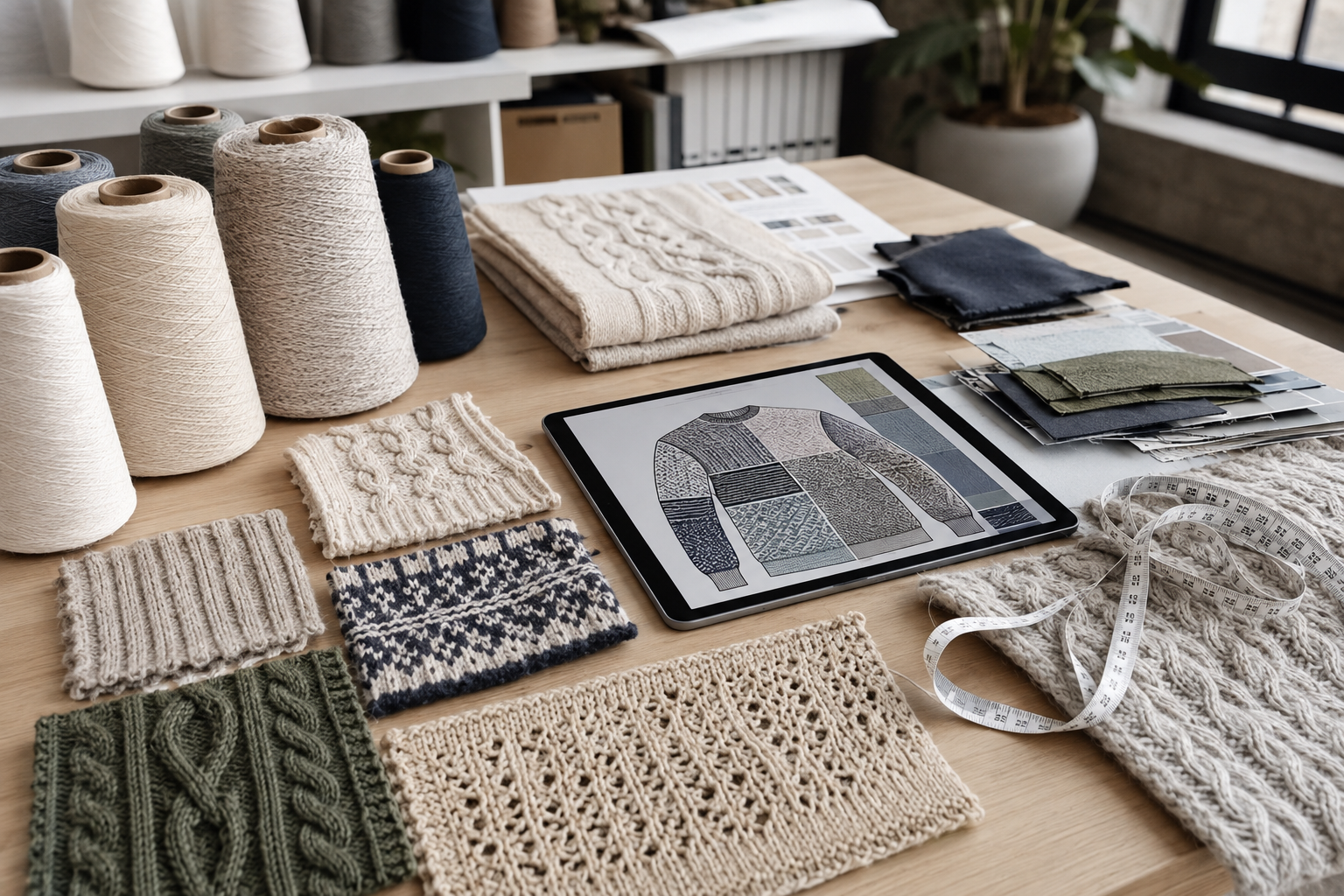
Define how pattern changes affect stitch architecture
Pattern and stitch combinations should be described as a system. A development team may need to decide between jacquard, intarsia, cable knit, rib knit, lace/openwork, fully fashioned knitting, embroidery, flocking, printing, appliqué, sequins, crochet or hand-finished details. Each choice can affect thickness, stretch, stability, appearance on the reverse side and the way panels join together.
The brief should identify transitions: where a body stitch changes into a border, where a cable meets a neckline, or where a color block aligns with a sleeve and side seam. It is also helpful to specify whether edges should remain compact, whether an open structure needs backing or reinforcement, and whether a decorative technique should sit flush with or on top of the base knit. These are development questions, not universal rules, so the final construction should be confirmed through sampling.
Yarn selection and knitting programming are closely linked to this stage. Record the desired yarn composition if known, the intended weight and surface, and any areas where a different yarn or stitch density may be considered. A computerized flat knitting machine can support detailed structures, but the production-ready combination still depends on the garment design, yarn behavior and target measurements.
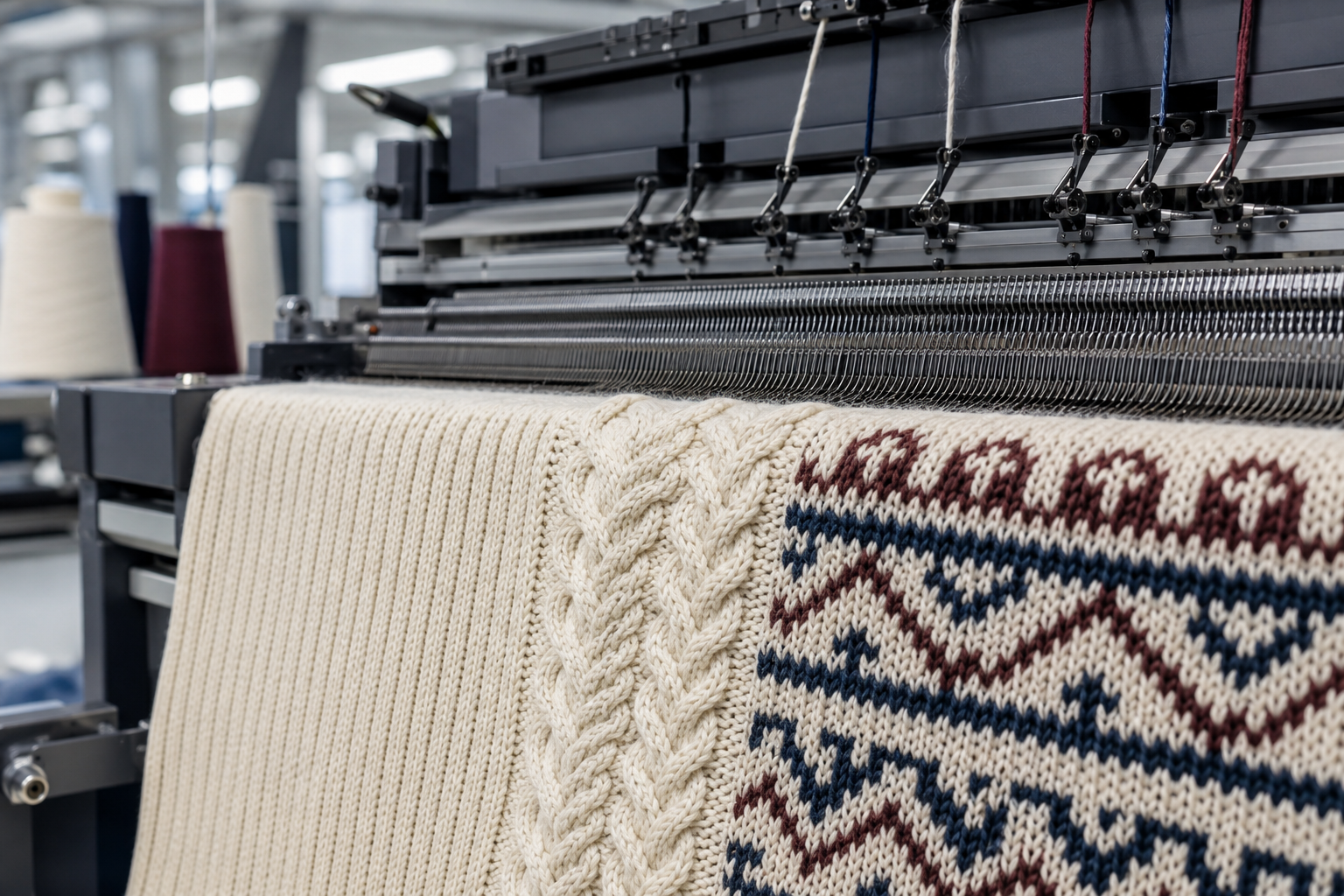
Use representative samples to validate scale, placement and fit
A pattern that looks balanced on a sketch can feel too dense, too small or too dominant once knitted. Before approving bulk production, review representative sample sections and, when needed, a complete sample in the relevant size range. Check the visual scale of the motif, the rhythm of repeats, the relationship between pattern and garment proportions, and whether the design remains legible after shaping.
Fit review should include more than the front view. Inspect sleeve movement, shoulder balance, side-seam alignment, hem behavior and the interaction between pattern placement and body shaping. A cable may pull in more than a plain knit; an openwork area may relax differently; an intarsia boundary may need alignment across linked panels. Document the decision after each fit adjustment so the approved sample becomes a reliable reference for bulk production.
This sample-based approach is useful for clothing brands, retailers and buying teams that need a clear path from design interpretation to sample development and fit adjustment. It also keeps unresolved details visible: grading, color placement, finishing and acceptable tolerance can be listed as to be confirmed until the product team signs off.
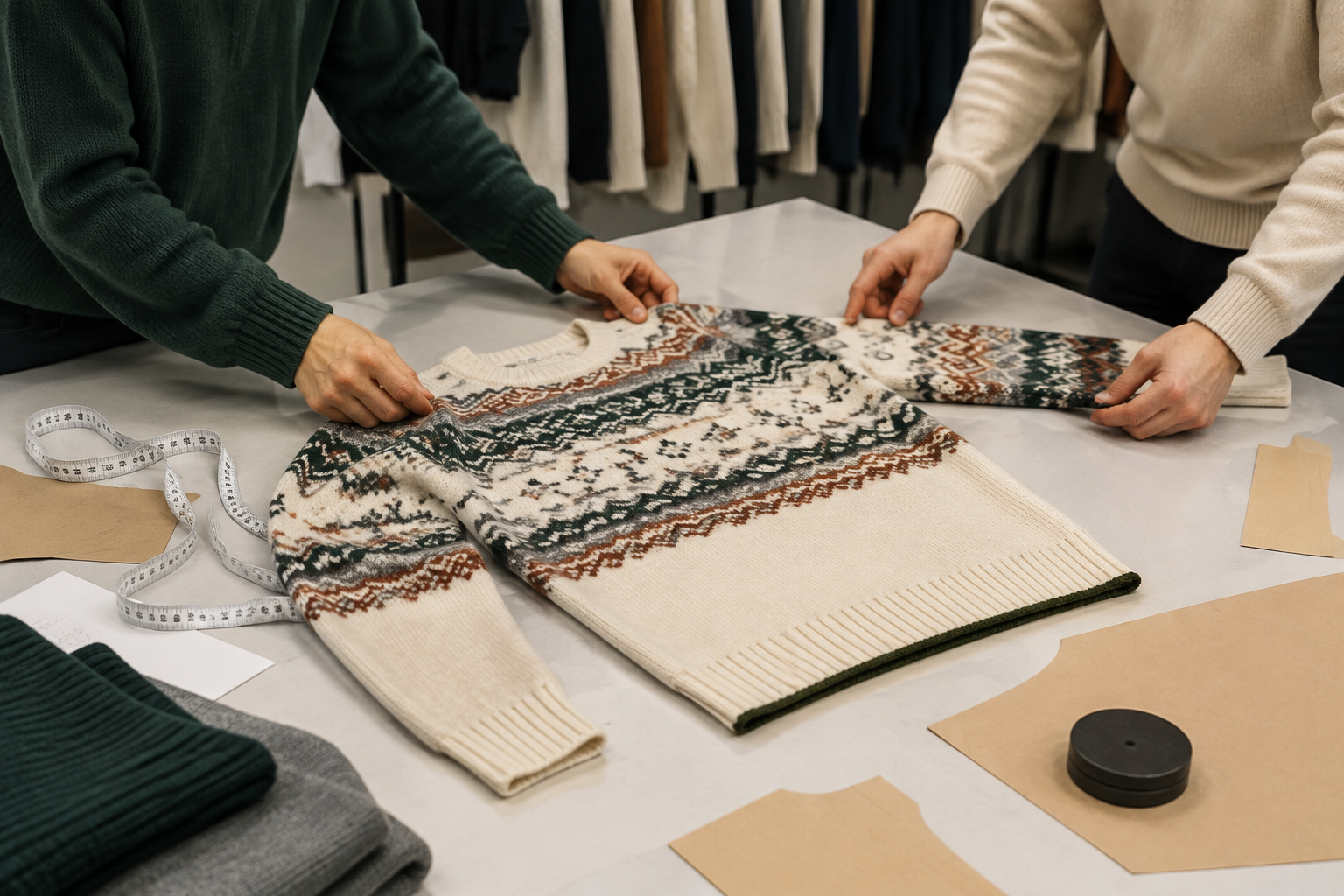
Carry the approved combination into finishing and quality control
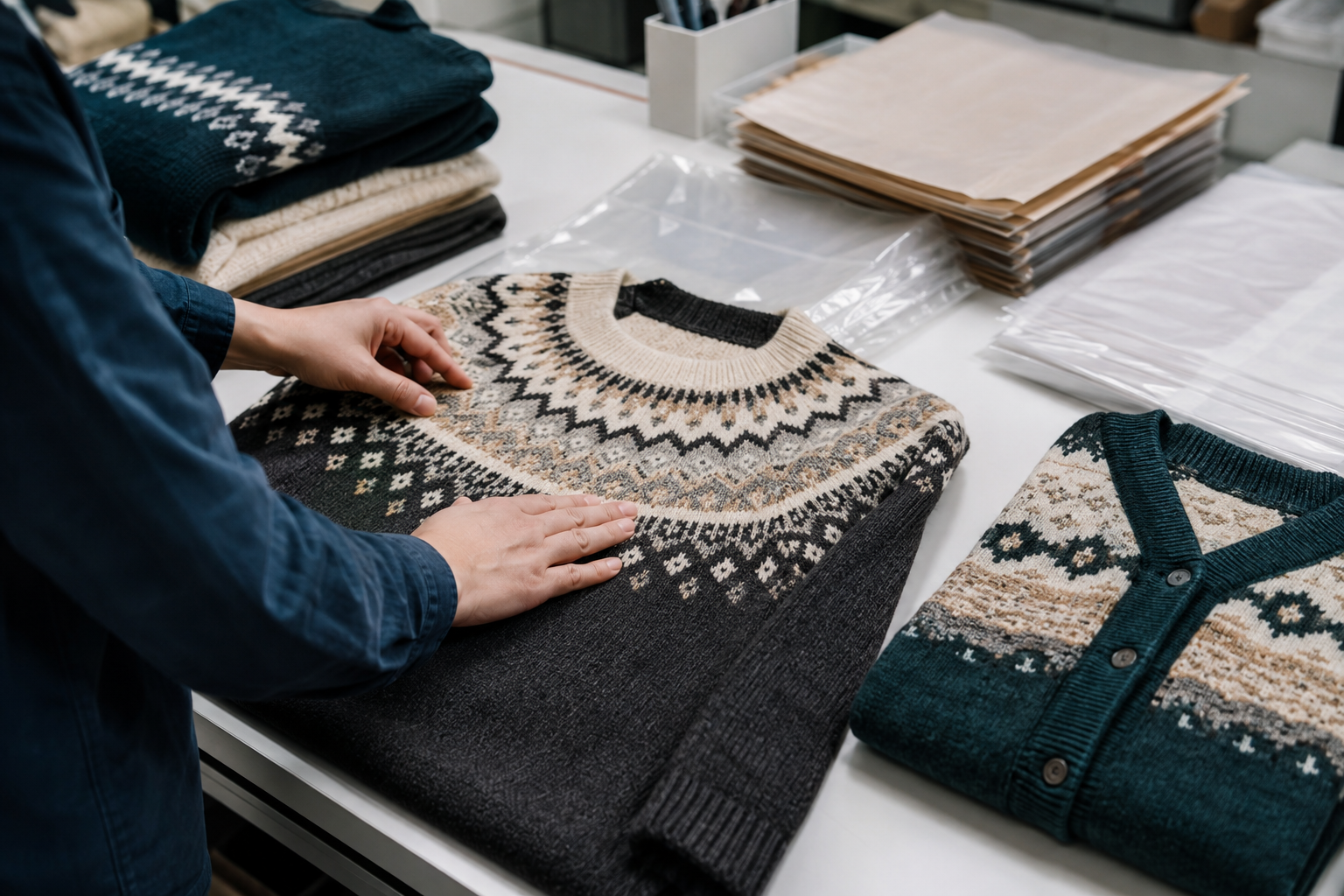
Once the pattern and stitch combination is approved, the production brief should carry the same decisions through finishing, inspection and packaging. Note the approved appearance of the surface, the intended shape after finishing, the placement of labels or trims if relevant, and any special handling needed for embroidery, sequins, appliqué, crochet or hand-finished details. The goal is to preserve product intent while the garment moves from panels to assembly and final preparation.
WTBF’s quality-check process covers raw materials, knitted panels and assembly, finished garment appearance, and packaging/shipment. For a patterned style, the inspection notes can focus on yarn consistency, motif placement, stitch transitions, panel matching, garment measurements, surface appearance and packaging protection. Specific acceptance criteria remain project-dependent and should be agreed in the technical package.
For brands looking for a knitwear manufacturing partner, a clear development brief helps connect design interpretation, yarn selection, knitting programming, sample development, fit adjustment, bulk production, finishing, quality inspection and packaging. Wait To Butterfly supports knitwear OEM, ODM, design-to-sample development and sample-based customization for sweaters, pullovers, cardigans, vests, dresses, skirts, coordinated sets, scarves and hats across menswear, womenswear, childrenswear and babywear requirements. Contact Wait To Butterfly or WhatsApp +1 (669) 358-6009 to discuss a project; MOQ and lead time are project-dependent and should be confirmed for each program.
FAQ
What should a knitwear pattern brief include?
Include product intent, garment category, silhouette, fit, target wearer, yarn direction, pattern zones, stitch techniques, color placement, measurement priorities, finishing expectations and open questions marked to be confirmed.
Should brands choose the stitch technique before sampling?
Brands should define the desired appearance and performance first, then use sampling to confirm whether jacquard, intarsia, cables, rib, lace/openwork or another technique best delivers the result.
How can brands prevent pattern misalignment in bulk production?
Specify repeat direction and placement, review representative samples, check panel and seam alignment during assembly, and keep an approved sample or technical reference for production inspection.
Can WTBF develop knitwear from a reference sample?
WTBF supports sample-based customization, design-to-sample development, pattern/sample services and knitwear OEM/ODM. Exact construction, MOQ and lead time should be confirmed as project-dependent.
Suggested internal-link anchor text: knitwear OEM and ODM services; sample-based knitwear customization; knitwear quality inspection process; sweaters and cardigans manufacturing; design-to-sample development.
Keyword notes: knitwear development brief; custom knitwear pattern development; jacquard and intarsia knitwear; cable knit sweater manufacturer; fully fashioned knitwear; knitwear sample approval; OEM sweater production. No public search-volume data used.