For clothing brands, retailers, and buying teams, a knitwear colorway is not fully approved when the shade looks right on a screen. The development team also needs a practical way to review color consistency, surface appearance, fit, finishing, and packaging readiness before bulk production begins.
This review is especially important for sweaters, cardigans, knitted vests, dresses, skirts, coordinated sets, scarves, and hats. A clear approval process helps connect the design brief with yarn selection, knitting programming, sample development, fit adjustment, and final inspection.
1. Start With a Color and Appearance Brief
The first step is to define what “correct” means for the product. A development brief can identify the intended color reference, yarn composition or hand-feel direction, stitch structure, decoration, measurements, and acceptable appearance characteristics. It should also state whether the product needs a clean, smooth surface or a visibly textured effect such as cable knit, jacquard, intarsia, rib knit, lace/openwork, embroidery, flocking, printing, appliqué, sequins, crochet, or hand-finished details.
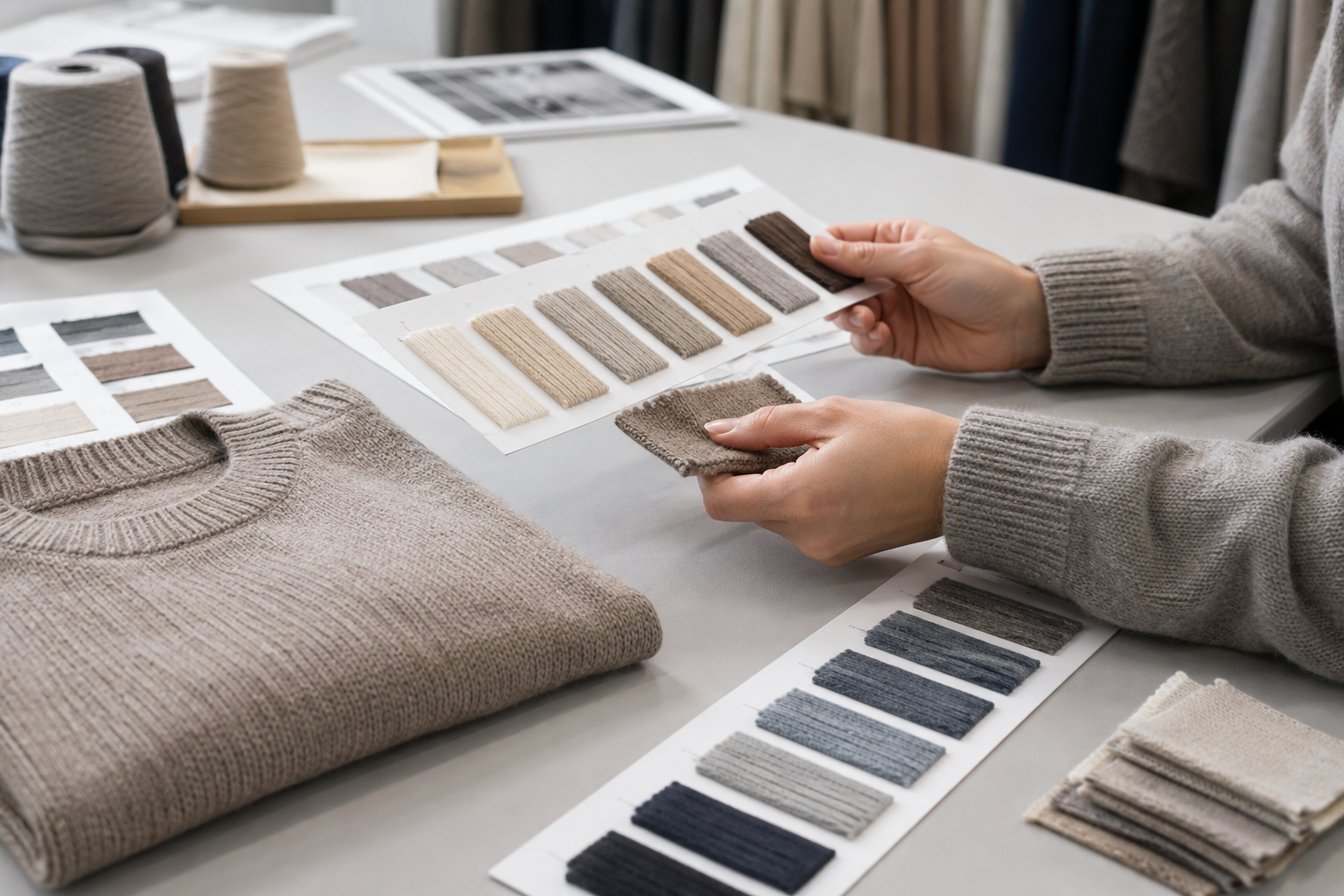
Color review should consider the full garment rather than a single small swatch. Brands can ask the supplier to compare the yarn, knitted panels, assembled sample, and finished garment under consistent lighting. If the exact shade, material, or standard is still under development, the requirement should remain project-dependent or to be confirmed instead of being treated as a fixed production promise.
2. Connect Yarn Choice With Knitting Structure
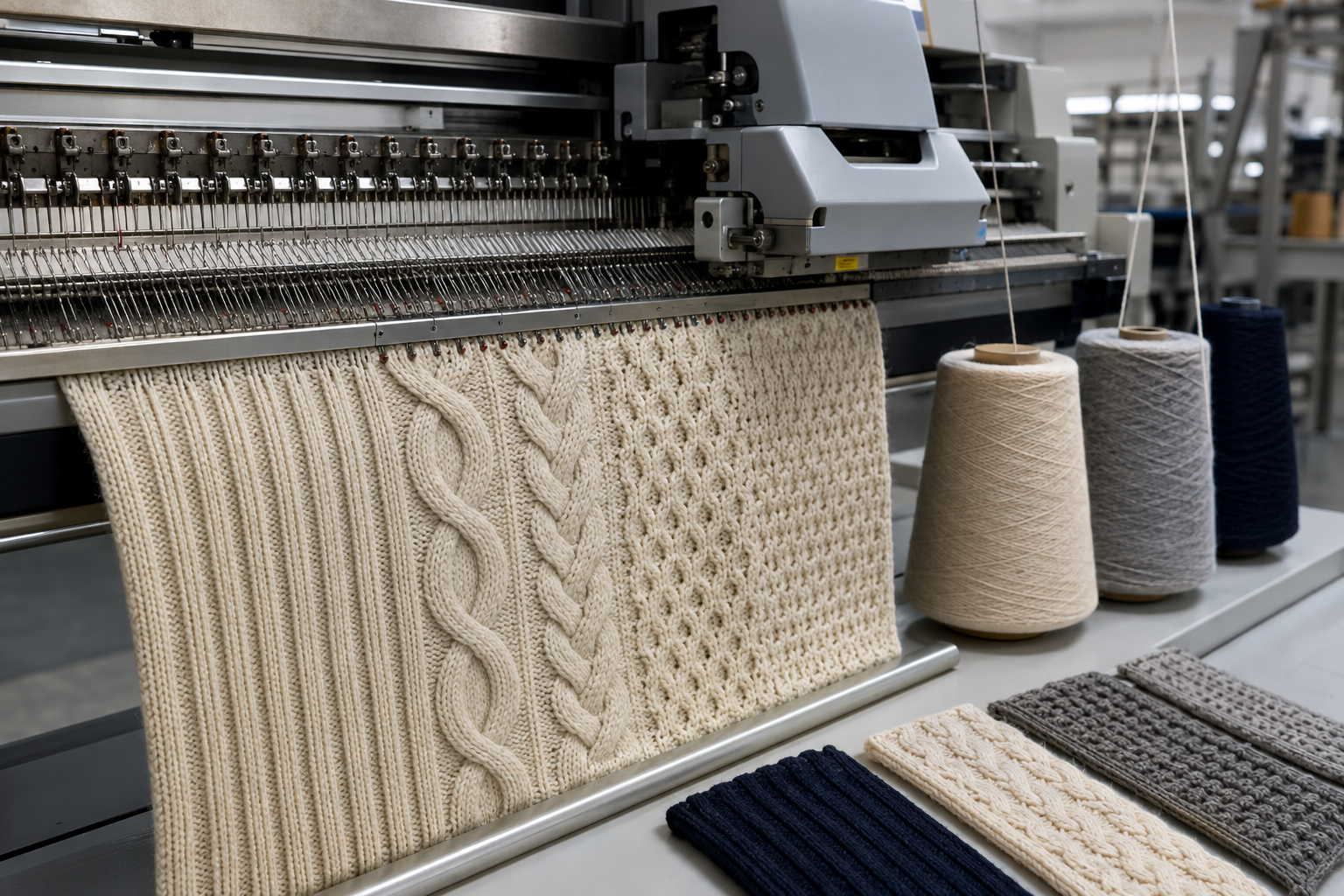
The same color can look different when the stitch density, yarn texture, or construction changes. A computerized flat knitting program influences the visual balance of jersey, rib, cable, jacquard, intarsia, and fully fashioned components. Yarn selection also affects luster, fuzziness, depth of color, and how the surface responds to finishing.
During sample development, the team can review whether the chosen yarn and stitch structure support the intended appearance across body panels, sleeves, cuffs, collars, hems, and decorative areas. This is where a knitwear OEM or ODM partner can help translate a reference into a workable combination of yarn, programming, construction, and linking details.
3. Review the Representative Sample in Wearable Conditions
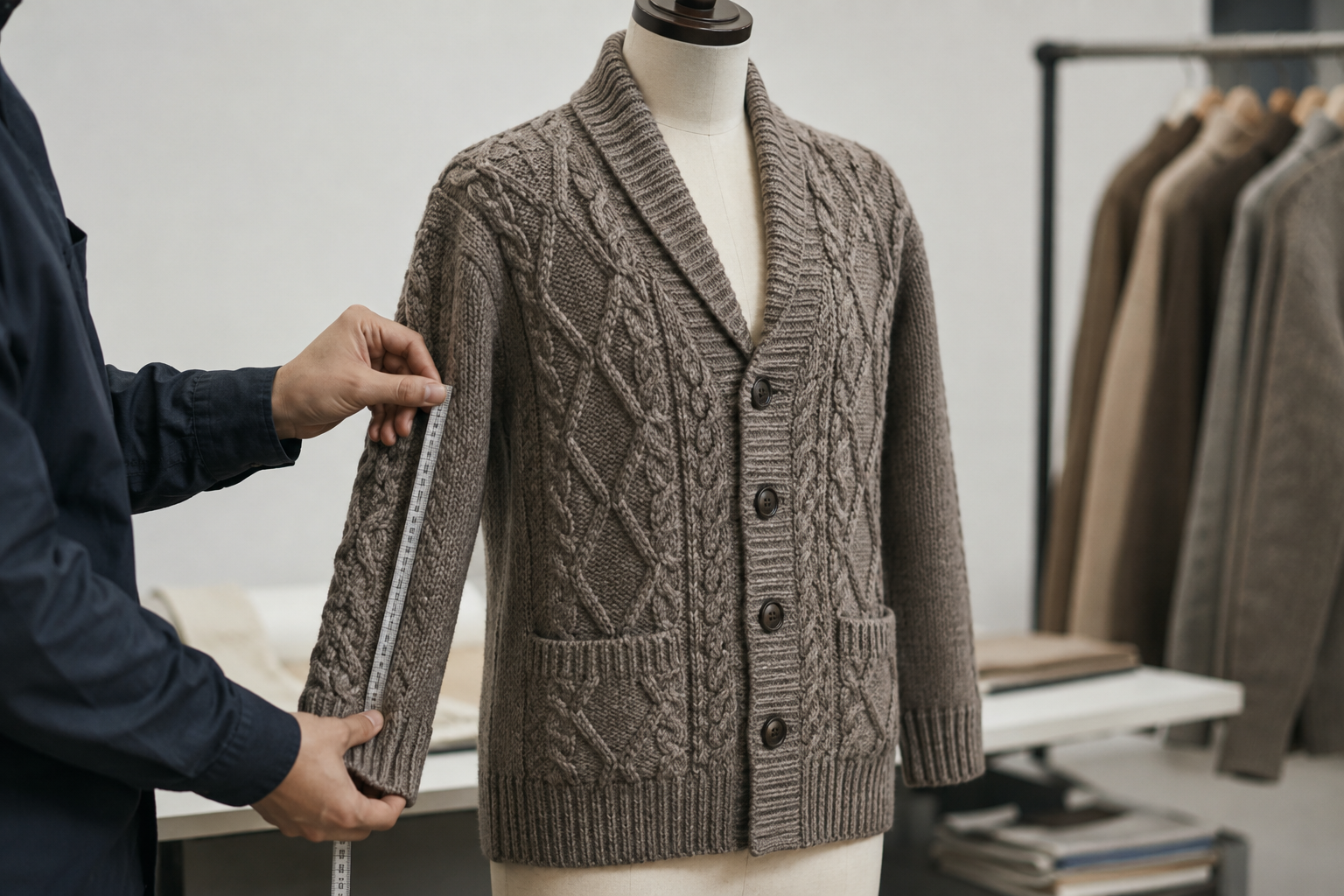
Appearance approval should include a representative-size sample and a practical fit review. Check the garment on a suitable form or model, then inspect the front, back, side seams, neckline, sleeve joins, cuffs, hems, and areas with pattern repeats. Look for visible shade variation, distortion after handling, uneven tension, misaligned motifs, unwanted shine, or a surface that does not match the approved direction.
The review should record comments in a way that can be applied to the next sample. Useful notes describe the location, the observed issue, the requested adjustment, and the approval reference. This creates a controlled loop between design interpretation, fit adjustment, sample revision, and bulk approval without relying on vague feedback such as “make it look better.”
4. Confirm Appearance Through Finishing and Quality Checks
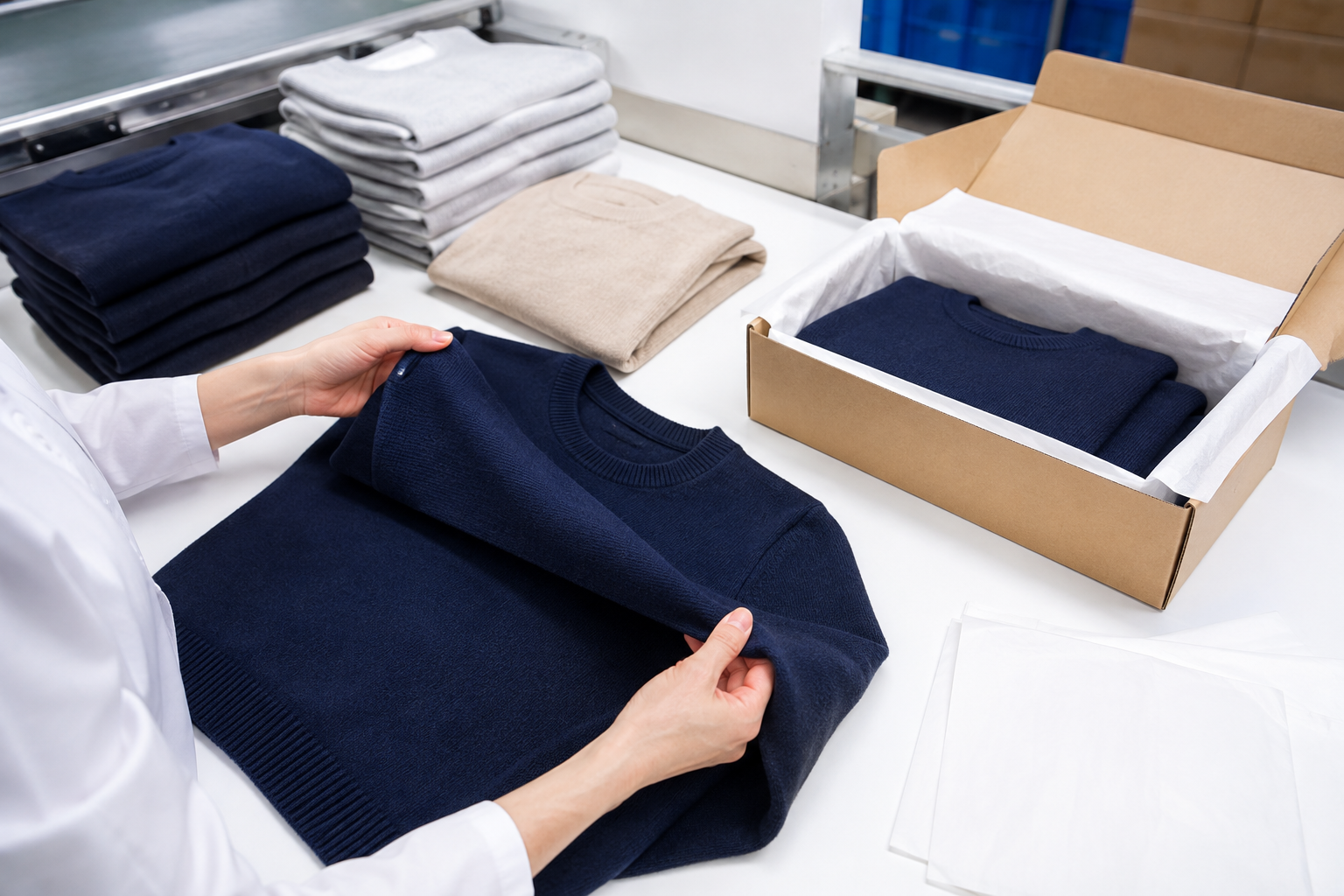
The final review should continue after knitting and assembly. Finishing can change the garment’s hand feel, dimensions, surface, and visual uniformity, so the finished appearance should be checked before packing. WTBF’s quality process covers raw materials, knitted panels and assembly, finished garment appearance, and packaging or shipment readiness.
For a practical approval record, brands can retain the approved reference, sample comments, measurement notes, decoration details, and photographs of the accepted appearance. The production partner can then use the same information during inspection and packaging. Specific MOQ, lead time, or testing claims should be confirmed for the individual project rather than assumed.
FAQ
What should a knitwear color approval include?
It should include the color reference, yarn direction, stitch structure, decoration, sample size, lighting conditions, appearance comments, and the person or team responsible for approval.
Can stitch structure affect perceived color?
Yes. Stitch density, yarn texture, surface relief, and finishing can change how light interacts with the garment, which may affect perceived color depth and uniformity.
When should appearance be checked?
Review it during yarn and sample development, after assembly and fit adjustment, and again after finishing before packaging or shipment.
What if the final color standard is not confirmed?
Mark it as project-dependent or to be confirmed, and document the reference that will be used for the next sample or approval stage.
CTA
Need help turning a color and appearance direction into a production-ready knitwear sample? Contact Wait To Butterfly for knitwear OEM, ODM, design-to-sample development, sample-based customization, and pattern or sample services. Visit waittobutterfly.com or contact WhatsApp +1 (669) 358-6009 and xyzzzlife@gmail.com.
Suggested internal-link anchor text
knitwear OEM and ODM development; knitwear sample development; computerized flat knitting services; knitwear quality inspection process.
Keyword notes
Target region: Global B2B; English. Keywords: knitwear color approval checklist; knitwear colorfastness and appearance review; sweater sample approval before bulk production; knitwear OEM and ODM manufacturer; computerized flat knitting development; knitwear quality inspection before shipment.