
When a clothing brand approves a knitwear style, measurements need to communicate more than a single sample’s dimensions. They need to define how the garment should be interpreted during knitting, linking, finishing, inspection, and packing. A practical measurement tolerance checklist helps product developers, buying teams, and manufacturers review the same points before bulk production begins.
For a B2B knitwear project, the checklist can begin with the approved sample, tech pack, reference measurements, construction details, and intended size range. It should then connect each measurement point to the way the garment is made and checked. This makes the approval process easier to repeat across sweaters, pullovers, cardigans, knitted vests, dresses, skirts, and coordinated sets.
1. Start With a Clear Measurement Brief
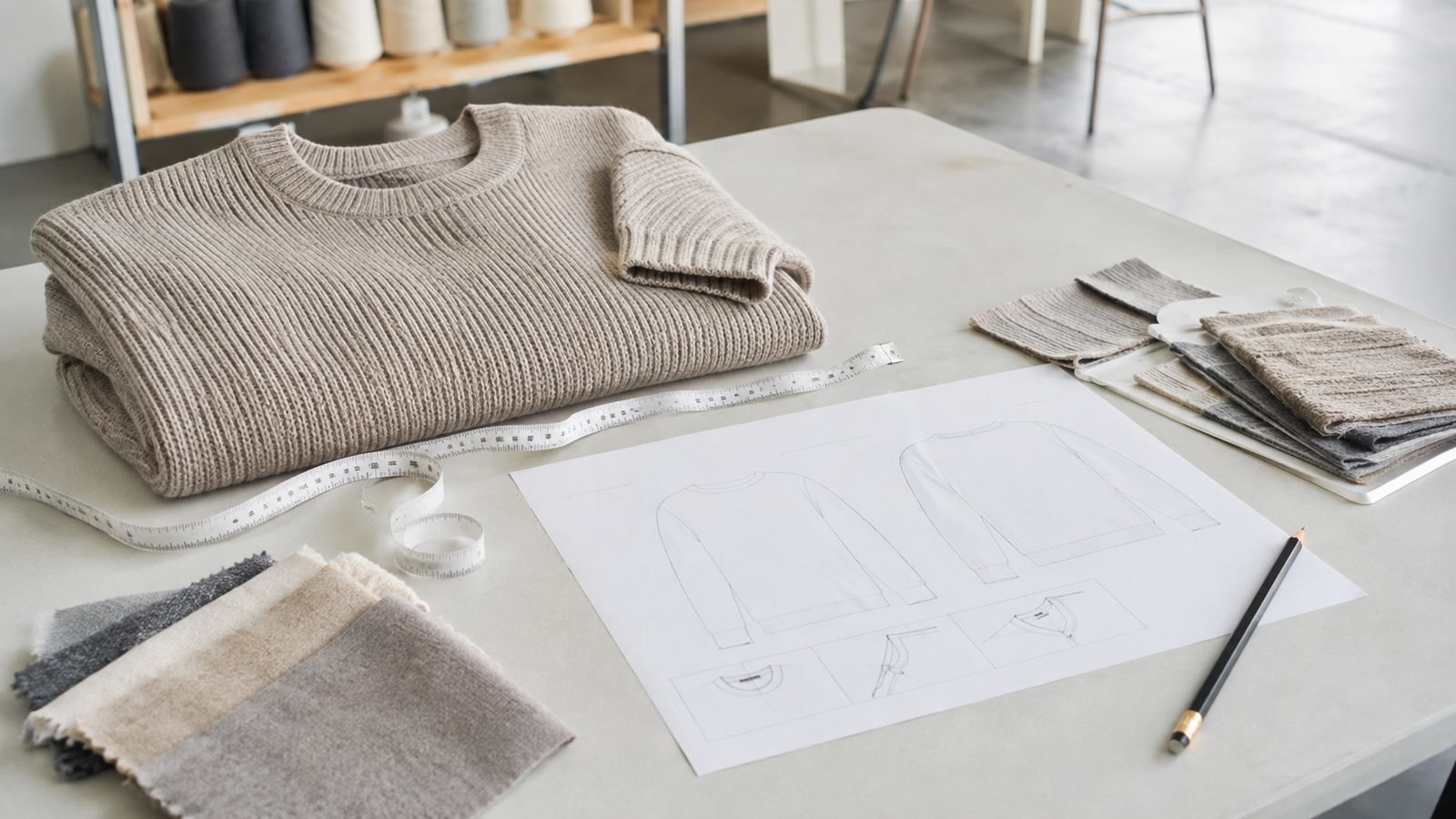
The first step is to define what will be measured, where each point begins and ends, and how the garment should be positioned during measurement. Useful points may include body length, chest or bust width, shoulder width, sleeve length, armhole depth, cuff opening, hem opening, neckline width, and garment width at selected levels. The exact points should follow the style and the brand’s own product specifications.
Measurement instructions should also state whether the garment is measured flat, relaxed, or after a specified finishing treatment. This matters because knitwear can respond differently depending on stitch structure, yarn selection, tension, rib construction, and finishing. A clear development brief gives the knitwear OEM or ODM partner a common reference before sample development and fit adjustment begin.
2. Connect Tolerances to Knit Structure and Construction
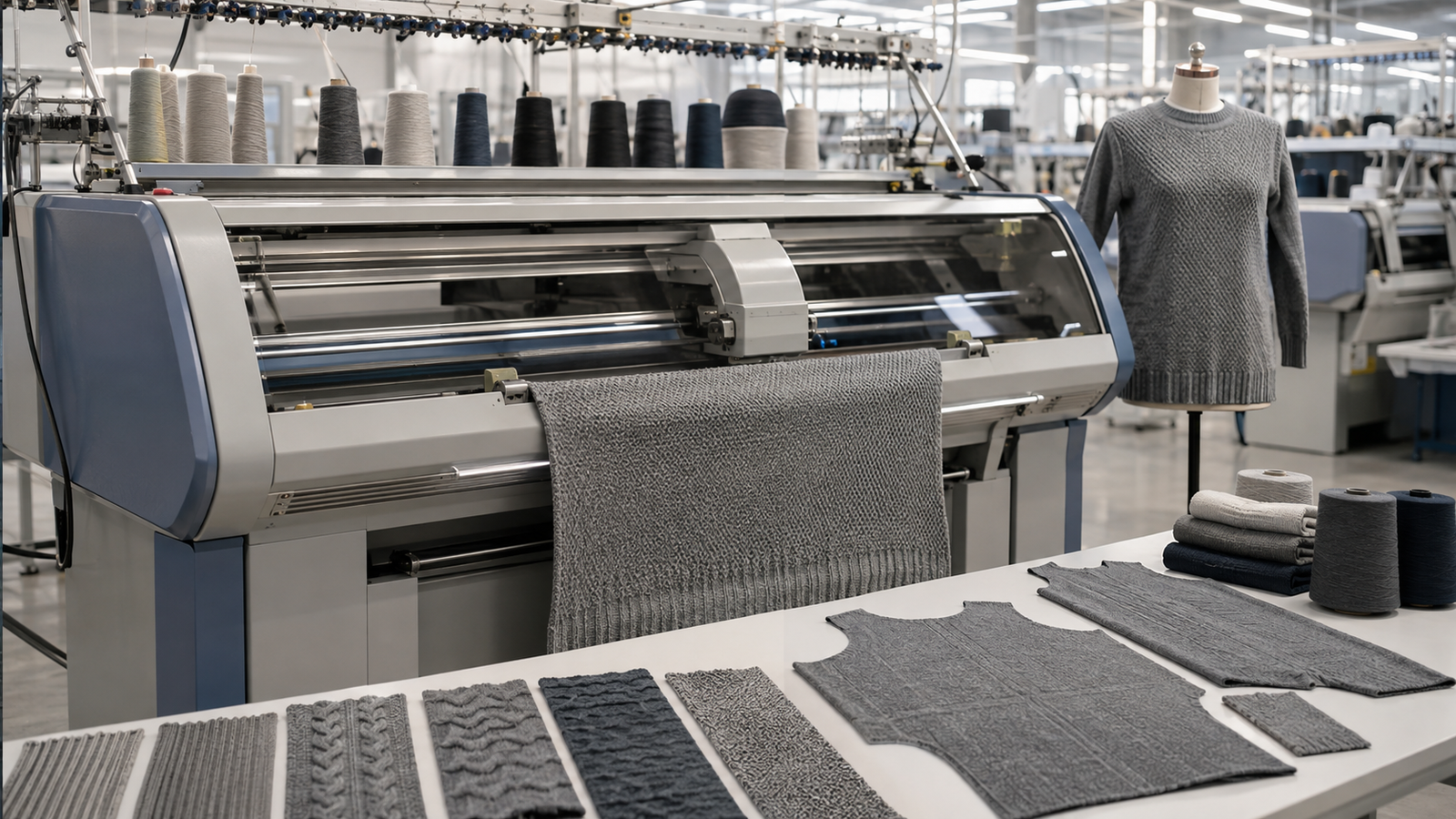
Not every measurement point carries the same production risk. A ribbed cuff, cable-knit panel, lace or openwork area, jacquard motif, intarsia block, and fully fashioned shaping can each influence how a measurement behaves. The checklist should identify which points are controlled by stitch programming, panel dimensions, linking, or finishing.
For example, a brand may want to review the relationship between body width and hem opening, or between sleeve length and cuff depth. On a cardigan, front opening alignment and button-area stability may need separate attention. On a knitted dress or skirt, length and width should be checked together because the visual balance can change when the fabric relaxes. Recording these relationships helps the development team adjust yarn, stitch density, pattern measurements, or construction details before bulk approval.
WTBF’s confirmed production resources include computerized flat knitting machines and linking machines, supporting a workflow that connects knit programming, knitted panels, assembly, and finishing. The appropriate tolerance remains project-dependent and should be confirmed against the approved specification and sample.
3. Review a Representative Sample Across the Size Set
One approved size cannot always explain how a style will look across multiple sizes. A measurement checklist should show which points are graded, which points stay proportionally stable, and which points require separate review. This is especially useful for brands developing menswear, womenswear, childrenswear, babywear, or multi-size collections.
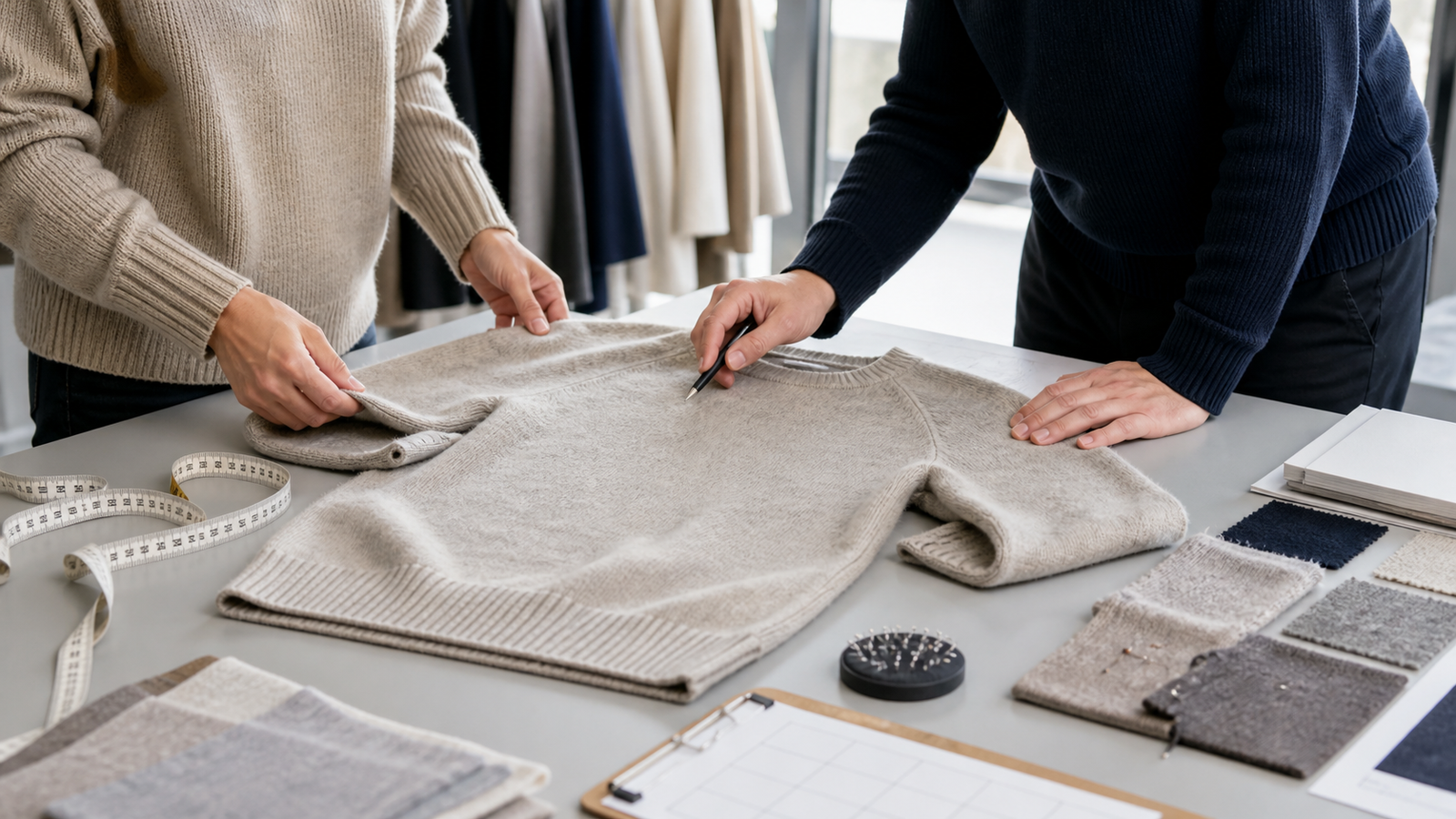
During sample review, compare the garment against the approved measurement chart and inspect the fit on a representative size. Check balance, shoulder placement, sleeve position, neckline shape, body ease, hem behavior, and the relationship between decorative or engineered details and the measurement points. If a measurement is outside the agreed project tolerance, record the observation with the sample version, measurement method, and requested adjustment.
Sample-based customization can be useful when a brand has a physical reference garment or a specific fit intention. The manufacturer can interpret the sample, confirm yarn and stitch decisions, develop a sample, and refine fit before bulk production. This makes the tolerance checklist part of a review loop rather than a document used only at the end.
4. Carry the Same Checks Into Final Inspection and Packing
The checklist should not stop when the development sample is approved. Before shipment, the production team can use the agreed measurement points alongside appearance and construction checks. WTBF’s confirmed quality-check stages cover raw materials, knitted panels and assembly, finished garment appearance, and packaging or shipment.
For finished garments, review the measurement points in a consistent condition and note any visible effect from finishing, pressing, folding, or packing. Also check that labels, trims, decoration, panels, and seams do not distort the intended measurement. A clear record can separate measurement observations from appearance issues, making corrective action easier to communicate.
Because MOQ and lead time are project-dependent unless confirmed for a specific order, the checklist should leave those commercial fields open for project confirmation. The same principle applies to tolerances: use the brand’s approved chart and mutually confirmed production standard rather than inserting generic numbers.

A Practical Knitwear Measurement Checklist
- Approved sample or reference garment identified by version and date.
- Measurement points named with clear start and end locations.
- Measurement condition defined: flat, relaxed, finished, or another agreed method.
- Size range and representative review size recorded.
- Stitch structures, ribs, engineered details, and construction-sensitive points flagged.
- Measurement chart compared with sample observations and fit comments.
- Adjustments linked to a sample version or development note.
- Final inspection points carried into finished-garment and packing checks.
- Project-dependent commercial items marked to be confirmed.
Frequently Asked Questions
Why does knitwear need a measurement tolerance checklist?
Knitwear measurements can be influenced by yarn, stitch structure, tension, linking, finishing, and packing. A checklist gives the brand and manufacturer a shared method for reviewing those variables.
Should every knitwear style use the same measurement points?
No. Core points can be reused, but the checklist should be adapted to the garment category, construction, stitch details, size range, and fit intention.
Can a reference garment be used instead of a complete tech pack?
A reference garment can support sample-based customization, but the team should still confirm measurement points, construction expectations, and approval standards before bulk production.
When should the measurements be checked?
Review them during development, on the approved sample, across the relevant size set, and again during finished-garment quality inspection.
CTA
If your brand needs help turning a reference garment, concept, or specification into a reviewable knitwear development brief, contact Wait To Butterfly at waittobutterfly.com, WhatsApp +1 (669) 358-6009, or xyzzzlife@gmail.com. WTBF supports knitwear OEM, ODM, design-to-sample development, sample-based customization, and pattern or sample services for clothing brands, retailers, and buying teams.
Suggested internal-link anchor text: knitwear OEM and ODM development; sample-based knitwear customization; knitwear quality inspection; computerized flat knitting services.
Keyword notes: knitwear measurement tolerance checklist; knitwear sample approval; knitwear fit review; knitwear OEM manufacturing; knitwear ODM development; sample-based customization; knitwear quality inspection. Target country/region: global B2B buyers, with emphasis on the United States, Canada, the United Kingdom, Europe, Australia, and other English-language markets. Language: English. Search-volume data: no public data used.