
Hem behavior and side-seam alignment affect how a knitted garment fits, hangs and looks in a retail setting. For clothing brands, these details deserve a clear sample-development checkpoint before bulk production. Review yarn, stitch structure, dimensions, assembly and finishing as one product system.
Define the intended hem and seam in the development brief
State whether the garment needs a clean straight edge, ribbed hem, shaped hem or relaxed drop. For side seams, note the desired construction, seam position, panel relationship, stripe or motif matching, and any fully fashioned appearance. Add body length, hem opening, hem depth and side-seam measurements to the reference sample or technical brief. Mark open points project-dependent or to be confirmed. Wait To Butterfly connects design interpretation, yarn selection, knitting programming and sample development.
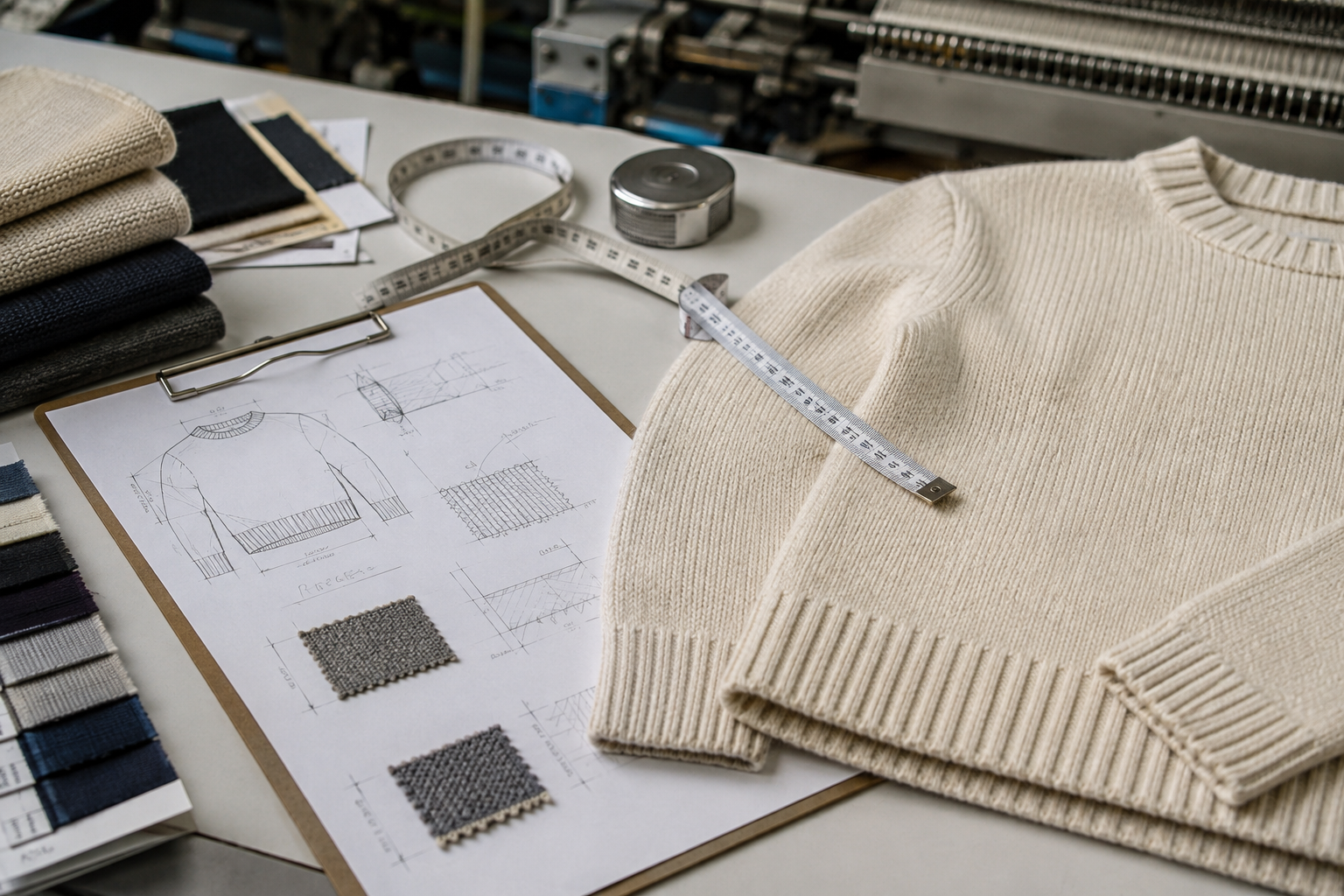
Review yarn and stitch structure before judging the edge
Yarn composition, yarn count, stitch density and the transition into rib affect recovery, roll, weight and drape. Compare the sample flat, hanging and lightly handled. Inspect side-seam stitch direction, panel width and tension changes. Computerized flat knitting and linking support repeatable panel and assembly work, but settings remain product-specific. Confirm jacquard, intarsia, cable, rib or openwork construction through sampling.
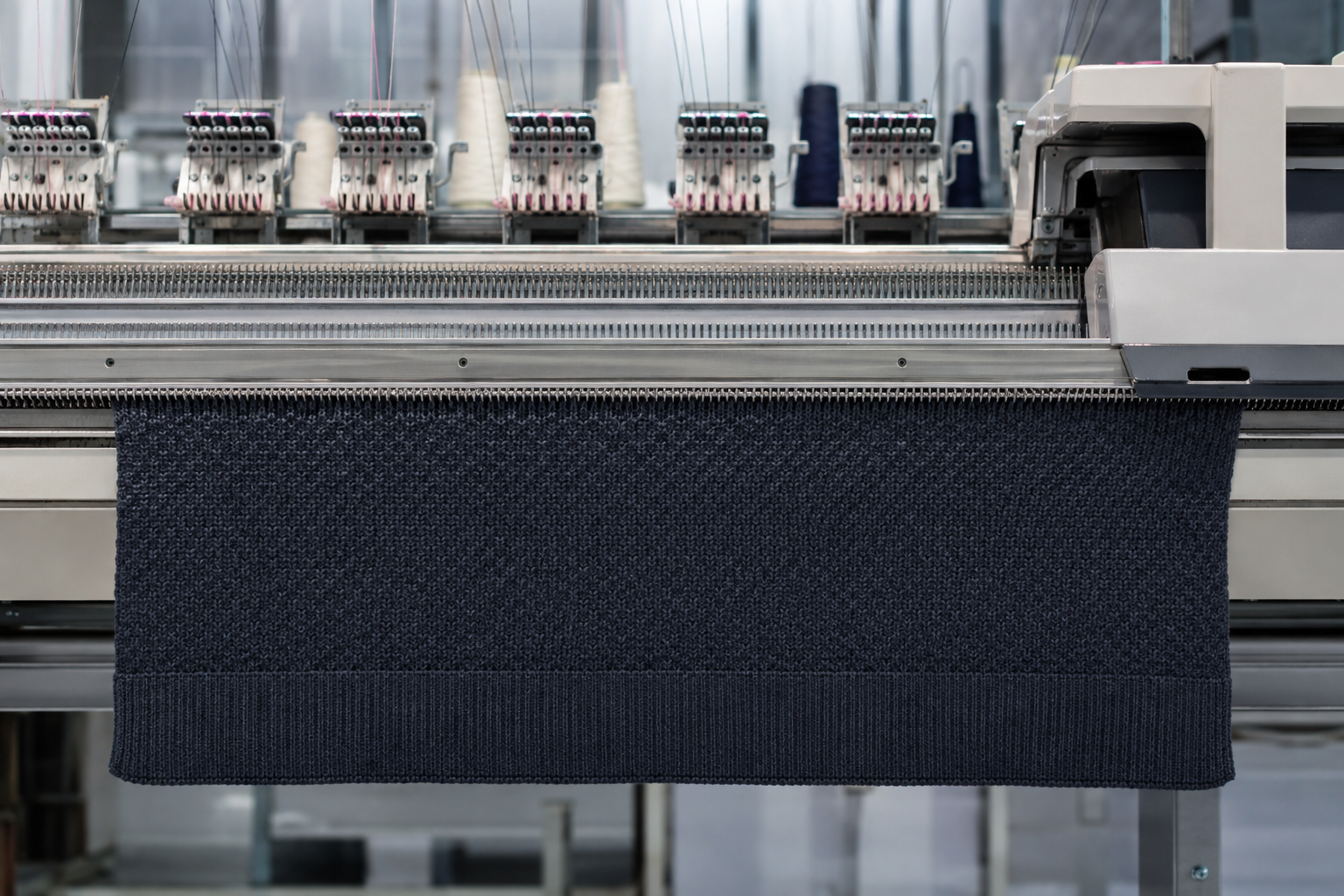
Check fit, alignment and recovery on a representative size
Measure hem opening and body length, then observe whether side seams hang vertically or twist when worn. Raise the arms, sit and walk to check hem lift, seam torque, stretching and recovery. Review front and back together, and record photos, measurements and focused revision notes.
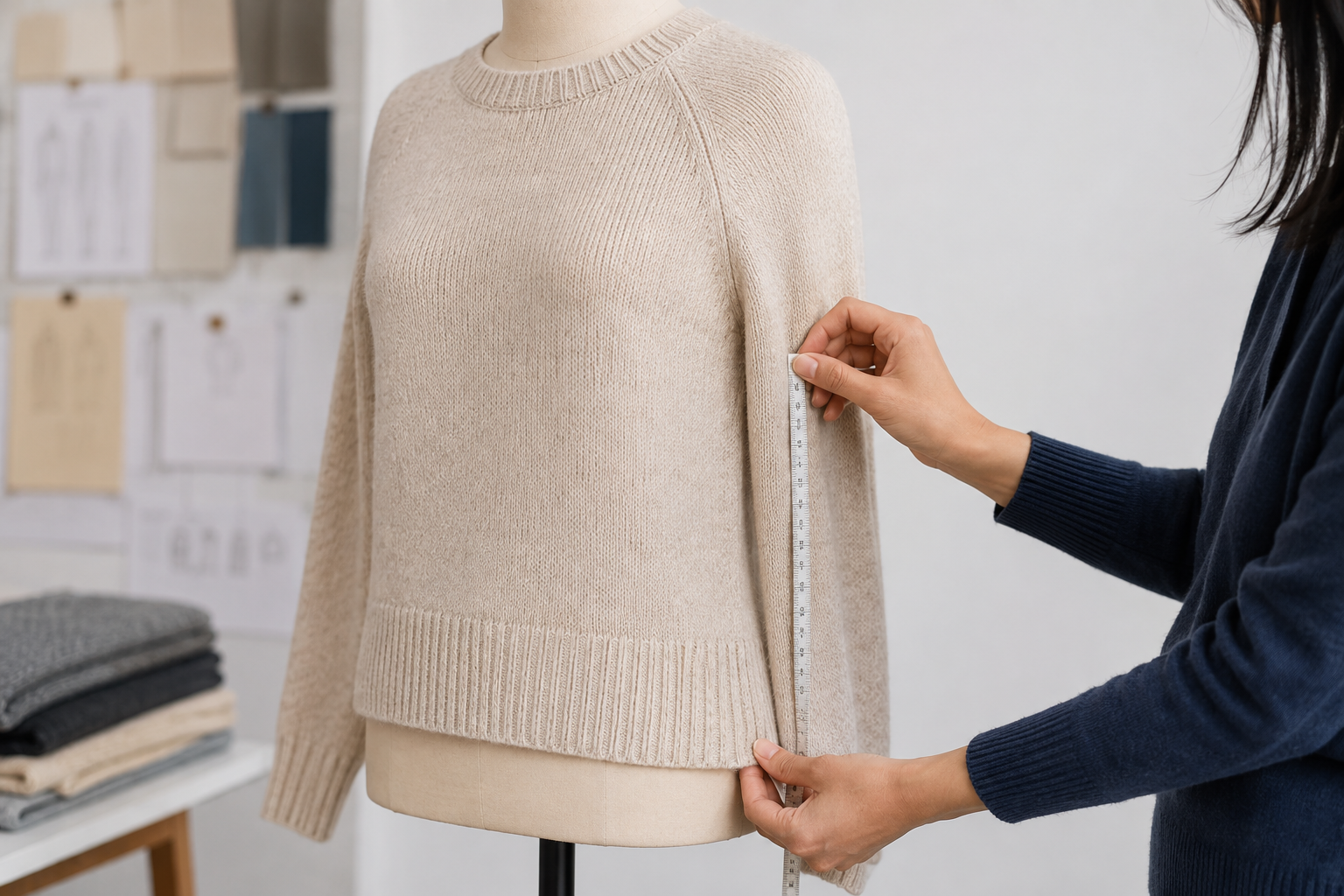
Confirm finishing, inspection and packing readiness
Review finished garment appearance for waviness, curling, uneven linking, skipped stitches, loose ends, puckering or seam impressions. Connect the checklist to raw materials, knitted panels and assembly, finished garment appearance, and packaging or shipment readiness. Keep the accepted sample, measurement sheet, construction notes and revision status together. Wait To Butterfly supports knitwear OEM, ODM, design-to-sample development, sample-based customization and pattern/sample services. Contact Wait To Butterfly, WhatsApp +1 (669) 358-6009, or xyzzzlife@gmail.com.
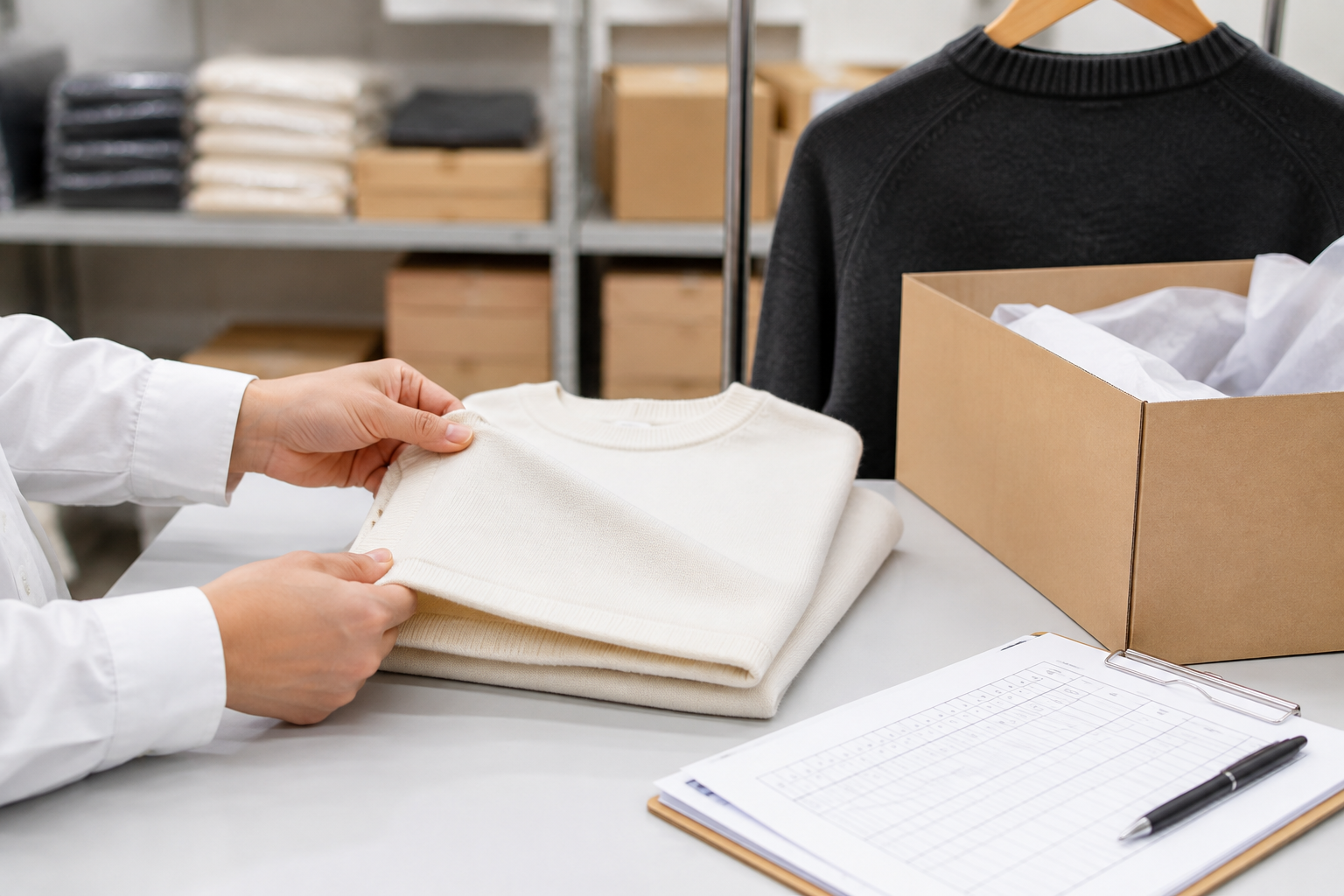
FAQ
Why review knitwear hems before bulk production?
The hem affects length, silhouette, recovery and comfort. Sample review can identify changes before they repeat across bulk production.
How can buyers check knitted side-seam quality?
Check seam position, vertical alignment, panel width, stitch consistency, pattern placement and behavior while hanging and moving.
What belongs in a knitwear development brief?
Include reference samples, yarn and stitch notes, key measurements, hem and seam intent, fitting requirements and revision status.
Can hem and side-seam details be customized?
They can be developed around yarn, stitch structure, panel design, assembly and finishing requirements. Confirm feasibility through sampling.
CTA: Share your reference sample or development brief with Wait To Butterfly to discuss knitwear hem construction and side-seam alignment.