For a clothing brand, the neckline is one of the first areas a customer notices and one of the easiest areas to misread during knitwear development. A collar can look correct in a sketch but feel too tight, flare after wear, sit unevenly or lose its intended proportion when translated into knitted panels. A structured review before bulk production helps a buying team protect the design intent while giving the manufacturer clear instructions.
This guide explains a practical review sequence for sweater collars, crew necks, V-necks, polo necks and other knitwear neckline details. The same approach can support knitwear OEM, ODM and design-to-sample development when a brand needs to move from a reference, tech pack or sample toward repeatable production.
Turn the neckline idea into a measurable development brief
Start by describing the neckline as a construction requirement rather than only a visual detail. Record the intended neckline type, finished opening, collar height, width of the rib or trim, depth of a V point where relevant, shoulder relationship and whether the edge should look soft, compact, clean or deliberately relaxed. Reference measurements should be taken on the representative sample size and identified as finished-garment measurements.
The brief should also explain the expected relationship between yarn, gauge and stretch. A fine-gauge merino-style look, a chunky cotton-blend sweater and an openwork fashion knit will not respond to the same collar treatment. Where the exact yarn composition, gauge or recovery is still being tested, mark the item as project-dependent or to be confirmed instead of implying a fixed specification.
Include a reference image or physical sample when the neckline has a particular roll, edge finish, contrast color, cable, jacquard or hand-finished detail. Ask the development team to confirm which parts are design intent and which parts may change for stability, comfort or manufacturability. This creates a clear approval record before sample knitting begins.
Review stitch structure, shaping and attachment together
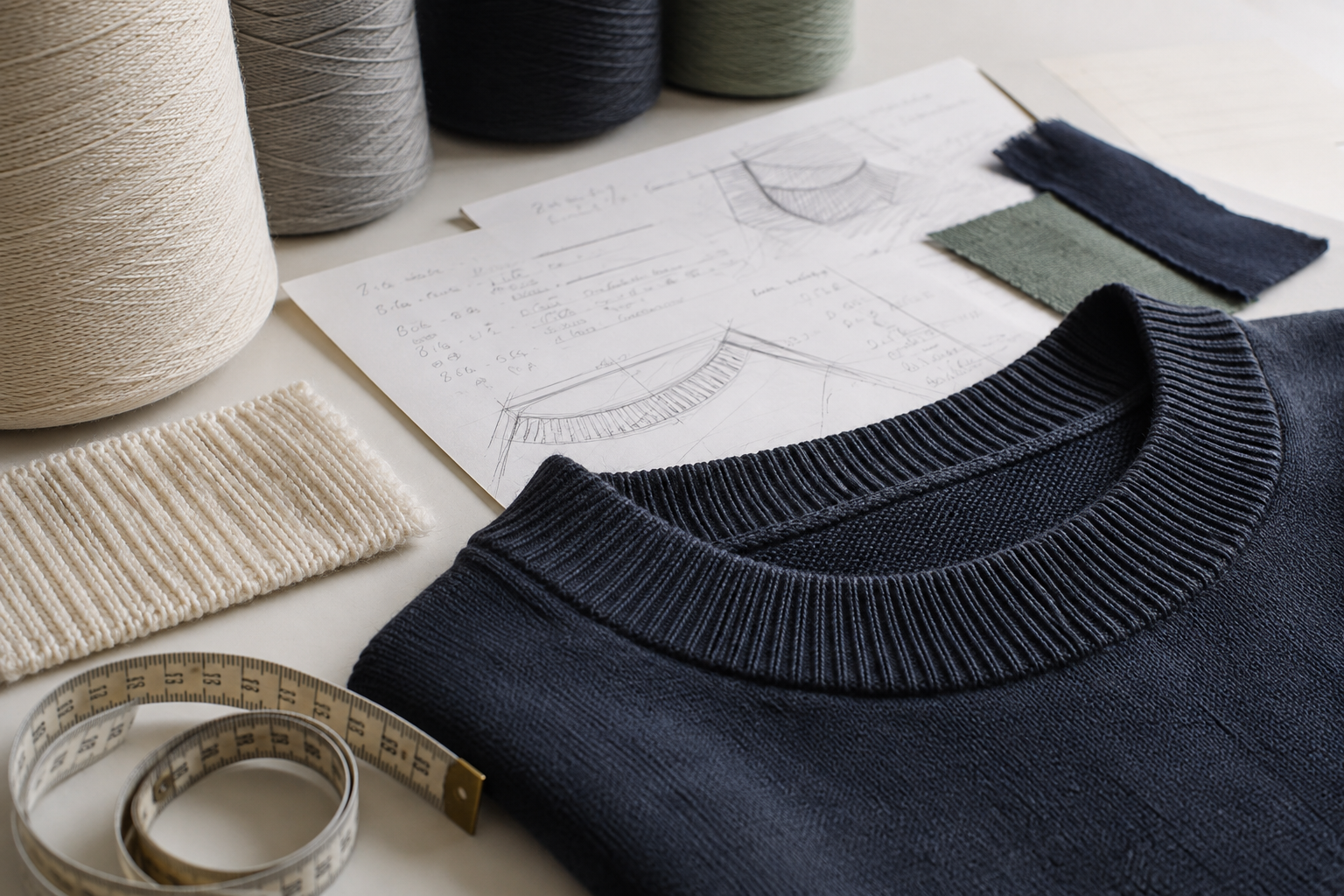
Neckline appearance depends on more than the collar strip. Review the base knit, edge structure and attachment method as one system. Rib knit may be used for recovery and visual definition, while fully fashioned knitting can help shape the neckline and reduce unnecessary bulk at the join. A cable knit, lace or openwork body may require a transition that protects the collar from distortion. Jacquard or intarsia near the neck should be checked for clean color boundaries and comfortable inside surfaces.
For a crew neck, inspect the curve, shoulder balance and collar join. For a V-neck, review the point, symmetry and reinforcement at the deepest area. For a polo or mock neck, check the height, roll and opening behavior. The manufacturer’s knitting programming and linking or assembly approach should be recorded in the sample comments, especially when the reference relies on a specific stitch density or edge finish.
The key question is whether the chosen construction can be reproduced consistently across the planned size range. A neckline that looks balanced in one size may become too shallow, wide or heavy when grading is applied. Ask for construction feedback early, before the style is treated as production-ready.
Test comfort, recovery and proportion on a representative sample
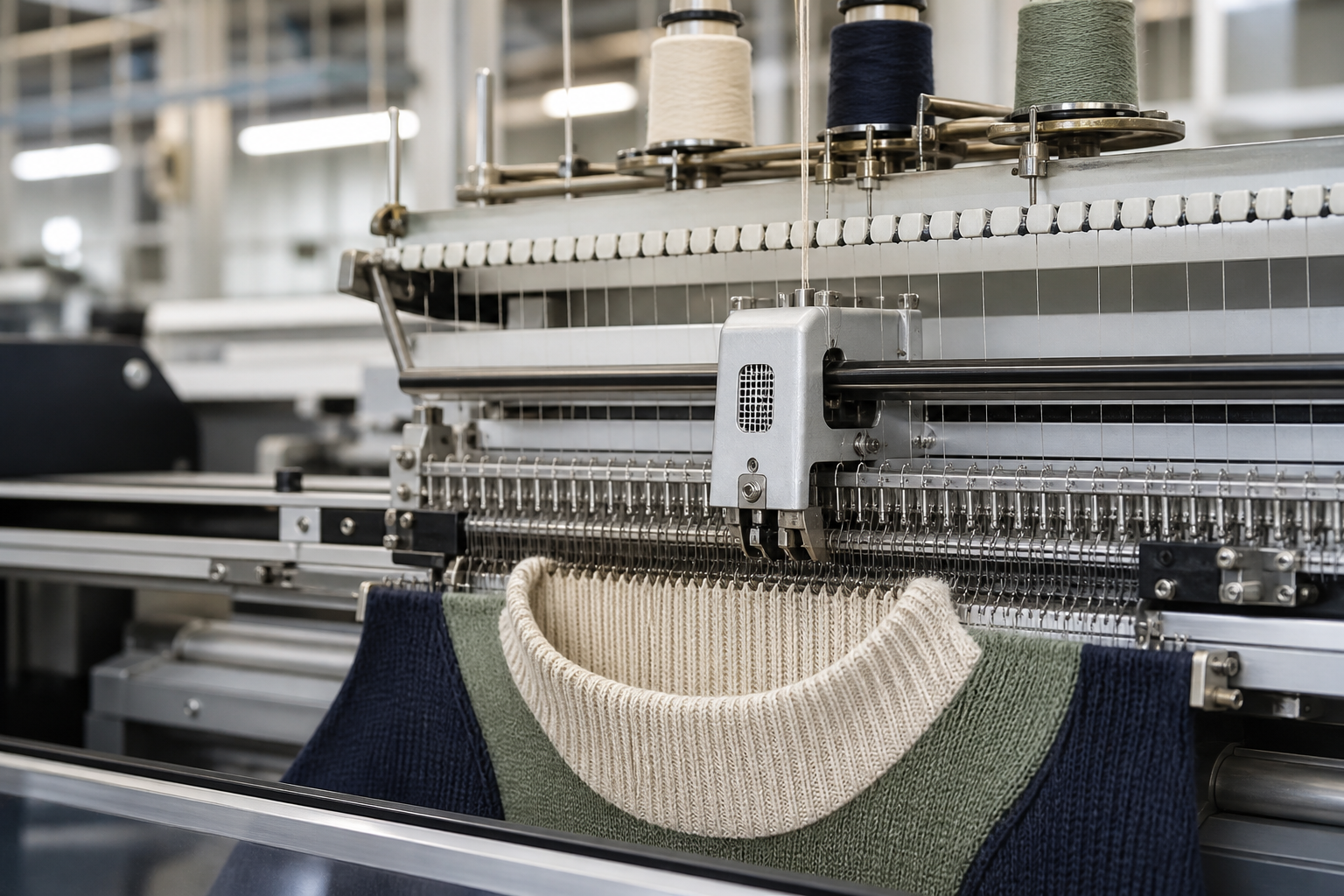
A neckline approval should include both a flat measurement review and a wear-oriented fit review. Place the sample on a form or model representative of the intended size, then check whether the collar sits at the planned position without pulling across the front or back. For a V-neck, check that the point remains centered and does not twist. For a close neck, check entry comfort and whether the opening returns after being stretched.
Review the neckline after normal handling rather than only immediately after pressing. Light stretching, folding and try-on can reveal uneven recovery, rippling, seam bulk or a collar that does not match the body tension. If the garment includes embroidery, flocking, printing, appliqué, sequins, crochet or other decoration near the neck, confirm that the added weight does not change the drape or comfort.
Record comments with photos, measurements and a clear decision: approved, revise and resubmit, or approved with a specific tolerance to be confirmed. A sample-based customization project benefits from this disciplined loop because the manufacturer can adjust the pattern, stitch programming, sample development or fit before bulk production.
Add neckline checkpoints to final inspection and packing review
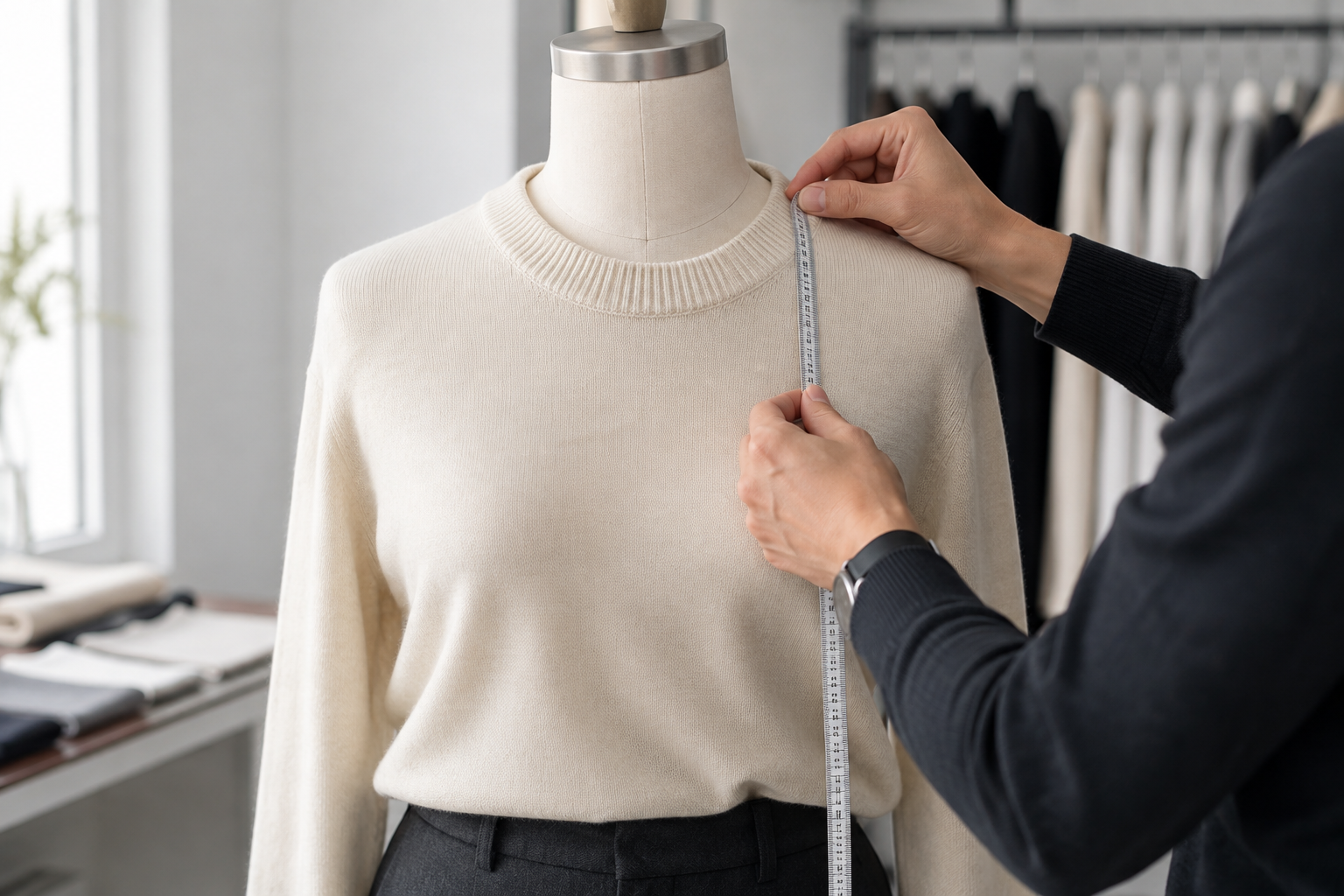
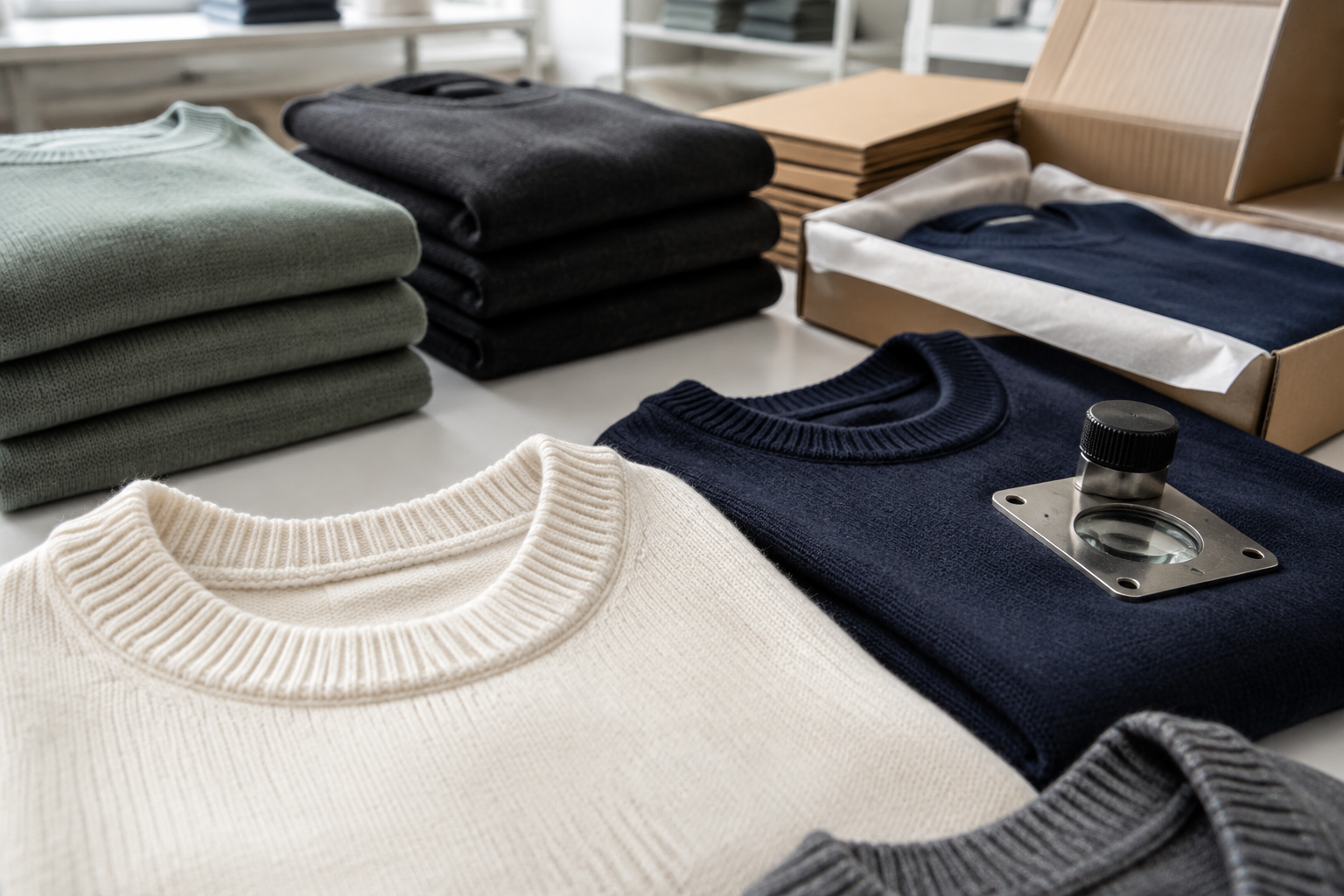
Once the neckline is approved, carry the same requirements into production quality checks. At the raw-material stage, confirm that the selected yarn and color support the intended hand feel and recovery. During knitted-panel and assembly checks, inspect collar dimensions, stitch consistency, symmetry, joins, V points and any visible tension marks. At finished-garment inspection, review appearance, fit, edge neatness and the neckline’s position on the body.
The last check is practical handling and packaging. Make sure folding or packing does not permanently flatten, stretch or distort the collar. If the garment has a delicate openwork edge, hand-finished detail or embellishment, specify how it should be protected during shipment. WTBF’s stated quality process covers raw materials, knitted panels and assembly, finished-garment appearance, and packaging/shipment, which gives brands a useful framework for placing neckline checks at each stage.
Avoid approving a neckline from a single attractive sample photograph. Keep the approved measurements, construction notes, fit comments and packing expectations together so the development record can guide production and future repeats. If a required tolerance, MOQ or lead time has not been confirmed for the project, treat it as project-dependent or to be confirmed.
FAQ
What should a brand include in a sweater collar development brief?
Include the neckline type, representative-size measurements, collar height and width, desired stretch and recovery, yarn or gauge direction, reference images or samples, edge finish, color details and any decoration near the neckline. Mark unconfirmed production details as to be confirmed.
Is rib knit always the best choice for a knitwear neckline?
No. Rib knit can support recovery and definition, but the best construction depends on the yarn, gauge, silhouette, body stitch structure, comfort target and design intent. Fully fashioned shaping or another edge treatment may be more suitable for a specific style.
How can buyers reduce neckline fit risk before bulk production?
Approve a representative-size sample, measure the finished opening, test try-on comfort and recovery, inspect symmetry and record revisions with images. Then carry the approved construction into the size range and production inspection checklist.
Can a knitwear manufacturer help develop a neckline from a reference sample?
Yes. A development and manufacturing partner can review the reference, select or test yarn options, plan knitting programming, develop samples, adjust fit and prepare the style for bulk production. Final specifications remain project-dependent until confirmed.
Need help translating a sweater collar idea into a production-ready sample?
Contact Wait To Butterfly for knitwear OEM, ODM, design-to-sample development and sample-based customization. Visit https://waittobutterfly.com/ or contact WhatsApp +1 (669) 358-6009 and xyzzzlife@gmail.com.