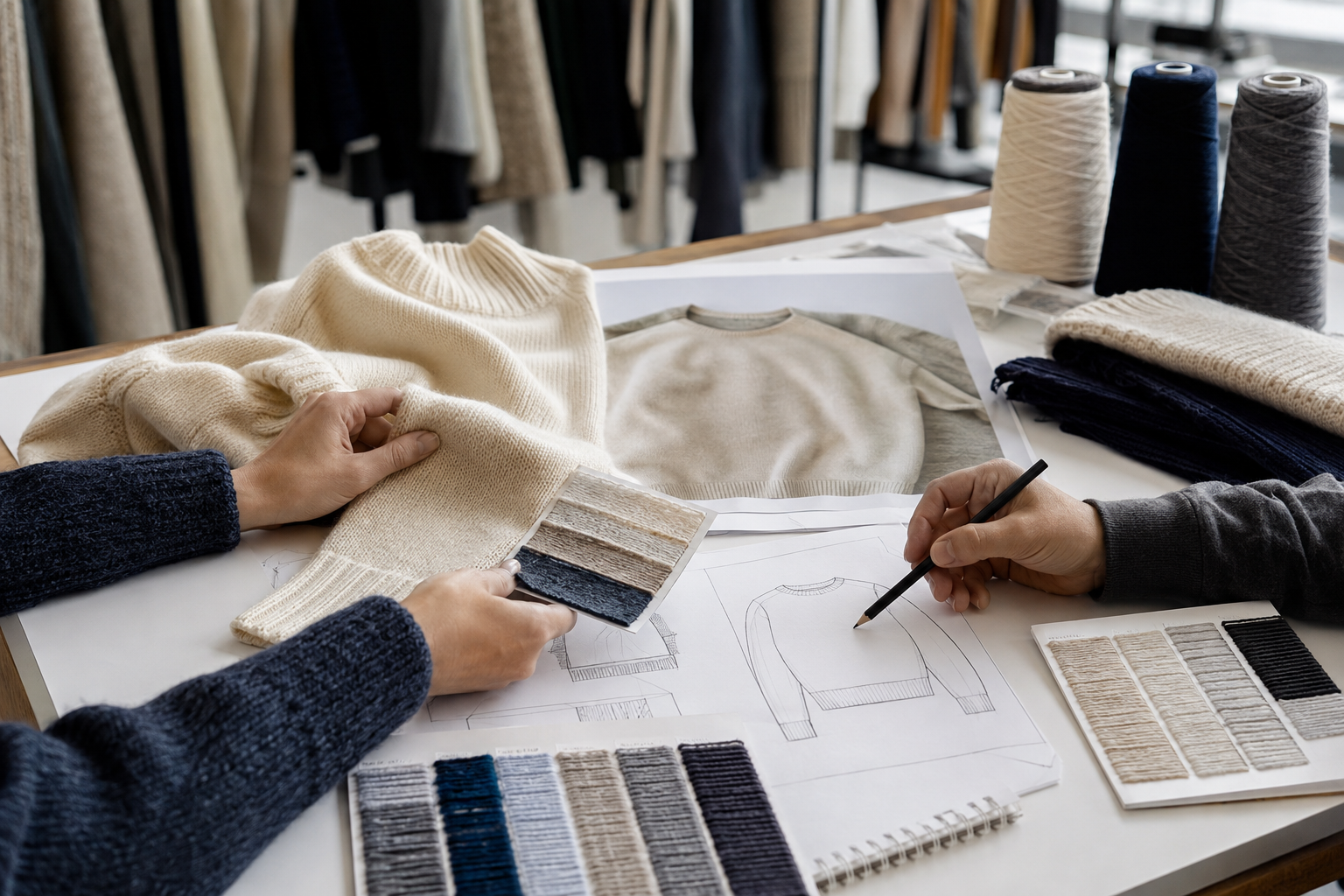
When a clothing brand shares a knitwear reference, the most important details are often structural rather than decorative. A soft-looking rib, a raised cable, or a clean fully fashioned shoulder can affect yarn behavior, machine programming, panel shape, labor, and final fit. A useful development brief therefore explains what the structure must achieve, where it appears, and which visual or comfort characteristics are non-negotiable.
Start with the garment silhouette, target wearer, reference images, sketch, measurements, and construction priorities. Then mark the exact locations of ribs, cables, links, neck treatments, hems, cuffs, and shaped panels. If the reference is not available in every view, identify the areas that require interpretation. This gives a knitwear OEM or ODM partner a clear basis for design interpretation, yarn selection, knitting programming, sample development, and fit adjustment.
Describe rib knit by function and proportion
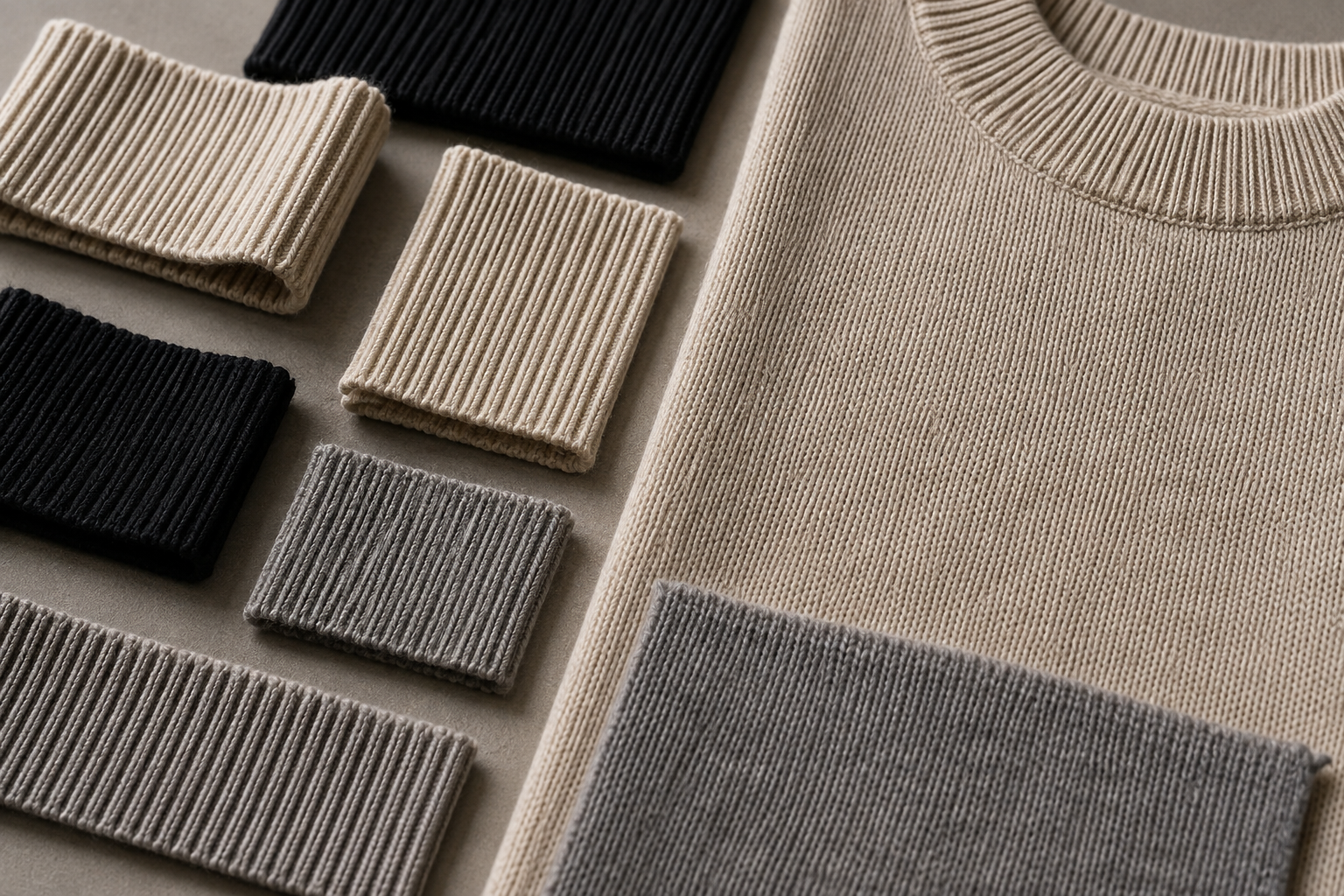
Rib knit is not just a texture name. The number of wales, rib width, recovery, depth, and transition into the body can change the garment’s appearance and behavior. In a brief, specify whether the rib is intended for a stable hem, a close-fitting cuff, a softer neckline, or a full garment body. Note the desired visual scale, edge tension, stretch direction, and relationship to the main stitch structure.
For a sweater or cardigan, explain whether the hem should sit flat or gather slightly, whether the cuff should recover after wear, and whether the neckline needs a clean turn or a layered finish. These functional notes help the sampling team compare alternatives without treating every rib as interchangeable. The first sample can then be reviewed against proportion, hand feel, recovery, and fit rather than texture alone.
Make cable knit and fully fashioned decisions visible
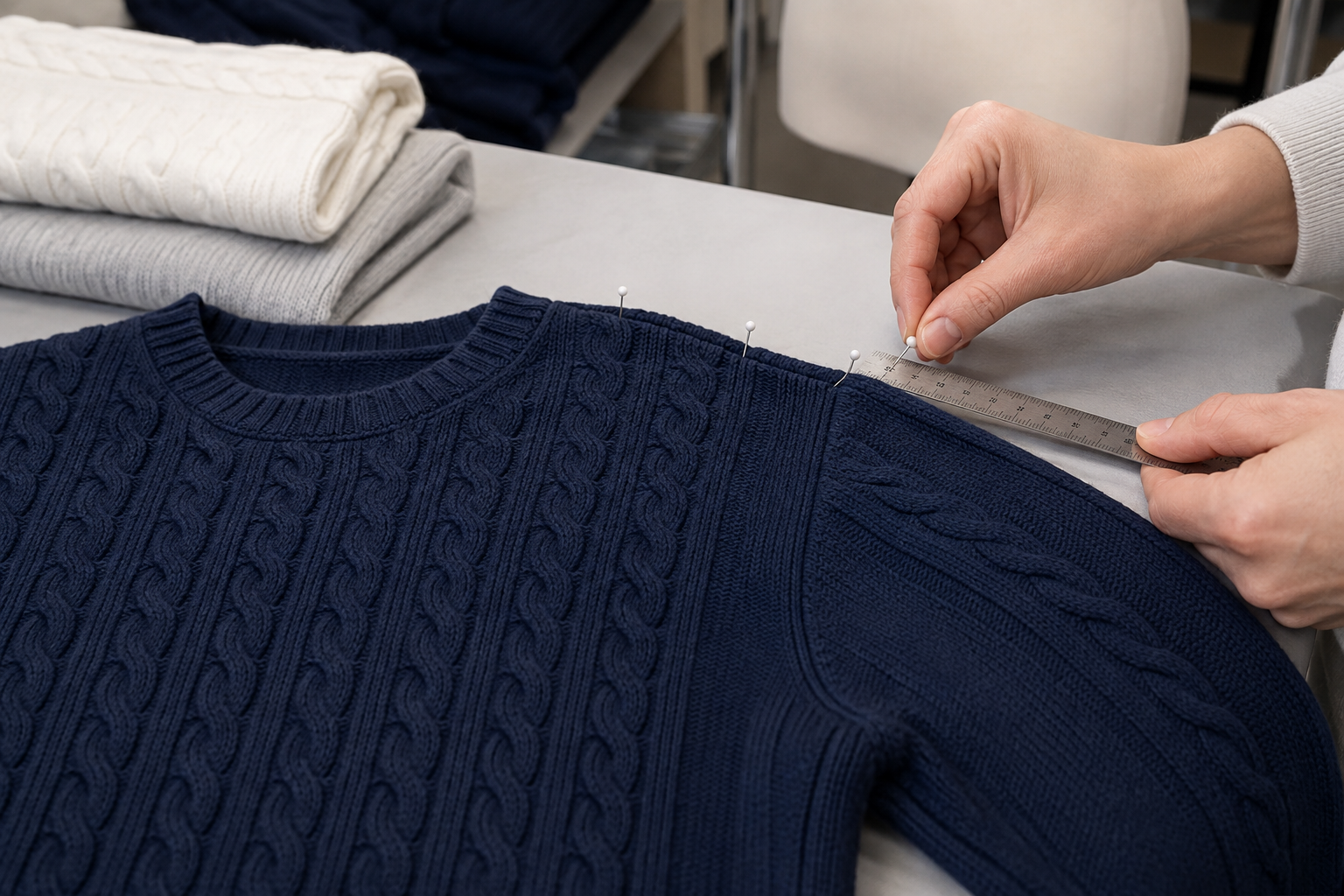
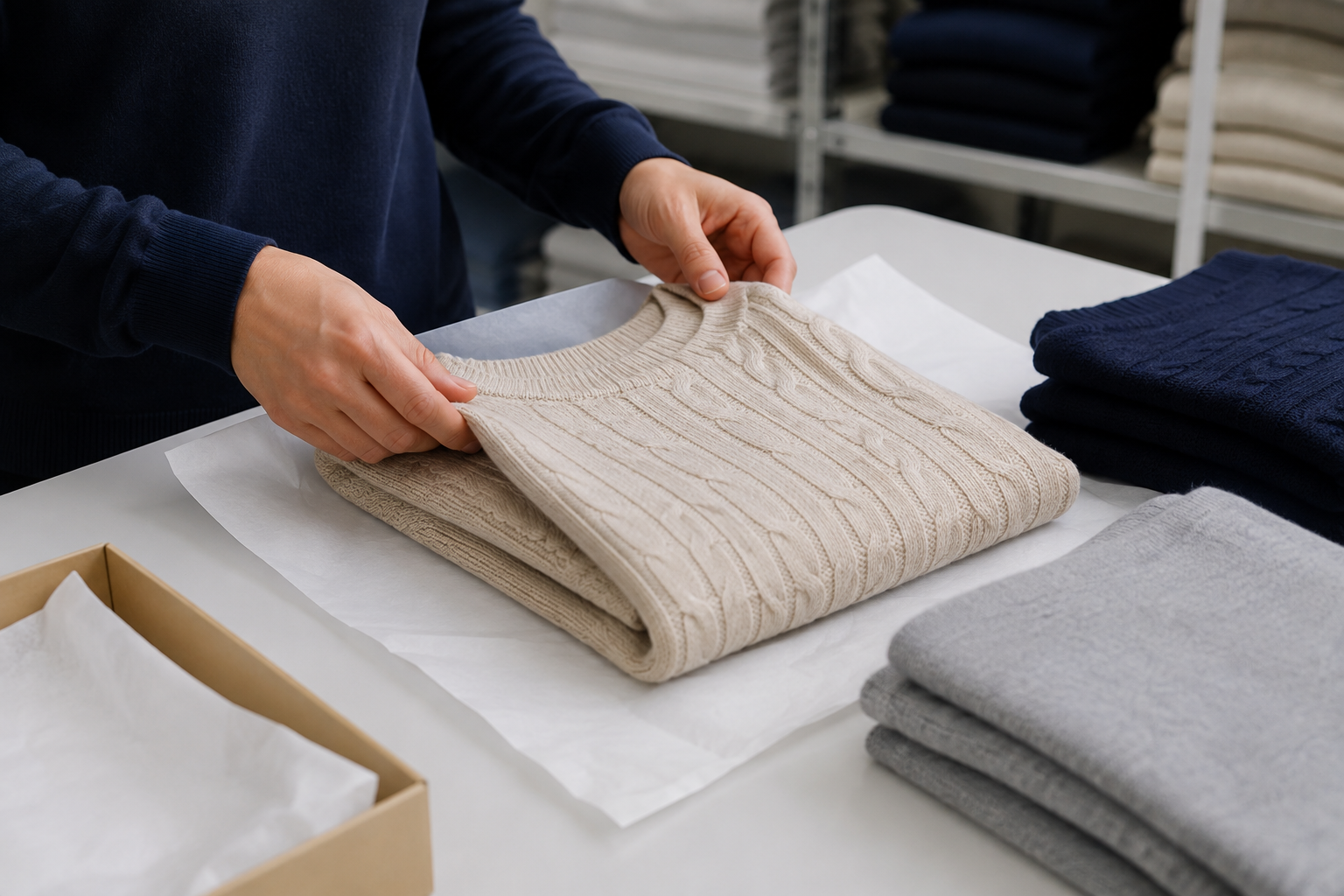
Cable knit adds relief, density, and directional movement, but it also changes local thickness and width. Identify the cable repeat, placement, scale, and relationship to plain, purl, or rib areas. If the cable should continue across a shoulder or align with a front panel, state that expectation directly. For openwork or mixed structures, show which areas should remain flexible and which should hold definition.
Fully fashioned knitting should also be described as a shaping and construction intention. Mark shoulder, armhole, neckline, side-seam, and sleeve transitions on the sketch or technical page. Clarify where shaping lines should be visible, how panels should meet, and whether a clean, lightweight join is part of the design goal. This is especially useful when the garment includes multiple sizes or coordinated pieces that need consistent visual logic.
Use the sample review to confirm structure, not just appearance
Once a prototype is ready, review each structure against the original brief in a fixed sequence. Check stitch definition and scale first, then measure key points, inspect panel alignment, assess stretch and recovery, and try the garment on a representative size. A cable may look accurate but feel too rigid; a rib may have the right width but pull the hem out of proportion; a fully fashioned join may be neat while still needing a fit adjustment.
Record changes with a marked image, measurement table, and concise decision for each area: keep, revise, or test an alternative. If the development involves sweaters, pullovers, cardigans, knitted vests, dresses, skirts, or coordinated sets, keep the structure vocabulary consistent across related styles. This makes the move from sample approval to bulk production more controlled and reduces the risk that product intent is lost between design interpretation and knitting programming.
Carry approved structure through finishing and inspection
Structural details should remain visible in the quality plan after knitting is complete. Confirm raw materials, knitted panels and assembly, finished garment appearance, and packaging or shipment readiness. At the finished-garment stage, inspect whether ribs sit evenly, cables remain defined after finishing, shaped joins align, and the garment retains the approved measurements and hand feel.
A development and manufacturing partner such as Wait To Butterfly can support the workflow from yarn selection and computerized knitting through linking, finishing, quality inspection, and packaging. Confirmed capabilities include a 10,000-square-meter production area, 100+ employees, 500+ computerized flat knitting machines, and 100+ linking machines. Project-specific MOQ, lead time, legal company details, certifications, customer references, and performance metrics should be confirmed for the individual program rather than assumed.
FAQ
What should a knitwear structure brief include?
Include the silhouette, measurements, reference views, yarn direction, stitch structures, placement, proportions, fit priorities, finishing expectations, and review criteria. Mark any item that remains to be confirmed.
How can a brand compare rib knit options?
Compare width, recovery, edge behavior, hand feel, and integration with the body stitch. Review these points on the actual sample instead of relying on the structure name alone.
When should cable alignment be checked?
Check it during sample review and again after finishing. Alignment across panels, shoulders, sleeves, and related sizes can affect the final appearance.
Can fully fashioned details be included in a multi-size program?
Yes, but shaping lines, panel relationships, measurements, and grading expectations should be defined and reviewed across the required size range. Final details are project-dependent and should be confirmed during development.
Start with a clearer knitwear brief
Need help translating a knitwear reference into a production-ready development brief? Contact Wait To Butterfly at waittobutterfly.com, WhatsApp +1 (669) 358-6009, or xyzzzlife@gmail.com to discuss knitwear OEM, ODM, design-to-sample development, and sample-based customization.