
How should a buying team review knitwear colorways before sampling?
For a clothing brand or retailer, a colorway is more than a shade name on a range plan. In knitwear, the chosen yarn, stitch structure, gauge, and finishing method can all change how a color appears and performs. A practical colorway review therefore connects the visual direction with the product brief before sample development begins. The goal is to give the knitwear manufacturer a clear, usable decision set: approved colors, acceptable alternatives, placement priorities, and questions that still need confirmation. This approach helps protect product intent while keeping development communication efficient.
Start with yarn behavior, not only digital color references
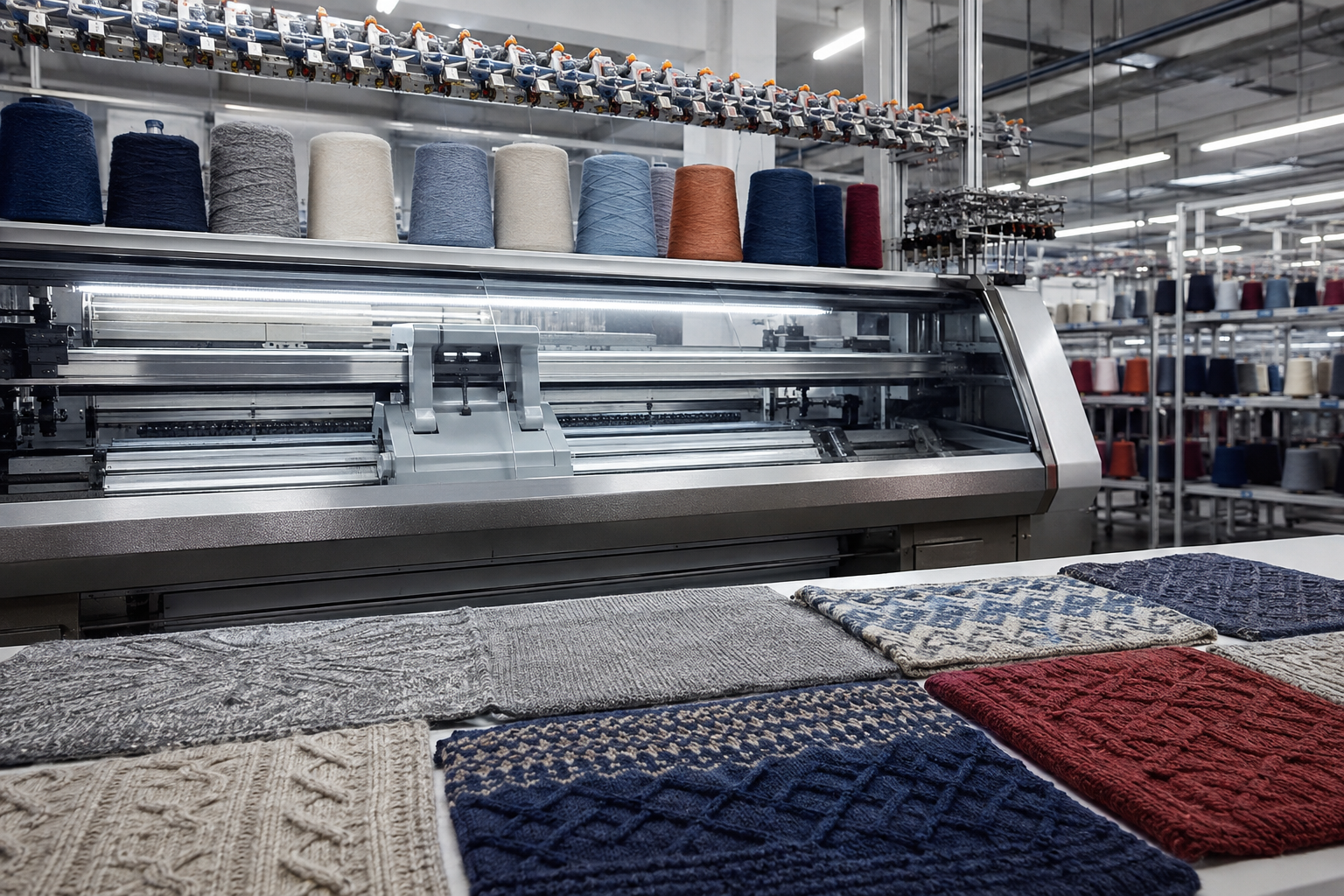
Digital color references are useful for aligning a collection, but they cannot fully predict the appearance of a knitted garment. The same color can look different in a smooth jersey, a dense rib, a cable knit, or a textured jacquard because stitch density and surface shadow affect perception. Buying teams should identify the intended yarn family, fiber composition, finish, and approximate gauge alongside each colorway. If a nominated shade is not available in the selected yarn, the team can review a close yarn-dyed or supplier-supported alternative while recording the difference. Yarn selection, color matching, and sample-based customization should be treated as connected decisions rather than separate approvals.
Check how color interacts with stitch structure and placement
Color approval should include the actual knit construction whenever the design depends on contrast, repeats, or directional details. Jacquard and intarsia may produce different visual edges and handle different placement logic; cable, rib, lace/openwork, and fully fashioned knitting can also change the balance between light and dark areas. A buying team should mark the dominant body color, contrast color, trim color, and any motif boundaries in the specification. For multi-color products, review likely yarn substitutions and ask how the color relationship will behave after knitting, linking, washing, and finishing. These notes create a more reliable bridge between design interpretation and knitting programming.
Use the sample review to confirm proportion, not just shade
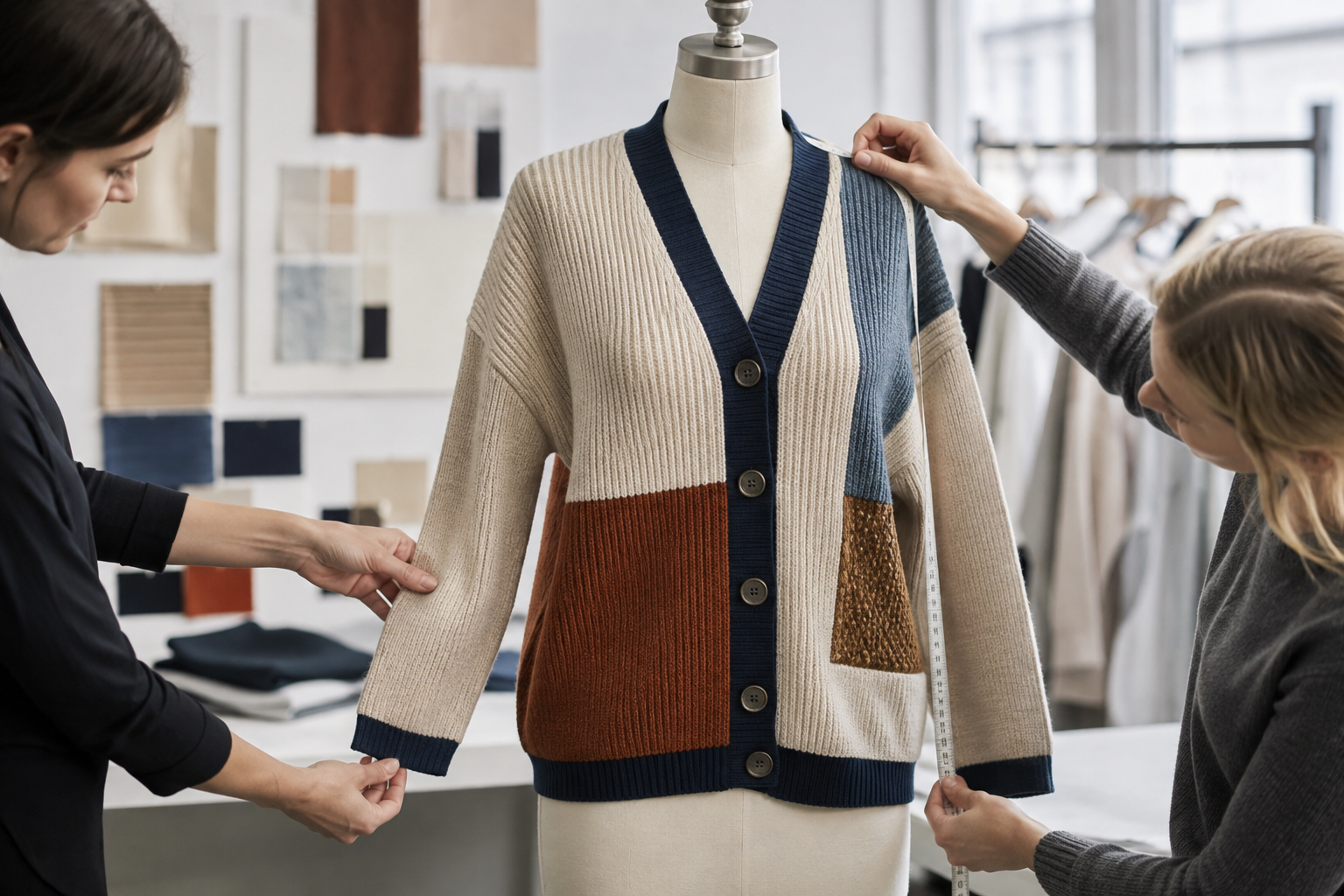
Once a sample is available, assess the colorway on the intended garment proportions. A contrast band that looks balanced on a small swatch may feel too strong on a full-length cardigan, dress, vest, or coordinated set. Review the neckline, cuffs, hem, side seams, motif scale, and color placement on the representative size, then note whether the same visual intent should extend across the size range. Fit adjustment and pattern/sample services are valuable at this point because color placement can affect perceived width, length, and balance. If the final color decision depends on a lab dip, yarn card, or physical reference, label the approval status clearly as approved, revise, or to be confirmed.

Close the colorway review with quality and shipment questions
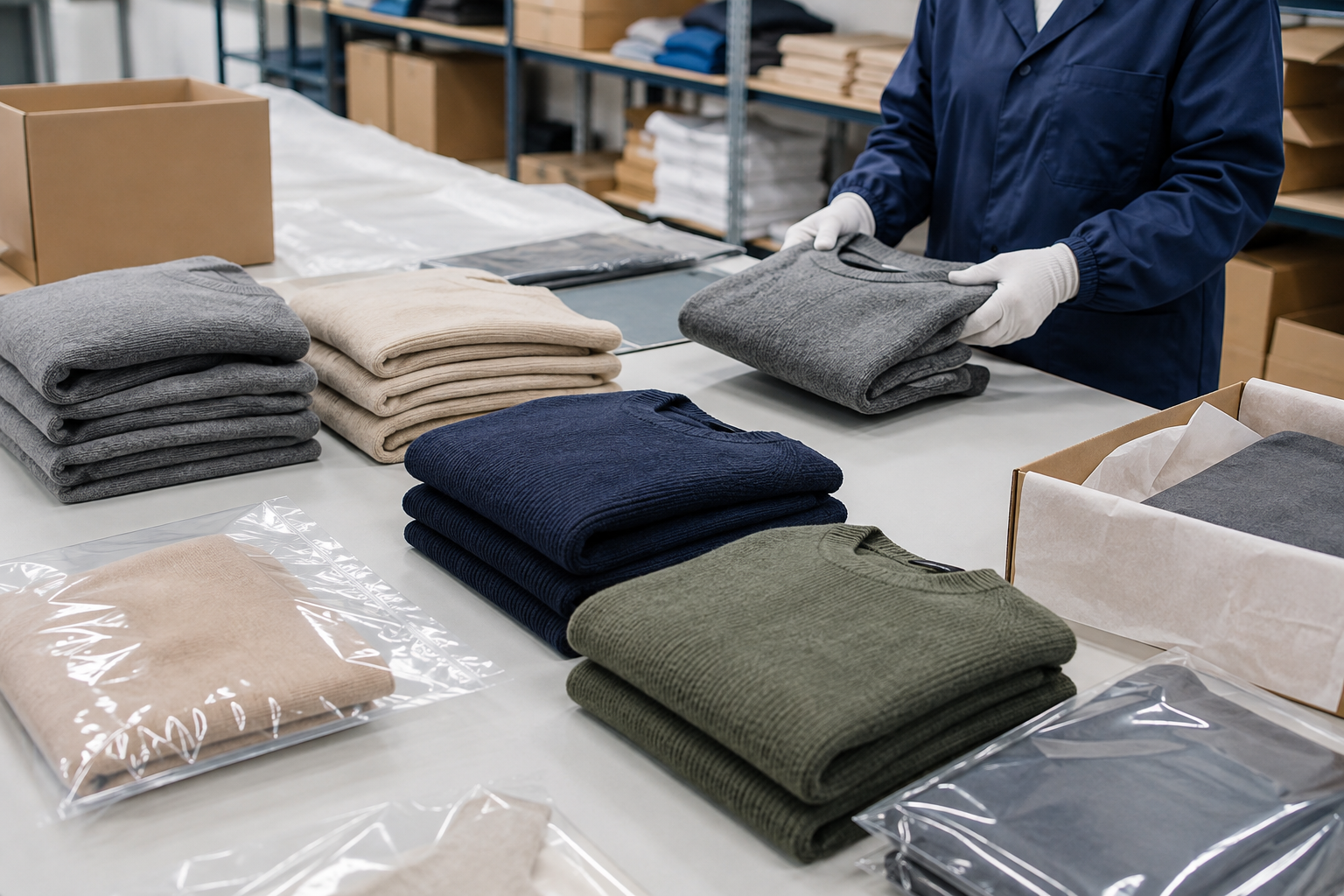
Before bulk production, convert the colorway decision into checkpoints that can be followed from raw materials to shipment. Confirm the approved yarn reference, color placement, motif alignment, garment appearance, and packaging presentation. Quality inspection should cover raw materials, knitted panels and assembly, finished garment appearance, and packaging/shipment. Teams should also record any project-dependent points, such as final shade tolerance, wash-test expectations, labeling, or delivery timing, instead of treating them as fixed facts. A concise approval record gives the development and manufacturing teams one shared reference and makes later questions easier to resolve.
FAQ
Can a digital color code approve a knitwear colorway by itself?
Usually not. It can establish a design direction, but the final review should consider the selected yarn, stitch structure, gauge, and physical sample appearance.
When should a buying team approve color placement?
Approve the direction before sampling, then confirm the placement on a representative garment sample. Any remaining lab-dip, yarn-availability, or wash-related issue should be marked to be confirmed.
Does the same colorway work across every knit structure?
Not always. Rib, cable, lace/openwork, jacquard, intarsia, and smooth structures can reflect and distribute color differently, so construction-specific review is recommended.
What should be recorded for multi-size production?
Record the approved yarn/color references, motif scale, placement rules, key measurements, and how the color balance should be maintained during grading and fit adjustment.
CTA
Need help turning a color direction into a production-ready knitwear sample? Contact Wait To Butterfly for knitwear OEM, ODM, design-to-sample development, and sample-based customization. WhatsApp: +1 (669) 358-6009. Email: xyzzzlife@gmail.com.
Suggested internal-link anchor text
- knitwear design-to-sample development
- computerized flat knitting capabilities
- knitwear quality inspection process
- sample-based customization for clothing brands
Keyword notes
Target region: United States, United Kingdom, Europe, and other English-speaking buying markets. Language: English. Relevant search phrases: knitwear colorway review, knitwear yarn color matching, jacquard color placement, intarsia color approval, knitwear sample development, multi-size knitwear production. Search-volume note: No public search-volume data used.