Before a production order is placed, a knitwear prototype should be treated as a decision document, not only as a visual sample. Buying teams need to confirm that the prototype communicates the intended yarn, stitch structure, measurements, decoration, finishing and packing requirements clearly enough for a development partner to reproduce it. A short, written review also helps separate design changes from project-dependent commercial points such as MOQ and lead time, which should be confirmed for the specific program.
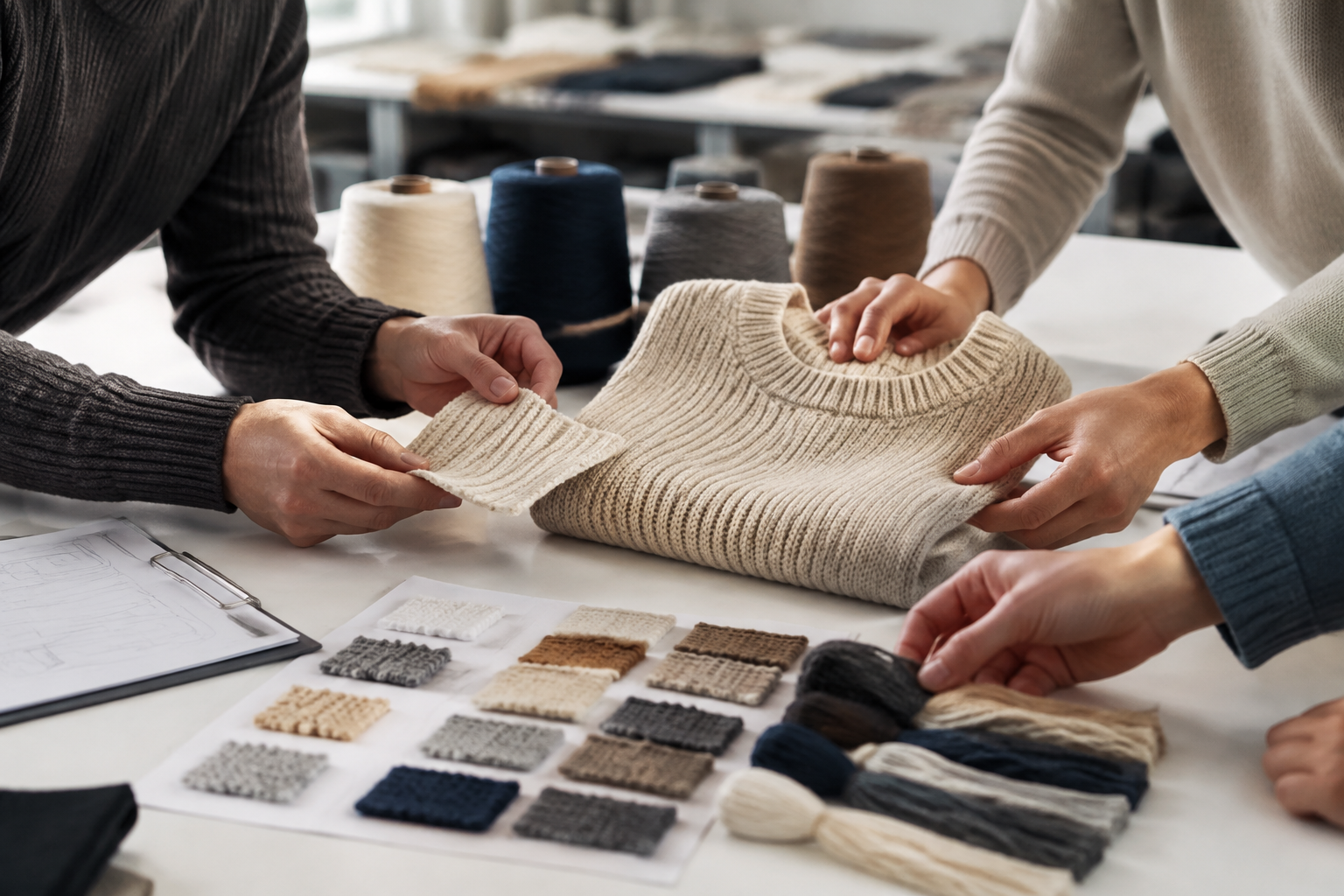
1. Confirm the yarn and specification brief
Start by checking whether the prototype review records the yarn composition, yarn count or usable equivalent, color reference, hand feel, weight expectation and care-label direction. If the final yarn is not yet selected, note the alternatives and the effect each may have on drape, warmth, surface appearance and cost. For a sweater, cardigan, knitted vest or coordinated set, buyers should also confirm whether matching pieces need the same yarn lot and color standard. Clear notes on gauge, stitch density and key measurements give the factory a more reliable base for sampling and costing.
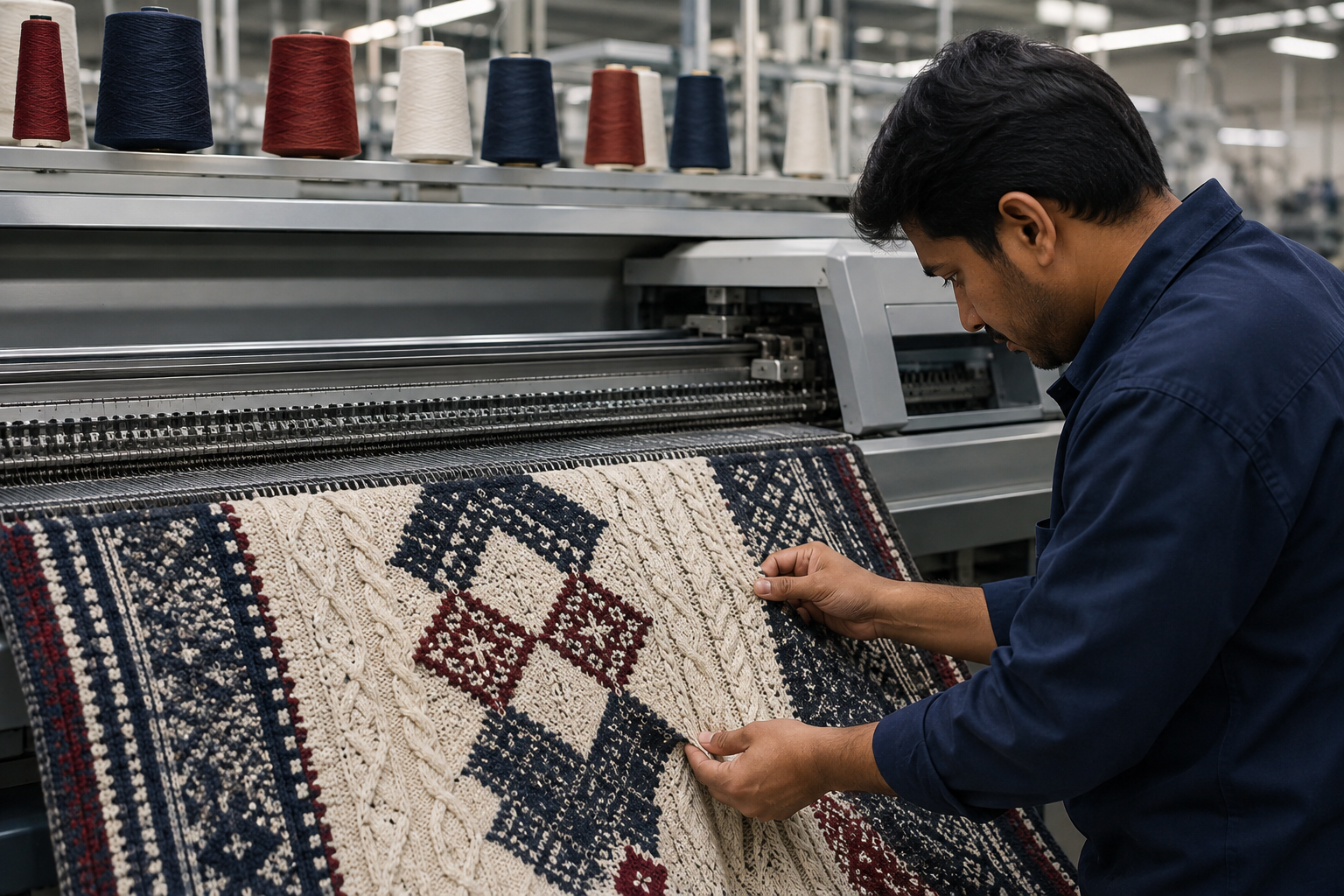
2. Review construction and decoration at panel level
Next, inspect how the design is built. Confirm the intended knitting method, panel shape, stitch transitions, rib dimensions, neckline construction, sleeve attachment and any fully fashioned details. If the style uses jacquard, intarsia, cable knit, lace/openwork, embroidery, flocking, printing, appliqué, sequins, crochet or hand-finished details, record the placement and the acceptable visual tolerance. Panel-level review is especially useful for checking motif alignment, repeat direction and whether decoration could affect stretch, comfort or production consistency.
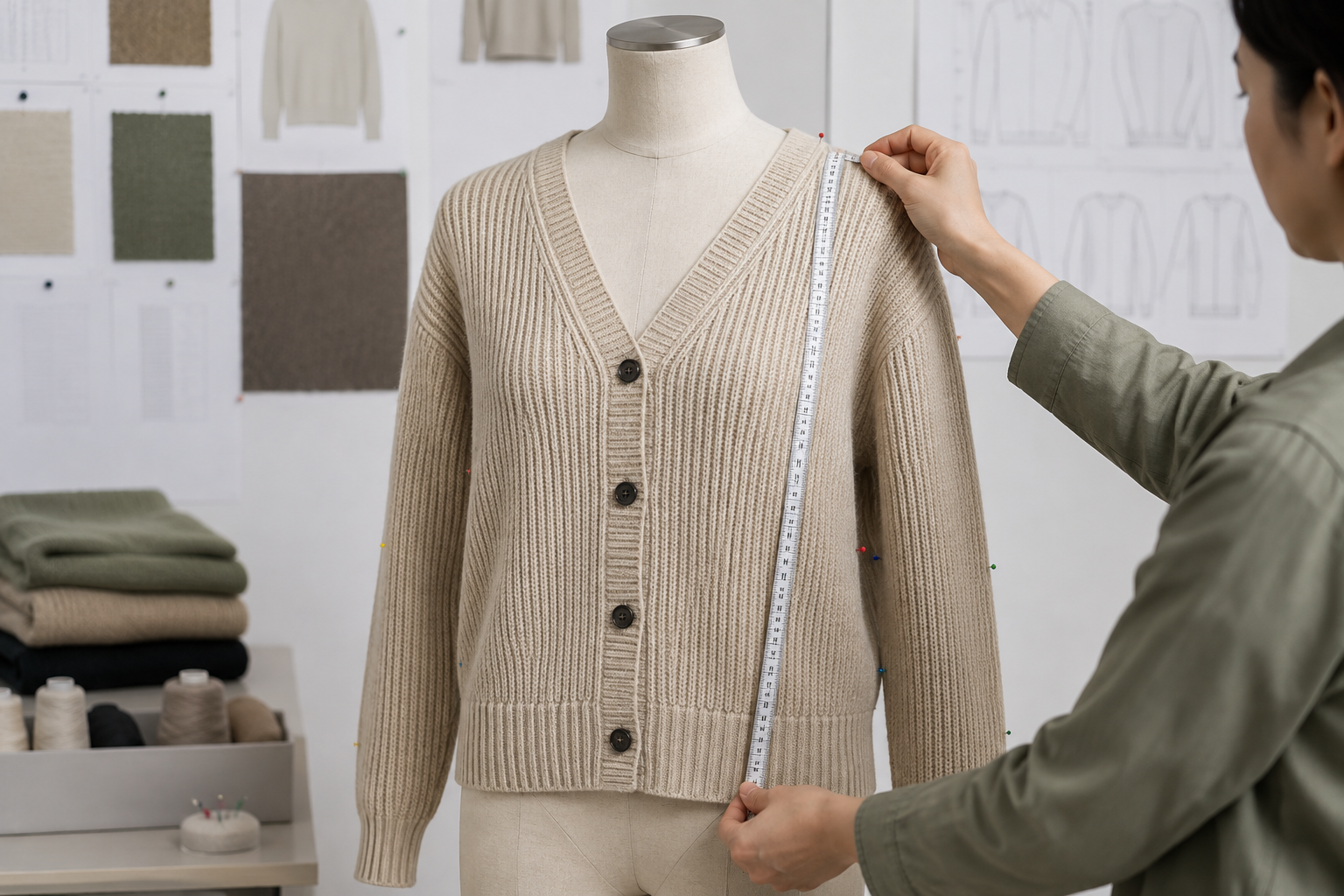
3. Validate fit, grading and sample changes
Fit approval should connect the physical prototype to a measurement chart. Compare body length, chest, shoulder, armhole, sleeve length, cuff opening, neckline and key points of measure against the intended size. Review the garment on the appropriate fit form or model, then note areas that need adjustment after wear or movement. For multi-size programs, confirm how the base size will grade and which proportions must remain consistent. A design-to-sample development partner can use these observations for fit adjustment, pattern/sample services and the next sample round; the production order should wait until the revision status is unambiguous.
4. Check finishing, inspection and packing readiness
Finally, review the prototype beyond the front appearance. Check linking, loose ends, pressing or blocking, label placement, folding, polybag direction and carton or shipment notes. The quality process should cover raw materials, knitted panels and assembly, finished garment appearance, and packaging/shipment. Buyers should write down any tolerance that matters for their channel, including visible stitch irregularity, shade variation, pilling risk, measurement variance or decoration security. If a point has not been confirmed, label it project-dependent or to be confirmed rather than treating an assumption as a promise.
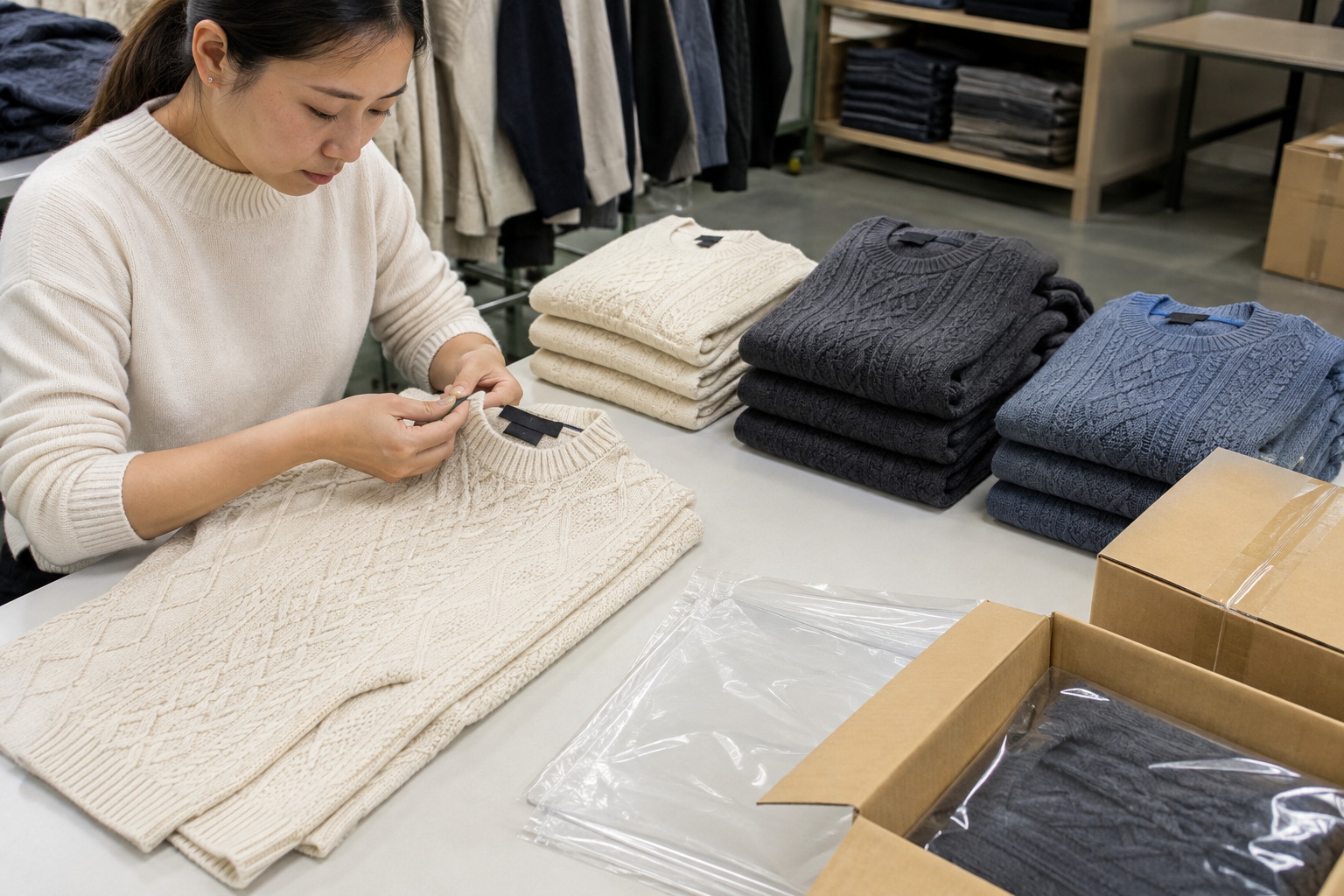
A simple approval record for buying teams
Use one approval record with five fields: approved reference, required change, responsible reviewer, next sample status and open commercial point. This keeps design interpretation, yarn selection, knitting programming, sample development, fit adjustment, bulk production, finishing, quality inspection and packaging connected in one workflow. It also creates a useful handoff between a brand, retailer or buying team and a knitwear OEM or ODM partner.
FAQ
What should a buyer check first on a knitwear prototype?
Check the yarn and specification brief first because yarn choice affects hand feel, weight, drape, gauge, appearance and costing. Then review construction, fit and finishing.
Can a prototype be approved before every commercial point is final?
Some design details can be approved while commercial items remain project-dependent. MOQ, lead time and final costing should be confirmed for the specific project unless already agreed in writing.
Why is panel-level review important for knitwear?
It helps buyers check motif alignment, stitch transitions, panel dimensions, decoration placement and the production implications of stretch or construction before bulk production.
What services can support the next sample round?
Depending on the project, support may include knitwear OEM or ODM, design-to-sample development, sample-based customization, pattern/sample services, yarn selection, knitting programming and fit adjustment.
CTA
Have a knitwear prototype, reference sample or early design brief? Wait To Butterfly supports clothing brands, retailers and buying teams with knitwear OEM, ODM and development support from design interpretation and yarn selection through sampling, production, finishing, quality inspection and packaging. Share your requirements at waittobutterfly.com or contact WhatsApp +1 (669) 358-6009 / xyzzzlife@gmail.com to discuss the next project.