A knitwear sample can look attractive and still be difficult to reproduce at scale. Before approving bulk production, clothing brands and buying teams need to assess more than color and styling. They should review construction logic, stitch consistency, fit behavior, finishing requirements and the information needed for repeatable production.
1. Review the sample against the intended product brief
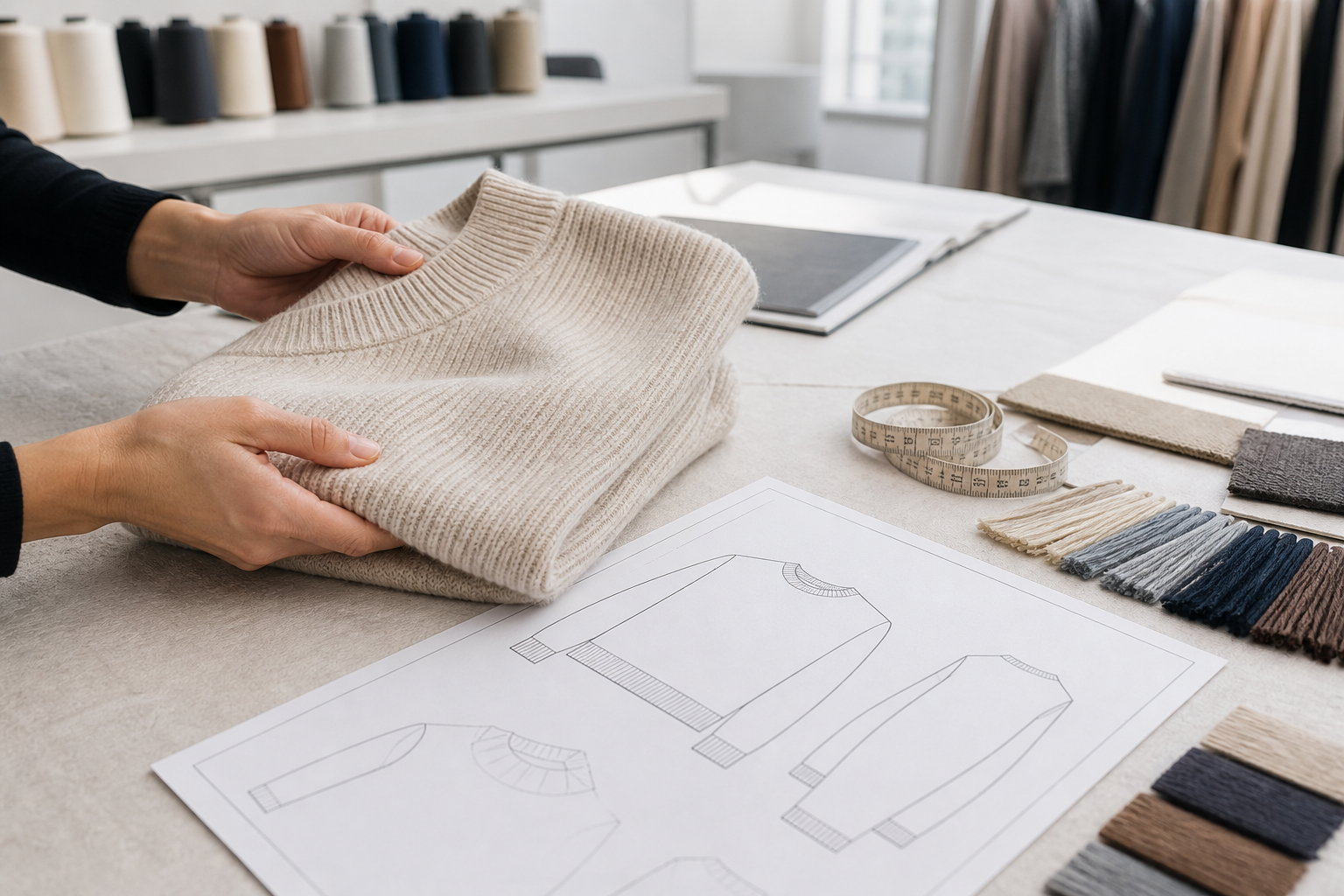
Start by comparing the physical sample with the original design direction, reference garment or technical information. Check the silhouette, proportions, neckline, sleeve shape, hem treatment, stitch structure and placement of any jacquard, intarsia, embroidery or other decoration. A structured review helps separate design changes from production problems.
The review should also record yarn appearance, hand feel, stretch and recovery. For sweaters, cardigans, knitted vests, dresses, skirts and coordinated sets, these details influence how the garment will fit and perform in different sizes. A development partner can clarify which visual details require pattern work, knitting programming or finishing adjustments.
2. Check whether construction can be reproduced consistently
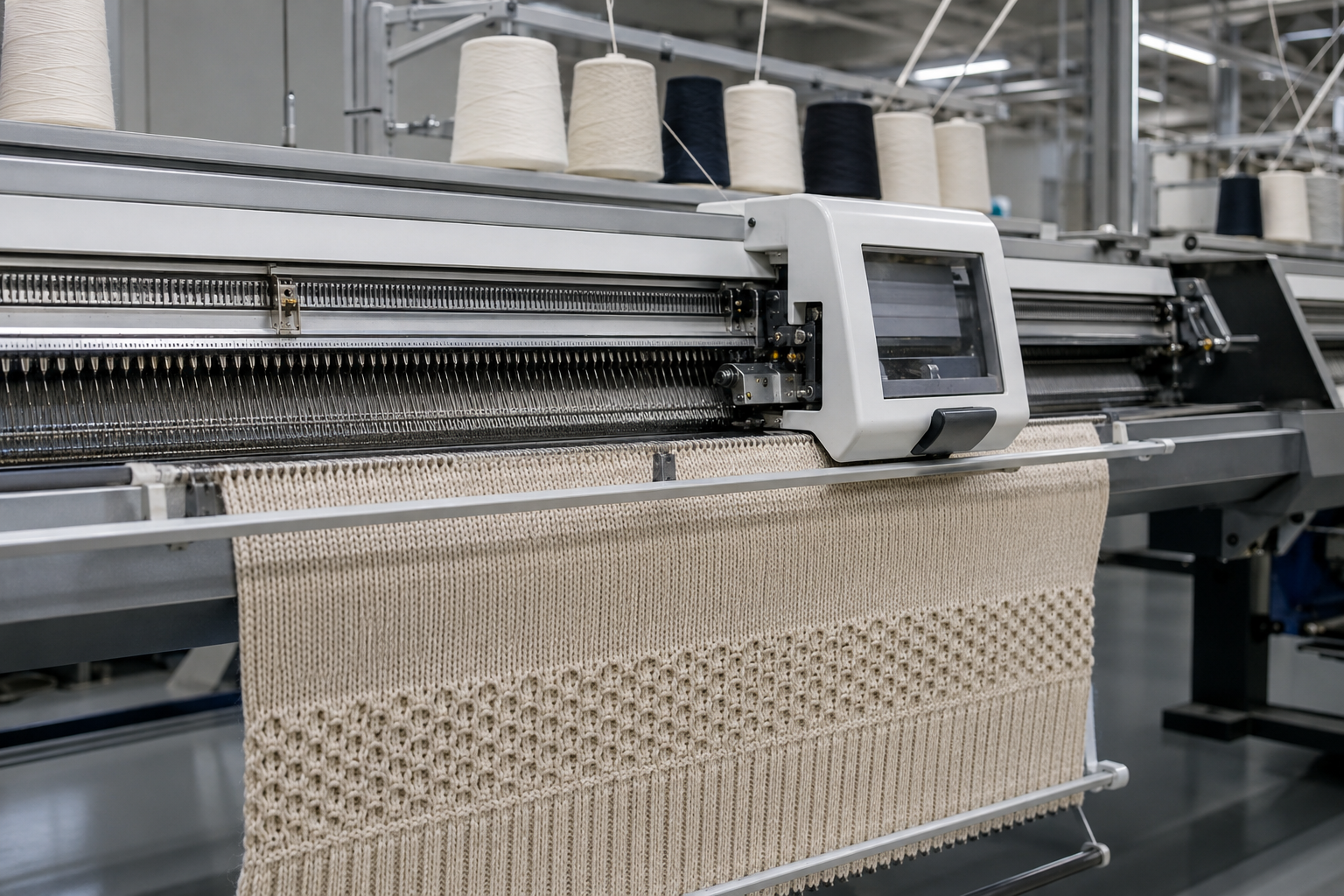
Production readiness depends on whether the sample construction can be translated into a repeatable knitting and assembly method. Review stitch density, panel dimensions, shaping points, linking or seam areas and transitions between stitch structures. Fully fashioned knitting, rib knit, cable knit, lace and openwork each create different requirements for programming, panel handling and assembly.
For patterned products, inspect motif scale, alignment and color changes across panels. Confirm how the design will be handled on computerized flat knitting machines and how linking will preserve the intended shape. Identify details that could require hand finishing, appliqué, sequins, crochet or embroidery before quantities are committed.
3. Test fit, grading and recovery—not just one sample size
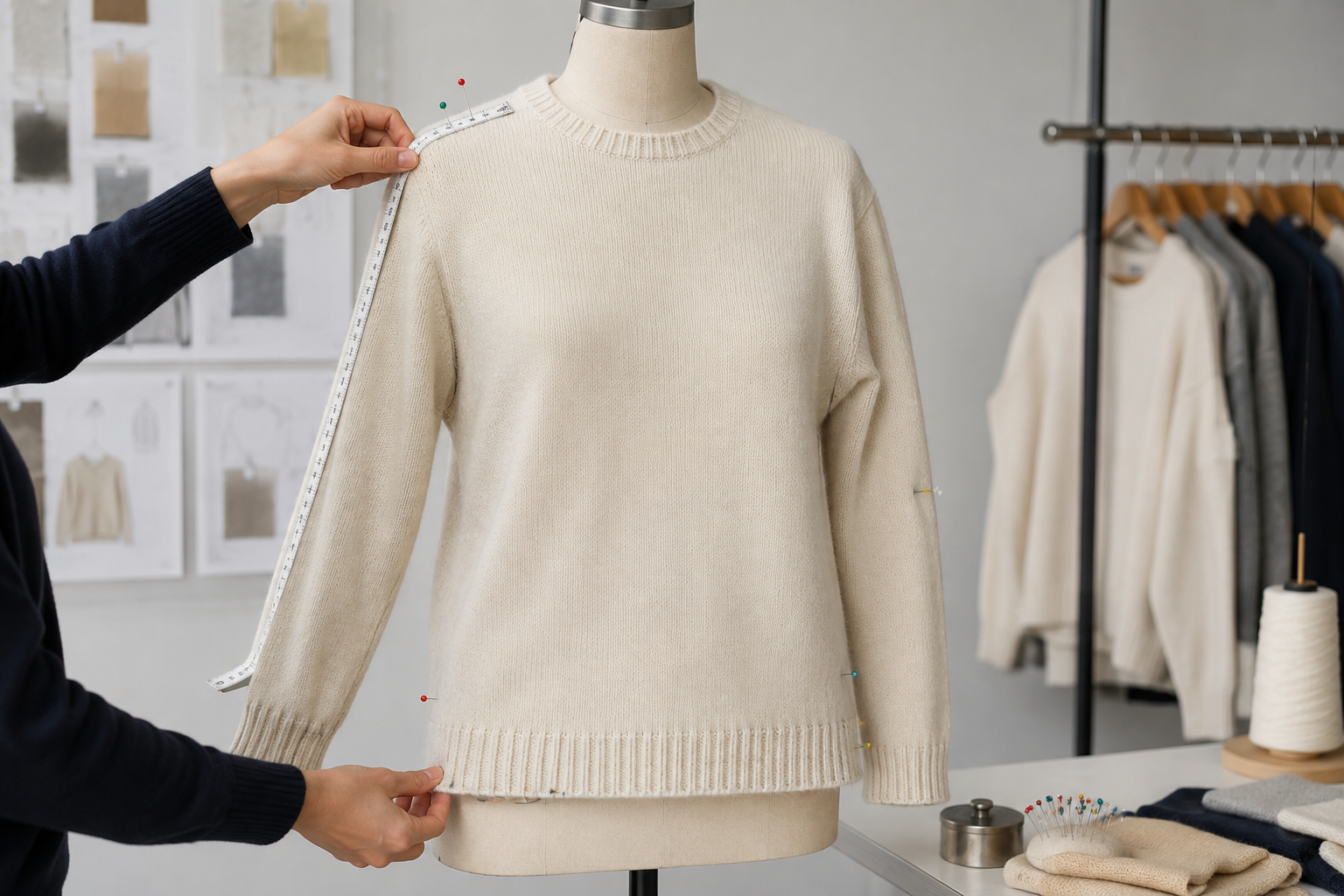
One approved size does not automatically prove that a knitwear style is ready for a full size range. Review measurements at chest, body length, shoulder, sleeve length, armhole, cuff and hem. Check how the garment changes after resting, pressing and finishing, because knitted structures can relax and recover differently from woven fabrics.
Fit comments should be specific and prioritized. Adjust neckline opening, sleeve balance, body ease or hem tension as needed, and define how the pattern will be adapted for menswear, womenswear, childrenswear, babywear or multi-size requirements.
4. Confirm finishing, inspection and packing expectations
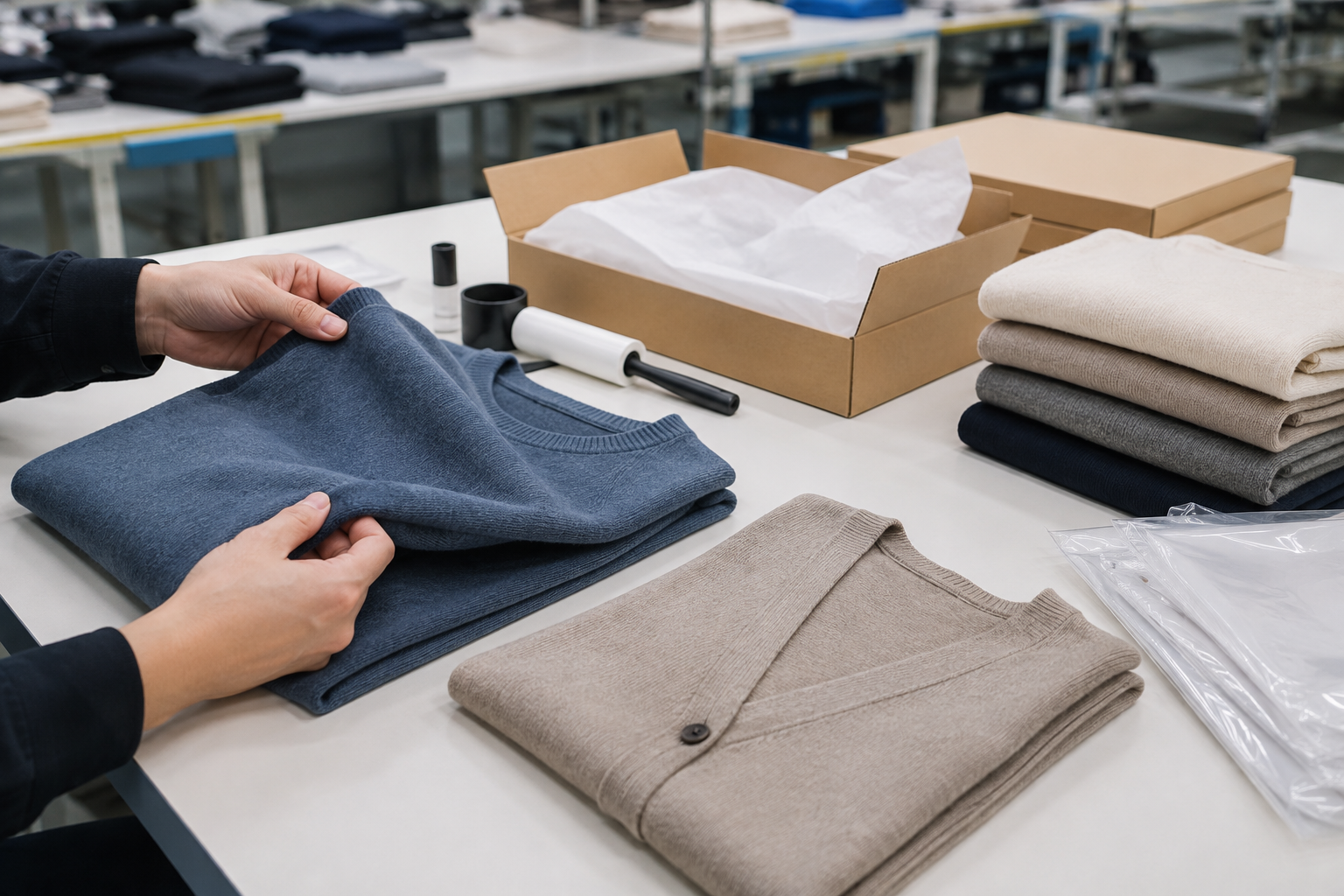
The final readiness check should cover the garment after finishing, not only the knitted panels. Confirm appearance, measurements, handle, loose ends, decoration security, shape and presentation. Quality checks can be organized across raw materials, knitted panels and assembly, finished garment appearance, and packaging or shipment preparation.
Document acceptable variation and points that require approval before bulk production, including color appearance, motif placement, linking quality, surface defects, pressing, folding and pack presentation. MOQ and lead time are project-dependent and should be confirmed rather than assumed.
FAQ
What should a brand check first on a knitwear sample?
Begin with the design brief and confirm silhouette, measurements, stitch structure, yarn appearance, decoration and finishing.
How can a brand reduce knitwear fit risk before bulk production?
Use measured fit comments, review recovery after finishing and confirm grading across the required size range.
Can a knitwear manufacturer help convert a reference garment into a sample?
Yes. A knitwear OEM or ODM partner may support design interpretation, yarn selection, knitting programming, sample development, fit adjustment, finishing and quality inspection, subject to the project brief.
Are MOQ and lead time fixed for every knitwear project?
No. They are project-dependent and should be confirmed after reviewing the product, yarn, construction, decoration, size range and finishing requirements.
CTA
Need help assessing whether a knitwear sample is ready for bulk production? Wait To Butterfly supports clothing brands, retailers and buying teams with knitwear OEM, ODM, design-to-sample development, sample-based customization and pattern or sample services. Contact waittobutterfly.com, WhatsApp +1 (669) 358-6009, or xyzzzlife@gmail.com.