The most reliable knitwear quality process is planned across four checkpoints: raw materials, knitted panels and assembly, finished garment appearance, and packaging or shipment preparation. For clothing brands, retailers, and buying teams, this structure makes feedback easier to trace from the original brief through bulk production.
A knitwear manufacturing partner should be able to connect those checks with design interpretation, yarn selection, knitting programming, sample development, fit adjustment, finishing, inspection, and packaging. The exact inspection depth remains project-dependent, but a clear sequence helps teams identify issues before they move into the next production stage.
1. Start with a raw-material and yarn checkpoint
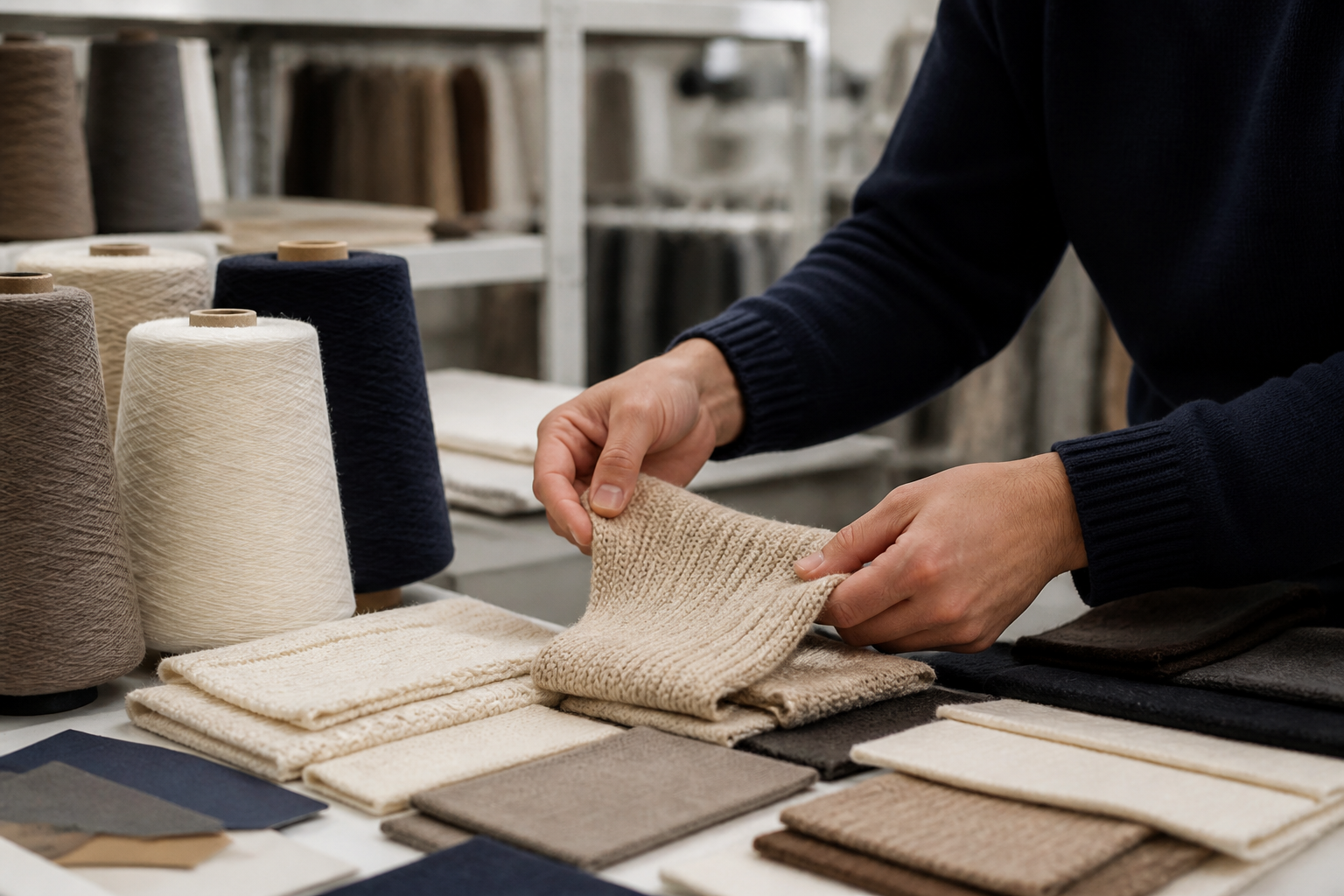
Yarn selection influences the hand feel, surface appearance, weight, color impression, and performance expectations of a knitted garment. Before knitting begins, buyers can record the approved yarn reference, color, texture, and any requirements that affect the sample or production interpretation. This is especially useful when developing sweaters, cardigans, knitted vests, dresses, skirts, coordinated sets, scarves, or hats.
The review should also connect the yarn decision to the intended stitch structure and construction. Rib knit, cable knit, lace or openwork, jacquard, intarsia, and fully fashioned knitting can each respond differently to yarn characteristics. Keeping the material checkpoint documented gives the development team a practical reference when reviewing later changes.
2. Review knitted panels and assembly details
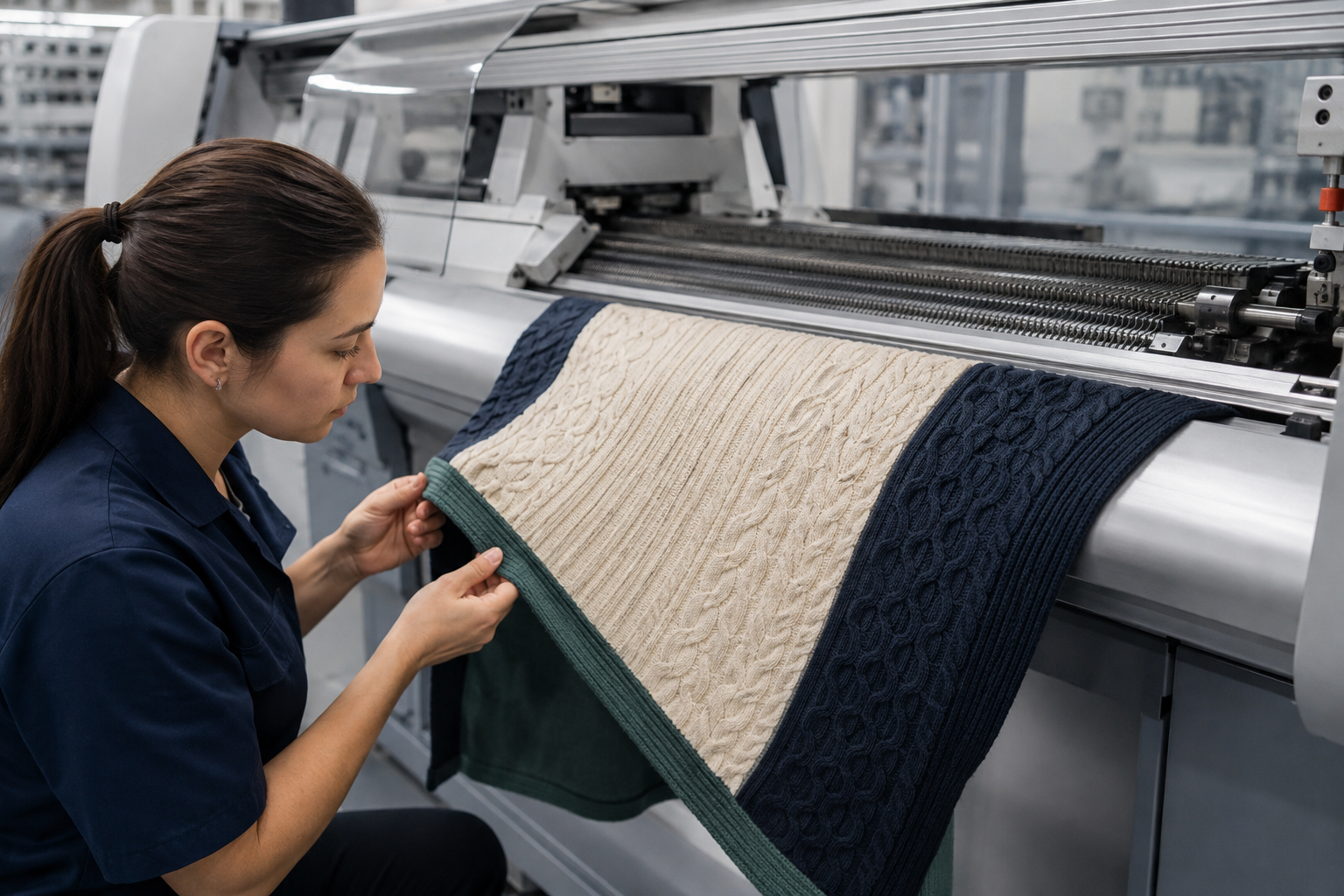
The second checkpoint focuses on the knitted panels and how they are assembled. Buyers can compare dimensions, stitch definition, pattern placement, edges, and construction details with the approved sample or technical direction. For decorated products, the review may include embroidery, flocking, printing, appliqué, sequins, crochet, or hand-finished details where relevant to the project.
At this stage, communication is more effective when feedback identifies the location and type of deviation instead of describing the garment generally. A knitwear OEM or ODM partner can then connect the issue to knitting programming, panel development, linking, or an additional finishing operation. Sample-based customization and pattern/sample services may require several review rounds, so recording decisions helps preserve continuity.
3. Check finished-garment appearance and fit
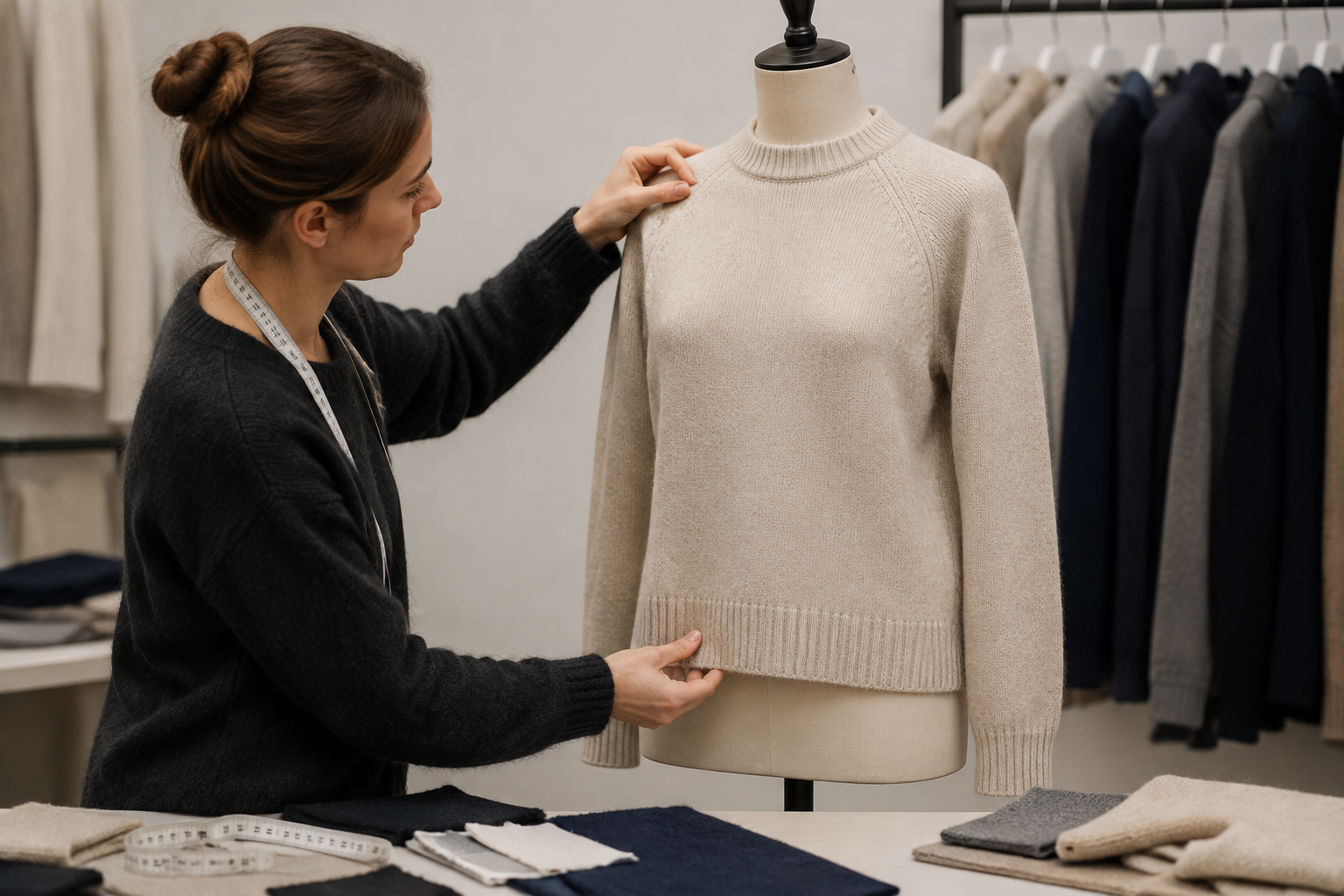
After assembly and finishing, the garment should be reviewed as a complete product. Buyers can assess overall appearance, symmetry, proportions, surface consistency, finishing quality, and fit against the approved development direction. The right review points depend on the product category, wearer group, size range, and design details.
For menswear, womenswear, childrenswear, babywear, and multi-size requirements, the team should keep the agreed fit references visible during development. This helps separate a construction issue from an intentional design feature and supports focused fit adjustment before bulk production. Where the project includes multiple sizes or coordinated pieces, reviewing the set together can also reveal proportion or color-balance issues that are harder to see on one item alone.
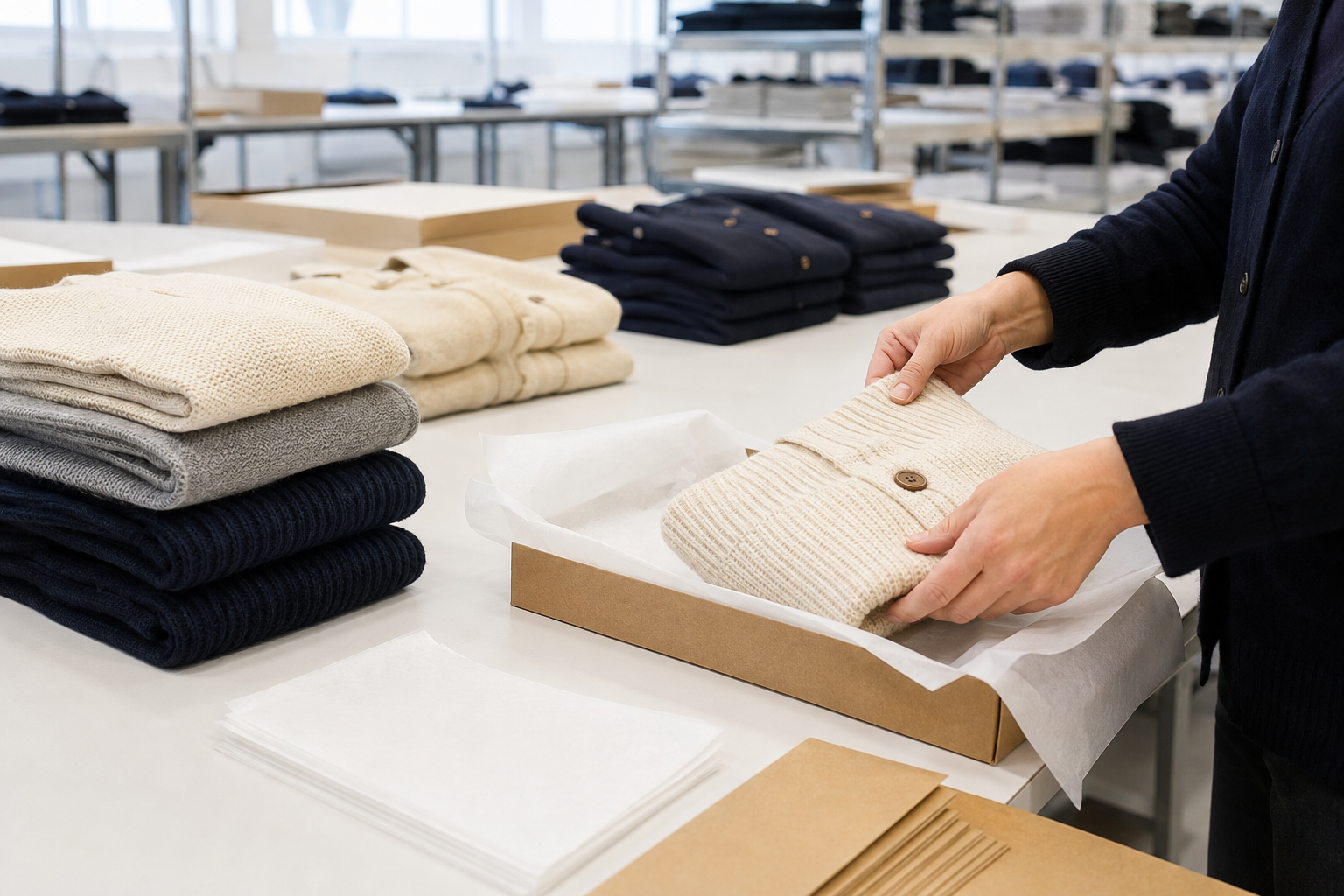
4. Confirm packaging and shipment readiness
The final checkpoint covers the finished garment’s presentation and packaging or shipment preparation. A buyer can confirm that the garment appearance remains acceptable after finishing, folding, labeling instructions supplied for the project, and packing. Packaging requirements should be agreed for each order; if they are not yet confirmed, they should be treated as project-dependent or to be confirmed.
A clear final review closes the loop between production and delivery. It also gives the brand a record of what was inspected before shipment, including any approved deviations or rework decisions. This is particularly valuable when a program includes several styles, colors, sizes, or product categories.
A simple review brief for knitwear development teams
An effective quality brief can be concise. Include the product name or style reference, approved yarn and color information, key stitch or decoration details, measurement and fit references, acceptable appearance expectations, packaging instructions, and the person responsible for approval at each checkpoint. The brief should distinguish confirmed requirements from items that are still to be confirmed.
For brands looking for knitwear OEM, ODM, or design-to-sample development support, this checkpoint model provides a useful starting point for conversations with a manufacturing partner. WTBF supports knitwear development and manufacturing across design interpretation, yarn selection, knitting programming, sample development, fit adjustment, bulk production, finishing, quality inspection, and packaging. Contact Wait To Butterfly or WhatsApp +1 (669) 358-6009 to discuss a project.
FAQ
What are the main knitwear quality checkpoints?
The main checkpoints are raw materials, knitted panels and assembly, finished garment appearance, and packaging or shipment preparation.
Why should yarn be checked before knitting?
Yarn affects hand feel, appearance, weight, color impression, and how stitch structures develop. Confirming it early helps keep later sample and production reviews aligned.
Can the same quality process work for different knitwear products?
Yes. The four checkpoints can be adapted to sweaters, pullovers, cardigans, vests, dresses, skirts, coordinated sets, scarves, and hats, with project-specific details added for each style.
Does every project use the same inspection standard?
No. Inspection depth and acceptance details are project-dependent and should be confirmed between the buyer and manufacturing partner.