Tech pack route
Specifications are reviewed for yarn, gauge, measurements, construction, artwork, trims and packing.
CUSTOM KNITWEAR MANUFACTURING
This page explains how a project moves through technical development, knit engineering, decoration, approval and bulk execution. Product categories are covered separately on the Products page.
Specifications are reviewed for yarn, gauge, measurements, construction, artwork, trims and packing.
Commercial direction is converted into product proposals, materials, structures and sample priorities.
Visible features are separated from technical assumptions before the first prototype is made.
The reference is measured and analyzed, then rebuilt with approved adjustments and documentation.
DESIGN BRIEF & MATERIAL PLANNING
Before sampling, we bring your visual references, yarn direction and commercial requirements into one development brief. This helps the first prototype answer the right questions.

TECHNICAL DEVELOPMENT
Each stage produces a physical or documented reference. Decisions are not left inside chat messages or assumed from a photograph.
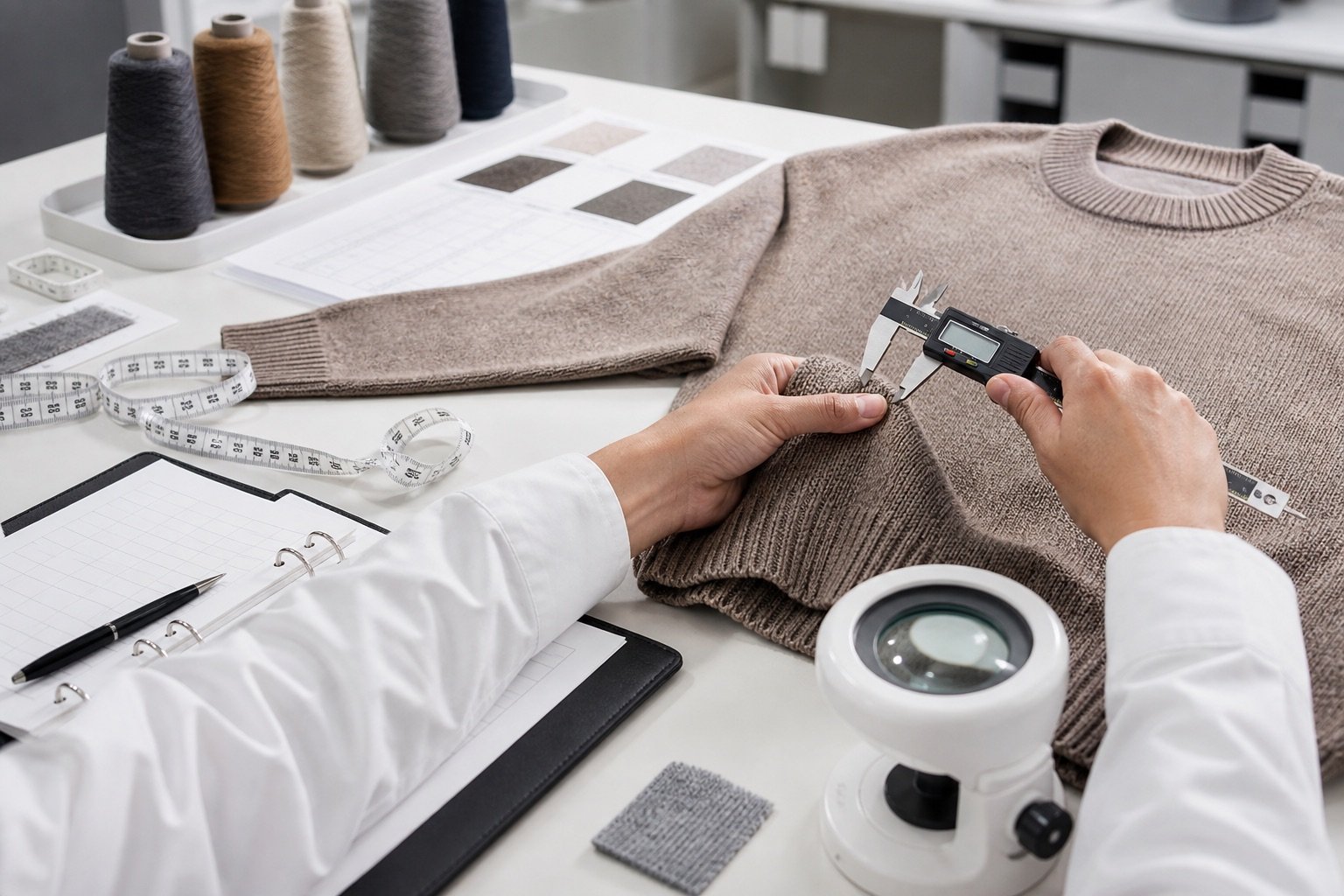
Panel dimensions, ribs, seams, yarn character, trims and finishing are documented before reconstruction.
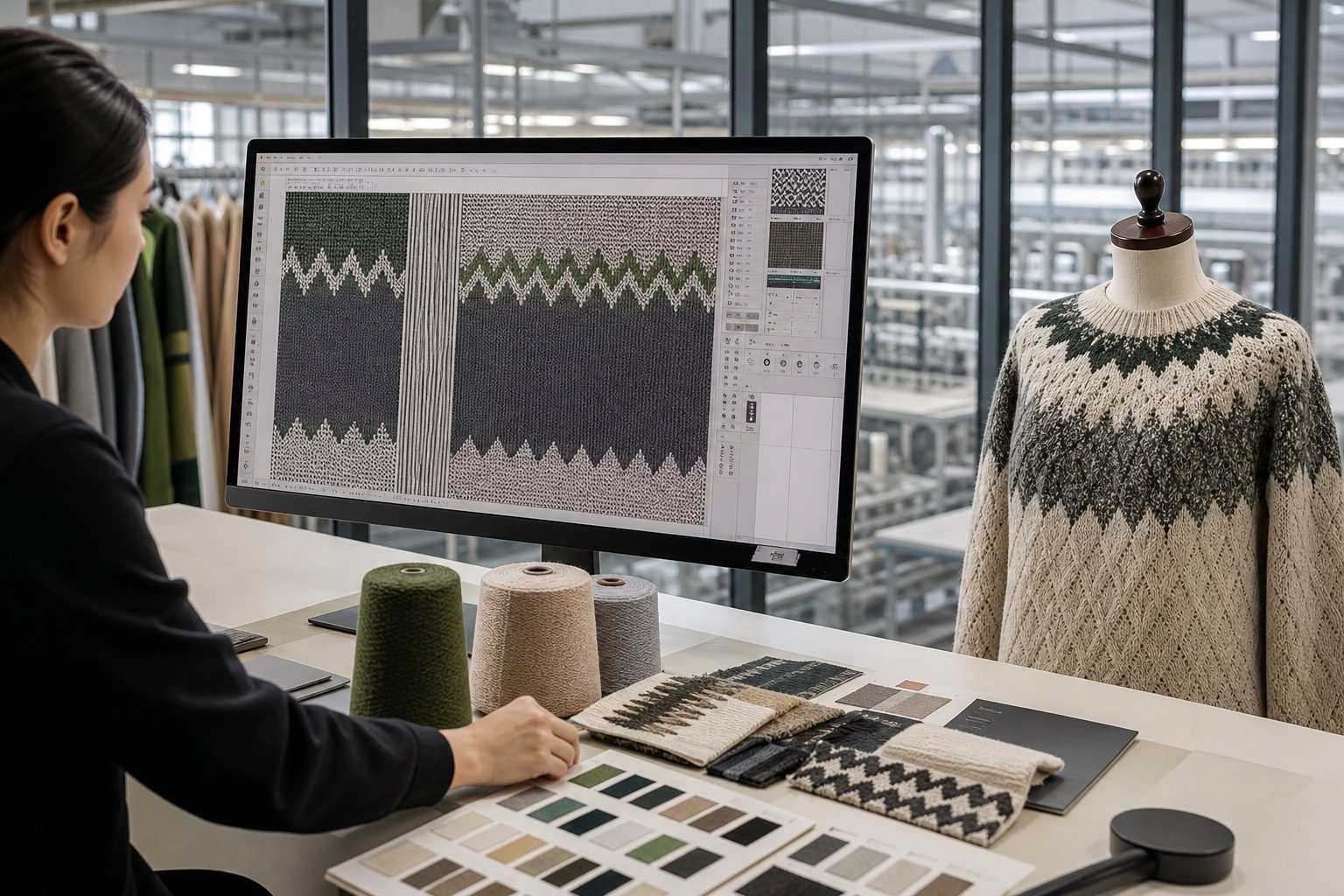
Stitch maps, transfers, shaping, tension and panel instructions are prepared for the selected machine gauge.
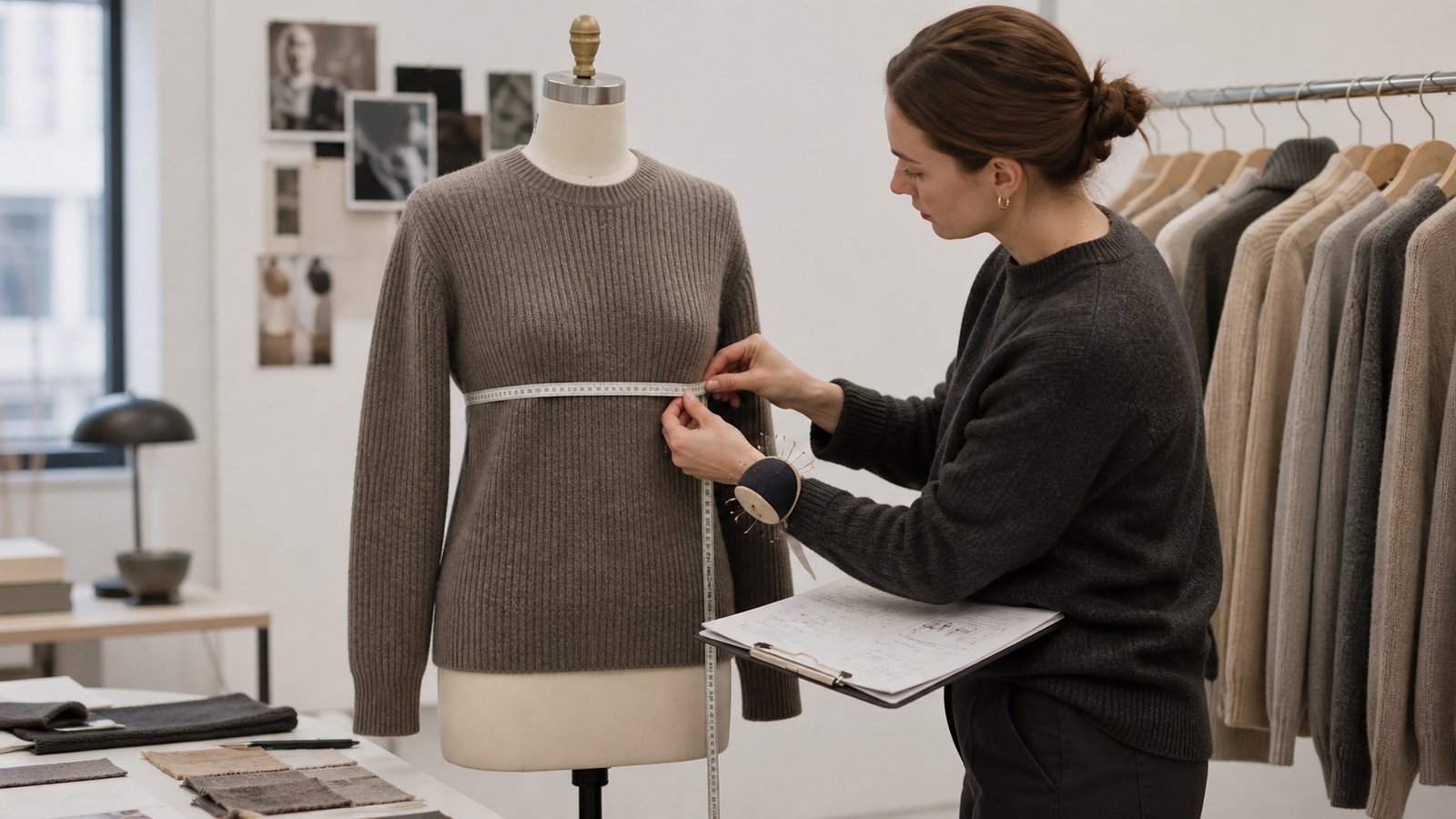
Garment balance, ease, neckline, shoulder, sleeve, length and stretch recovery are reviewed on the body form.
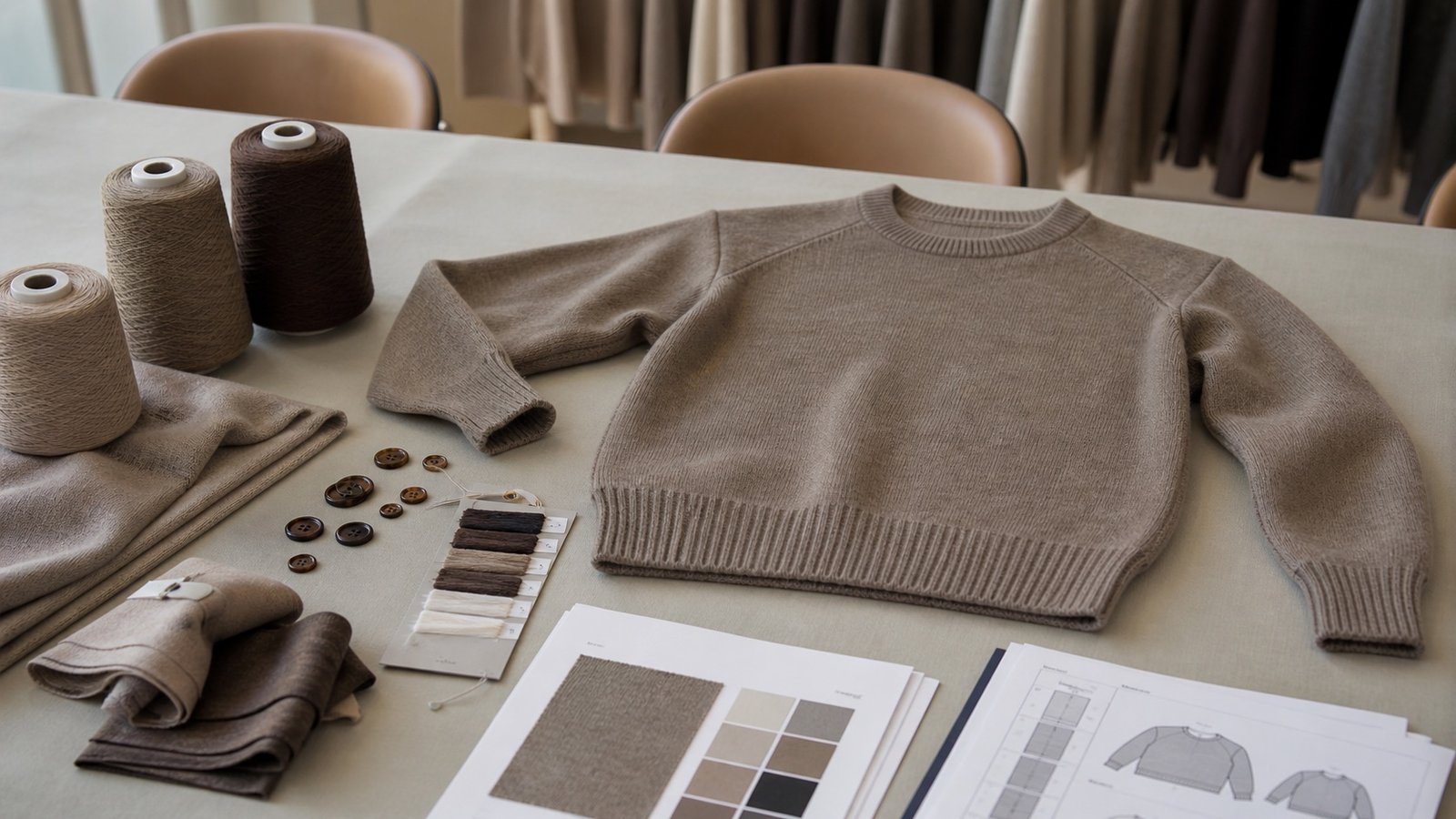
The final sample consolidates approved yarn, color, measurements, workmanship, trims, labels and packing.
KNIT & SURFACE ENGINEERING
Stretch, fabric weight, motif scale, reverse-side appearance, attachment strength, wash behavior, cost and production order are evaluated together.
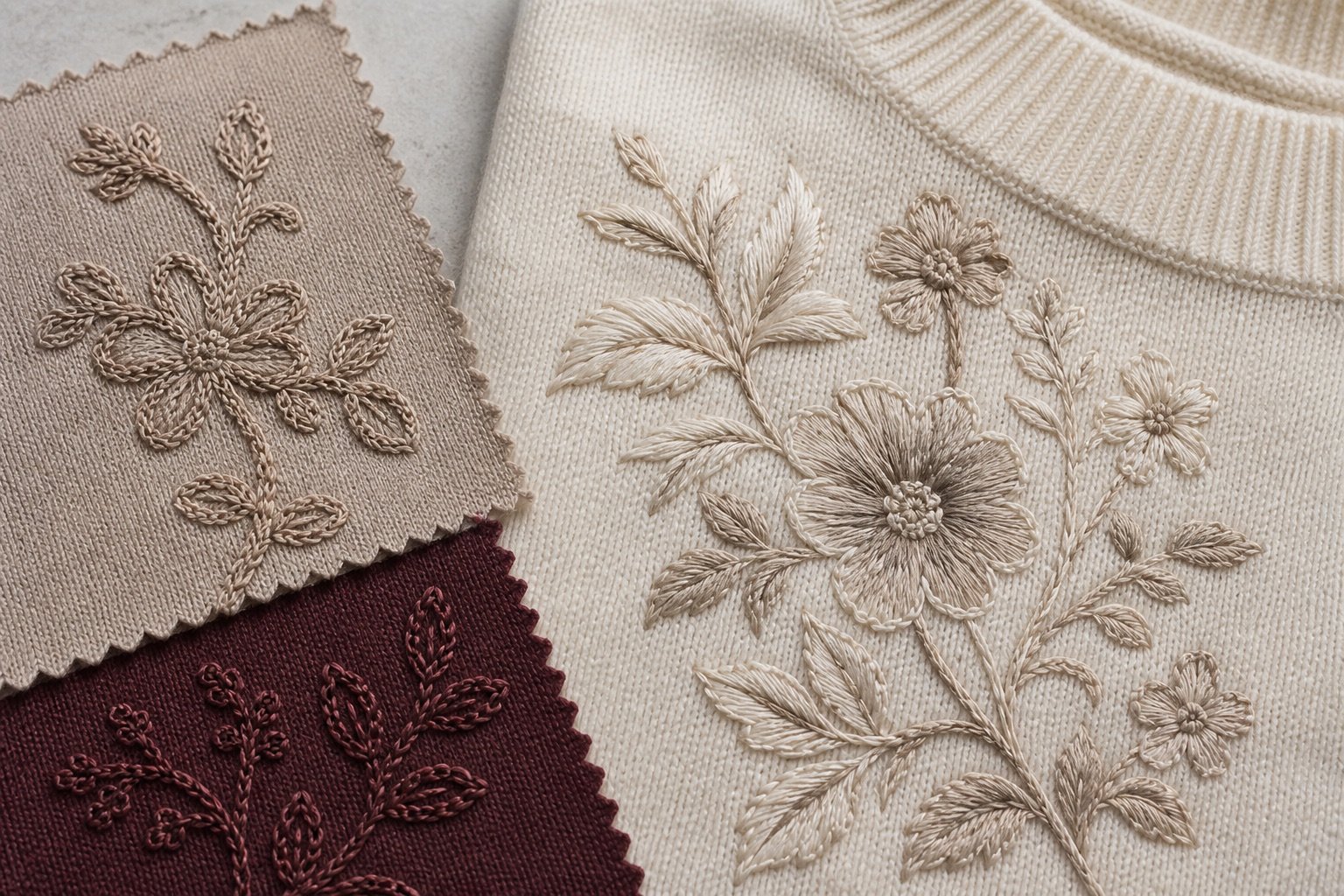
Flat, chain, chenille, towel and appliqué embroidery with placement and backing adapted to stretch.
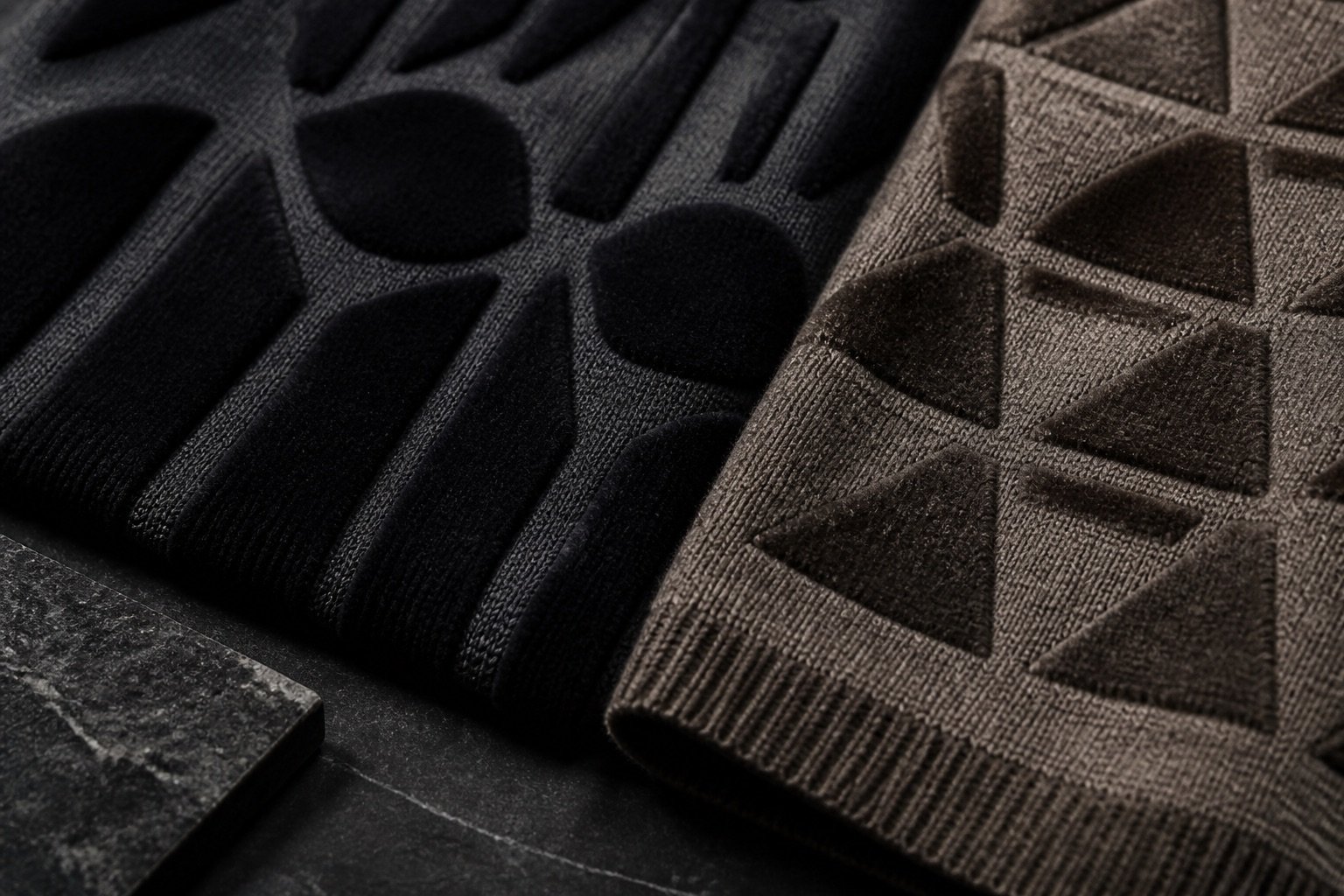
Velvet-like motifs, raised areas and combined flock-and-print treatments developed through adhesion trials.
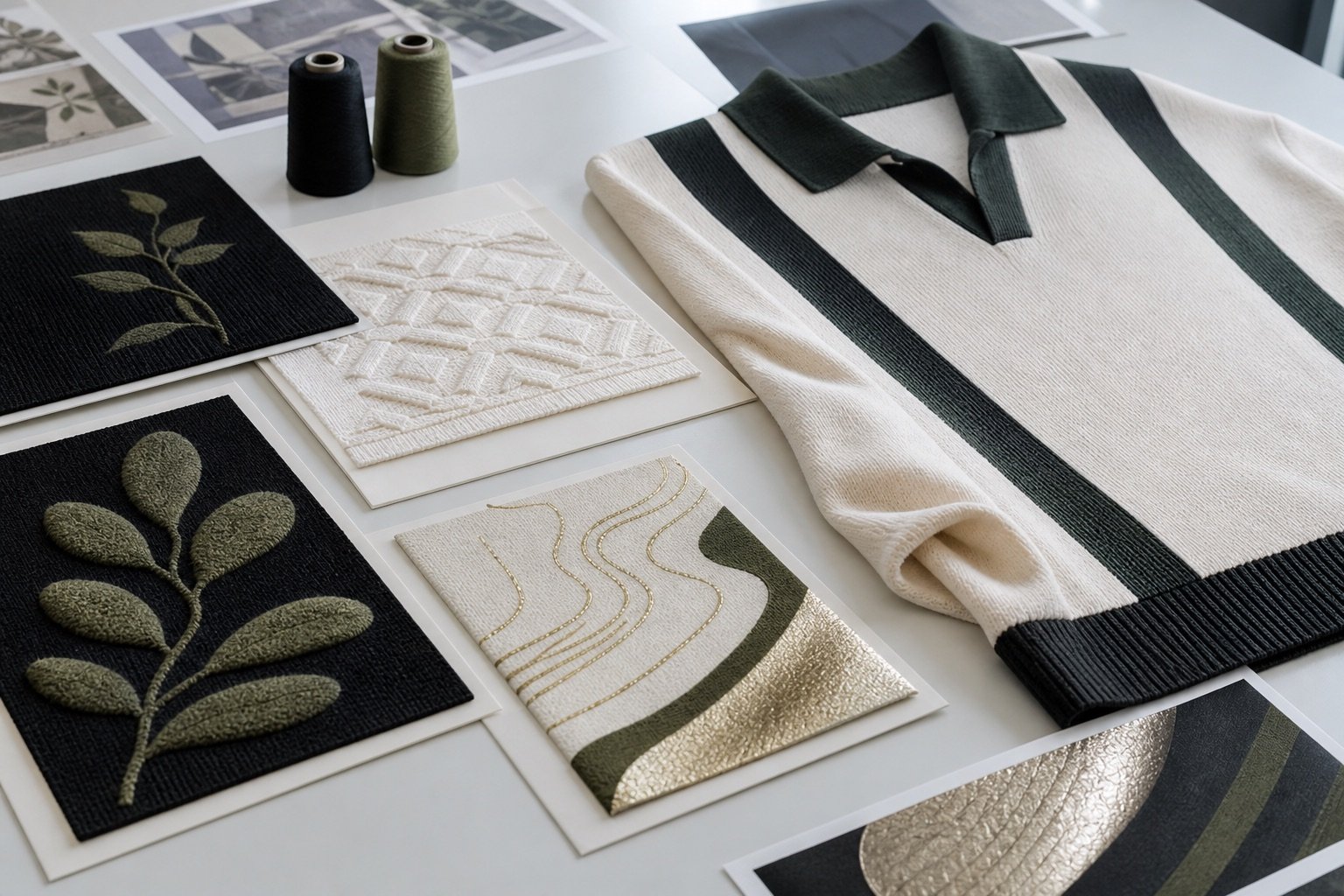
Screen, pigment, puff, high-density, foil, heat-transfer and selected digital applications.
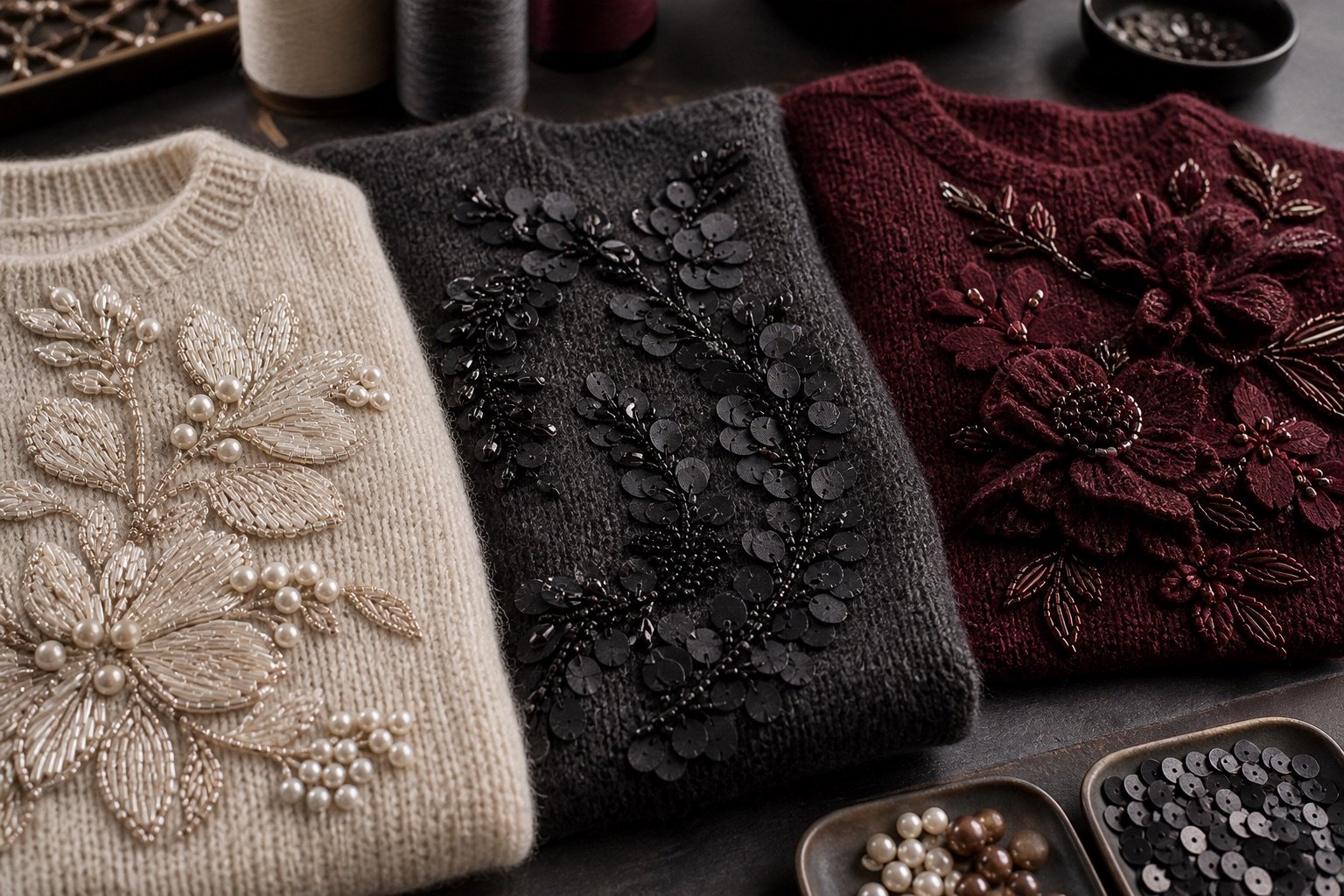
Beads, pearls, sequins, patches, appliqué, fringe, tassels and mixed handwork with secure attachment planning.
KNITTED FABRIC SYSTEM
Changing one variable can alter weight, drape, stretch, motif clarity, hand feel, knitting time and final cost.
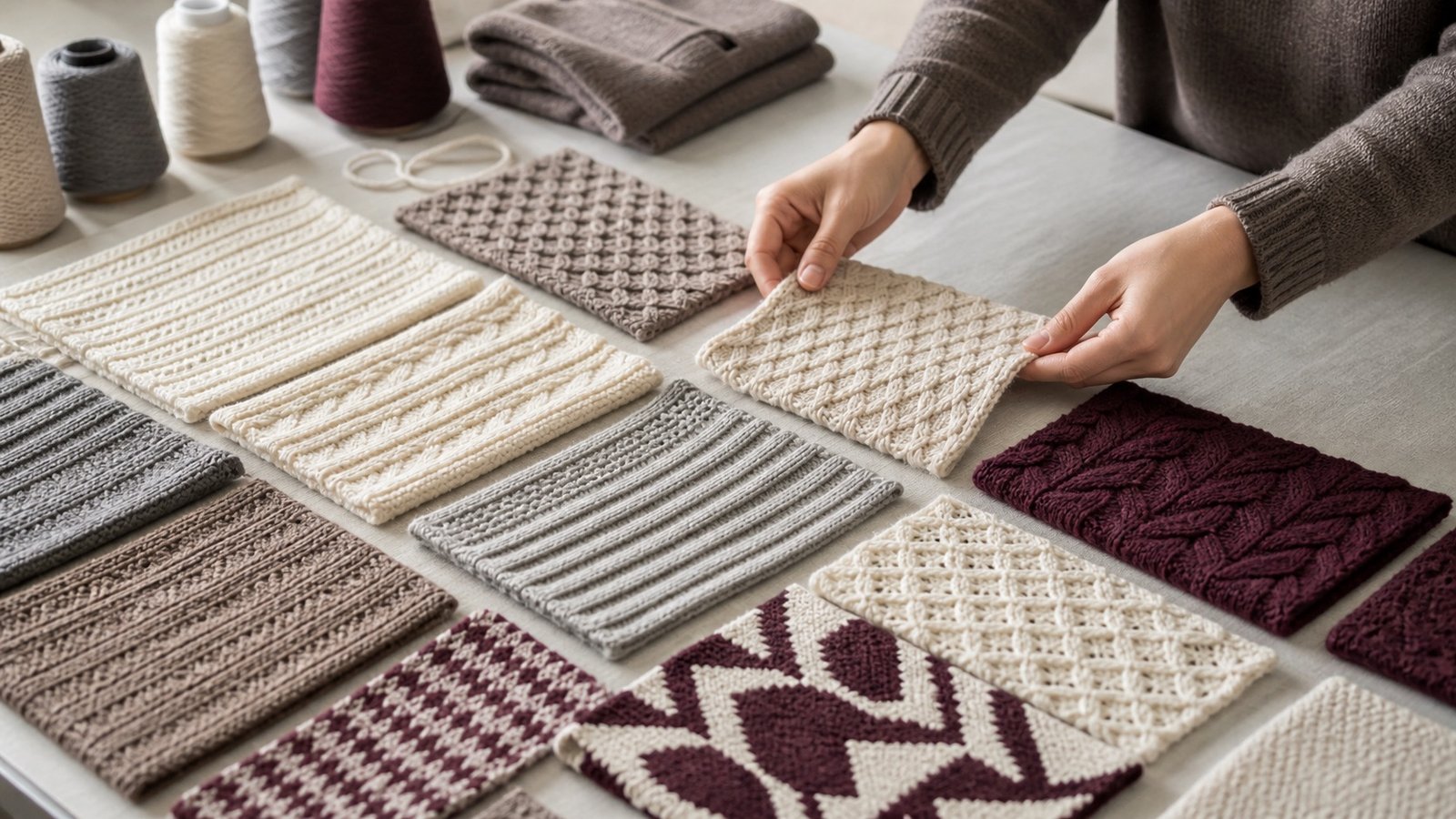
Jersey, rib, Milano, links, tuck, transfer, mesh, pointelle, cable and dimensional textures.
Stripes, jacquard, intarsia, plating, tipping, contrast ribs and placement motifs.
Fully fashioned reductions, increases, integral ribs, neck shaping and panel-specific construction.
Machine gauge is selected with yarn count, stitch scale, density, weight and intended appearance.
Buttons, zippers, tapes, labels, patches, cords and metal trims are checked against knit thickness and stretch.
Jacquard plus embroidery, print plus flocking or appliqué plus beads are sequenced and tested before approval.
SPECIALIST FINISHING
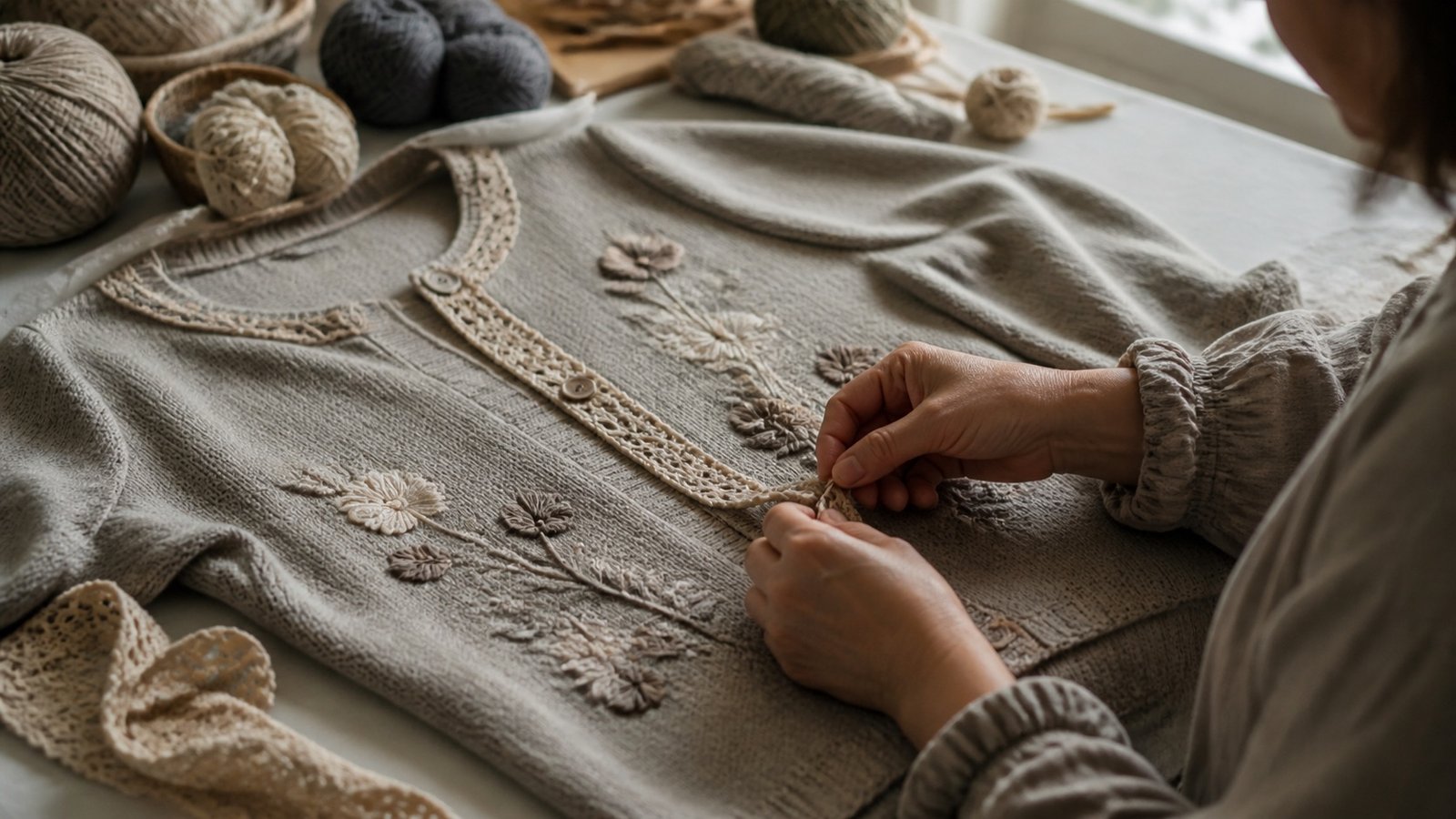
Crochet trims, hand embroidery, knots, fringe and artisanal accents are positioned against an approved sample.
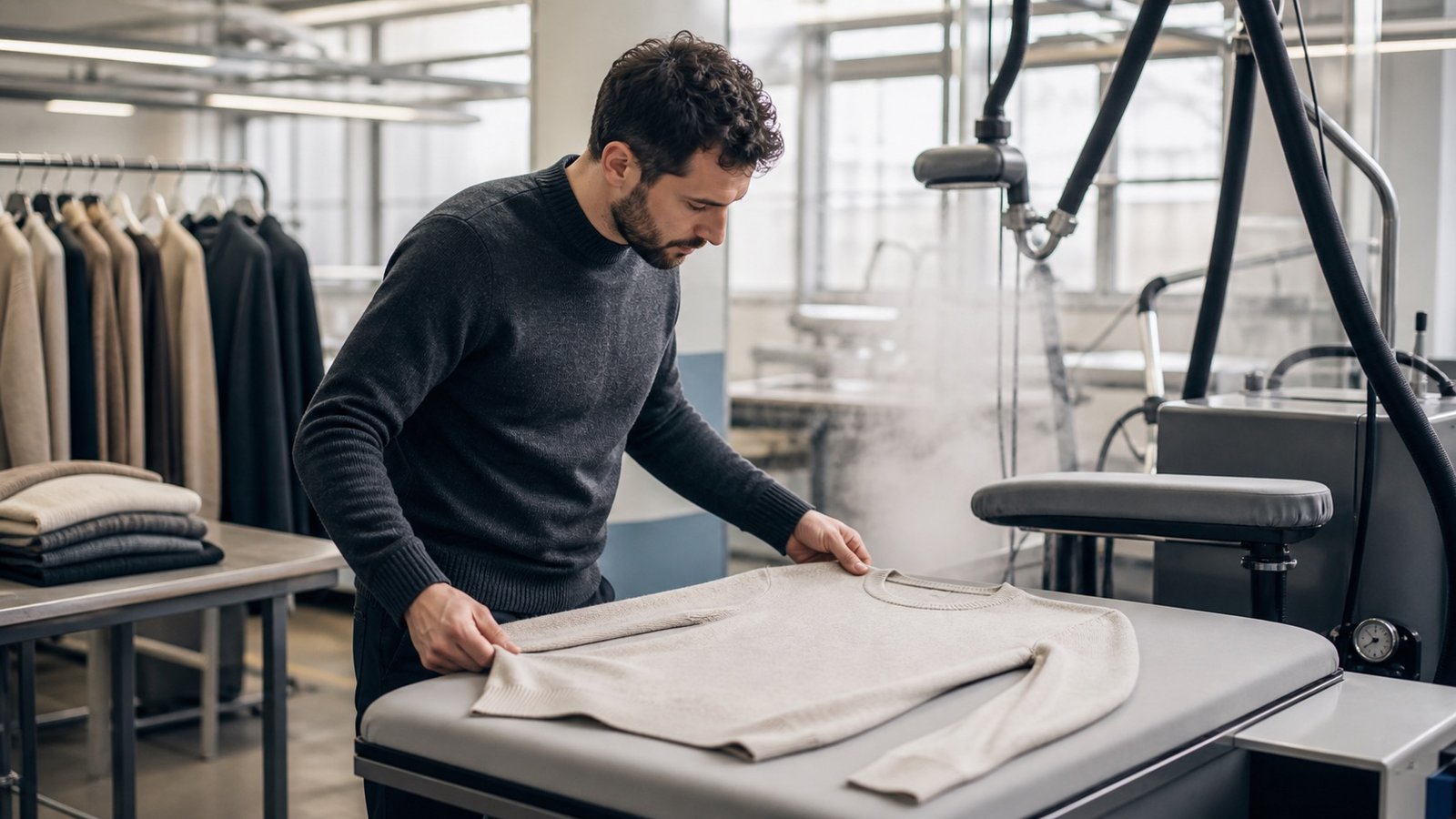
Wash recipe, temperature, time, mechanical action, drying, shaping and pressing are controlled as a linked process.
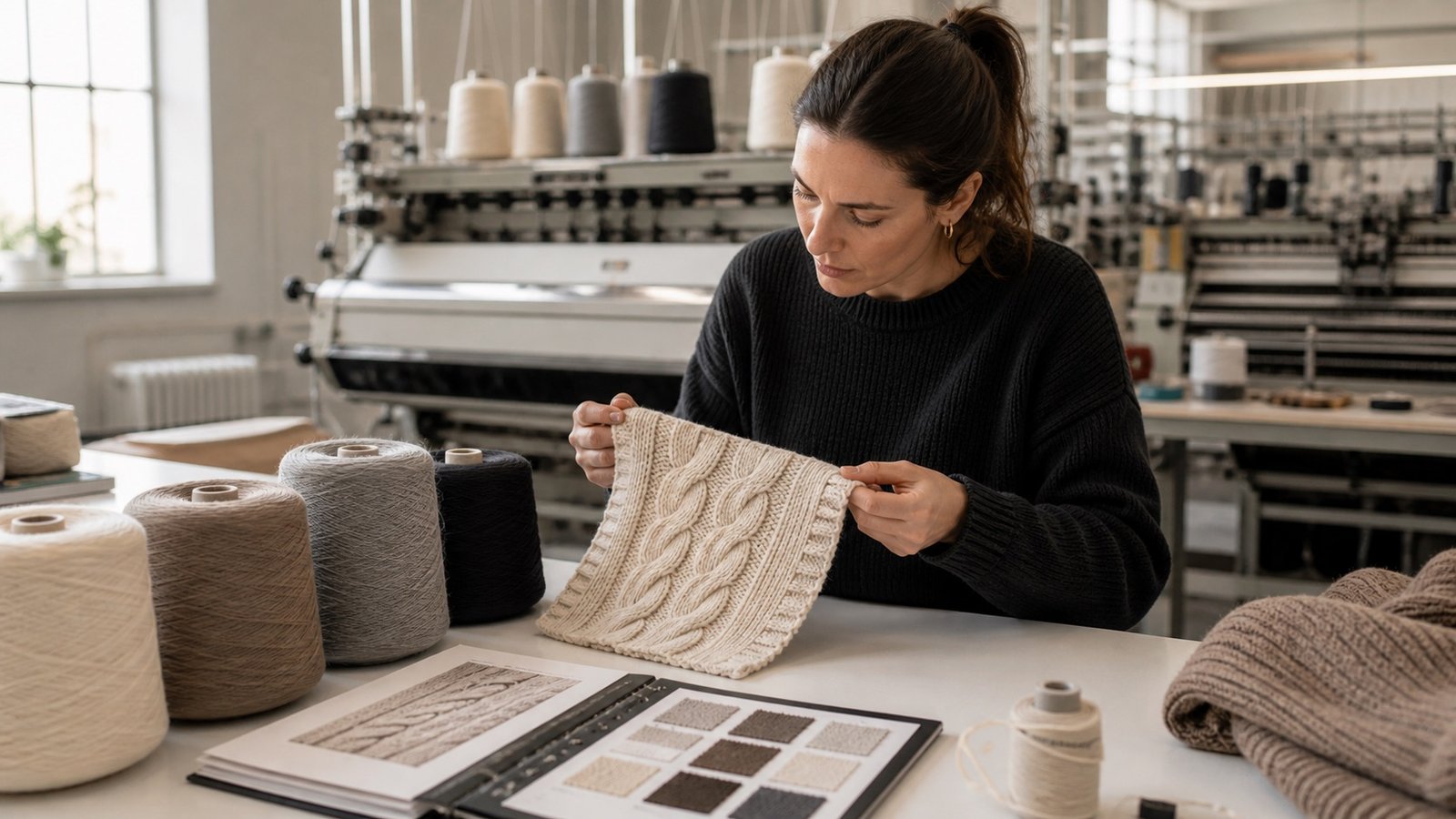
A swatch isolates structure, yarn effect, color or surface technique before a complete garment is repeated.
PRODUCTION GATES
APPROVAL TO BULK
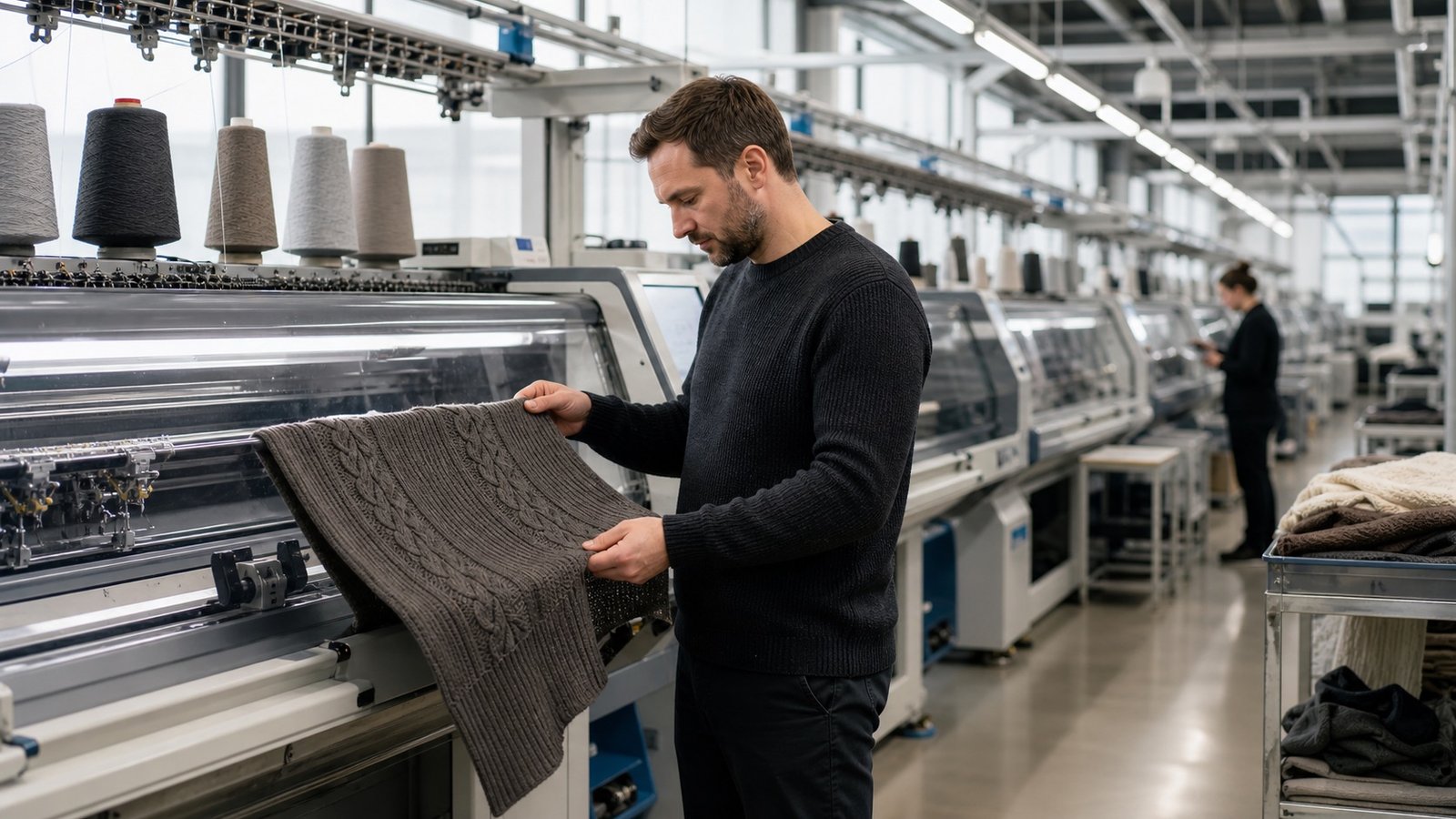
Early production panels verify tension, dimensions, artwork and repeatability before the full quantity advances.
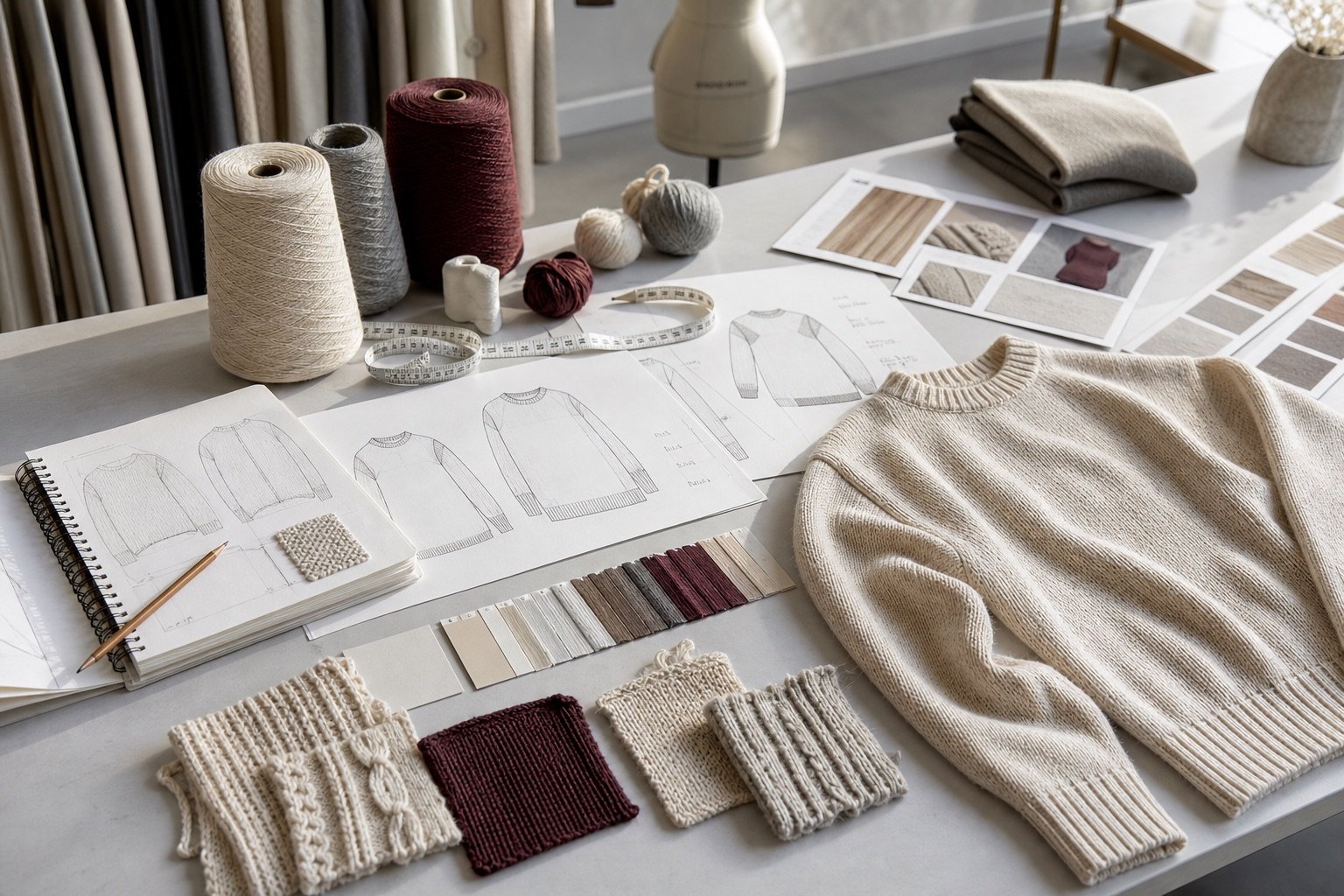
Garment, yarn, trims, color references and buyer comments remain connected as one controlled standard.
PRACTICAL ANSWERS
Use the reference-image or ODM route. We will identify the missing technical choices before recommending a prototype.
Yes, after confirming material compatibility, application order, wash behavior, appearance and attachment security.
A swatch is efficient when the uncertainty is concentrated in stitch, yarn effect, color work, embroidery, flocking or finishing.
The material, color, measurements, construction, artwork, trims, workmanship, labels, testing and packing reference.
Comments are attached to a named sample version and converted into measurable or visible production instructions.
START A PROJECT
Send the tech pack, reference image or sample details you have. We will identify the required technical trials and the first approval milestone.